
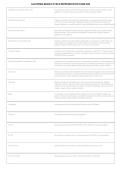
CALIFORNIA BRANCH 2 FIELD REPRESENTATIVE EXAM 2026
Falsifiable concentrates (EC or E) Formulations made up of the technical material, solvents and emulsifiers. Some
agitation is required. Once dry, pesticide residue is barley visible.
Wettable Powder (WP) These formulations are made by impregnating or coating an appropriate powder
with the technical insecticide. Wettable Powders do not dissolve in water and
frequent agitation is usually required. Heavy applications may leave visible deposits.
Soluble Powders (SP) May look like Wettable Powders but they dissolve and form true solutions when
dilute with water. Less visible than Wettable Powders after drying, Frequent
agitation is not required.
Suspension Concentrates (SC) Products made with small particles suspended in oil solvents or water. Easy mix,
require little or no agitation and remain stable for a long time. Have a greatly
reduced inhalation hazard because they come in a liquid form.
Flowable Liquids Contains concentrated water dispersible powders in a liquid form. These powders
may stay suspended for a long time. Flowable liquids are easy to handle and have
excellent dilution properties.
Microencapsulated Formulations (ME) manufactured by suspending liquid or solid pesticide particles in microcapsules. By
altering the membrane of the microcapsules, the residual performance, speed and
action and odor can be affected. May clog sprayers and leave visible residue.
Dusts (D) Made by combining and insecticide with a dust diluent (usually inert) Some products
such as Boric Acid Dusts, are almost totally comprised of Boric Acid and may have
small amounts of other ingredients added. Drifts are a major issue.
Granules Made by coating or impregnating an inert carrier with an insecticide. Made of
materials, such as, clay, corn cobs, pecan shells, saw dust, etc. Formulations are
ready to use and used mostly for exterior perimeter of buildings for the control of
crawling insects. Also is water activated.
Baits Combination of a insecticide with an attractive carrier/food that the target pest
prefers. Pheromone attractants are added to increase the effects. Comes in forms
of gels, granules, paste, pellets, powders or liquids.
Fumigants toxic gases such as methyl bromine that are used to kill pests.
Vitamin-K The antidote to consuming Anti-coagulants.
LD-50 the amount of a chemical that kills 50% of the animals in a test population.
LC-50 the lethal concentration in air or water required to kill 50% of the population.
Acute Toxicity adverse effects occur within a short period after exposure to toxin.
Chronic Toxicity Repeated exposure over time to sub-lethal doses of chemicals.
, CALIFORNIA BRANCH 2 FIELD REPRESENTATIVE EXAM 2026
Signal Word Indicates how toxic a product is and how dangerous.
Danger Category 1 Highly toxic LD-50 (0-50 mg/kg) a taste to a teaspoon could kill you.
Warning Category 2 moderately toxic LD-50 (50-500 mg/kg) a teaspoon to a tablespoon
could kill you.
Caution Category 3 slightly toxic LD-50 (500-5,000 mg/kg) an ounce to more than a pint can
kill you.
Type of pesticide General terms what type of pests are to be controlled and also type of formulation.
Net Contents Found on the front of the label along the bottom edge
Indicates the quantity of formulation in the package
Expressed in weight, volume, or count.
(EPA) Registration and Establishment Numbers Indicates the pesticide has been registered. Number will tell you which location and
facility the product was made at.
EPA Environmental Protection Agency.
Precautionary Statement Protection precautions of applicators and other people or animals who may be
exposed to the product. Will see heading (Hazards to humans and domestic
animals)
Statement of Practical Treatment lists first aid treatments recommended in case of poisoning or accidental exposure.
Environmental Hazard Pesticide maybe harmful to the environment.
Physical or Chemical Hazards Potential hazards such as fire, explosion or chemical reaction the product may
cause.
Re-entry Statement A requirement of the use of a chemical dictating when one can re-enter the area
where the chemical has been applied.
Directions For Use Instructions to tell you how to use the pesticide.
(IPM) Integrated Pest Managment A process used to solve pest problems while minimizing risks to people and the
environment.
Falsifiable concentrates (EC or E) Formulations made up of the technical material, solvents and emulsifiers. Some
agitation is required. Once dry, pesticide residue is barley visible.
Wettable Powder (WP) These formulations are made by impregnating or coating an appropriate powder
with the technical insecticide. Wettable Powders do not dissolve in water and
frequent agitation is usually required. Heavy applications may leave visible deposits.
Soluble Powders (SP) May look like Wettable Powders but they dissolve and form true solutions when
dilute with water. Less visible than Wettable Powders after drying, Frequent
agitation is not required.
Suspension Concentrates (SC) Products made with small particles suspended in oil solvents or water. Easy mix,
require little or no agitation and remain stable for a long time. Have a greatly
reduced inhalation hazard because they come in a liquid form.
Flowable Liquids Contains concentrated water dispersible powders in a liquid form. These powders
may stay suspended for a long time. Flowable liquids are easy to handle and have
excellent dilution properties.
Microencapsulated Formulations (ME) manufactured by suspending liquid or solid pesticide particles in microcapsules. By
altering the membrane of the microcapsules, the residual performance, speed and
action and odor can be affected. May clog sprayers and leave visible residue.
Dusts (D) Made by combining and insecticide with a dust diluent (usually inert) Some products
such as Boric Acid Dusts, are almost totally comprised of Boric Acid and may have
small amounts of other ingredients added. Drifts are a major issue.
Granules Made by coating or impregnating an inert carrier with an insecticide. Made of
materials, such as, clay, corn cobs, pecan shells, saw dust, etc. Formulations are
ready to use and used mostly for exterior perimeter of buildings for the control of
crawling insects. Also is water activated.
Baits Combination of a insecticide with an attractive carrier/food that the target pest
prefers. Pheromone attractants are added to increase the effects. Comes in forms
of gels, granules, paste, pellets, powders or liquids.
Fumigants toxic gases such as methyl bromine that are used to kill pests.
Vitamin-K The antidote to consuming Anti-coagulants.
LD-50 the amount of a chemical that kills 50% of the animals in a test population.
LC-50 the lethal concentration in air or water required to kill 50% of the population.
Acute Toxicity adverse effects occur within a short period after exposure to toxin.
Chronic Toxicity Repeated exposure over time to sub-lethal doses of chemicals.
, CALIFORNIA BRANCH 2 FIELD REPRESENTATIVE EXAM 2026
Signal Word Indicates how toxic a product is and how dangerous.
Danger Category 1 Highly toxic LD-50 (0-50 mg/kg) a taste to a teaspoon could kill you.
Warning Category 2 moderately toxic LD-50 (50-500 mg/kg) a teaspoon to a tablespoon
could kill you.
Caution Category 3 slightly toxic LD-50 (500-5,000 mg/kg) an ounce to more than a pint can
kill you.
Type of pesticide General terms what type of pests are to be controlled and also type of formulation.
Net Contents Found on the front of the label along the bottom edge
Indicates the quantity of formulation in the package
Expressed in weight, volume, or count.
(EPA) Registration and Establishment Numbers Indicates the pesticide has been registered. Number will tell you which location and
facility the product was made at.
EPA Environmental Protection Agency.
Precautionary Statement Protection precautions of applicators and other people or animals who may be
exposed to the product. Will see heading (Hazards to humans and domestic
animals)
Statement of Practical Treatment lists first aid treatments recommended in case of poisoning or accidental exposure.
Environmental Hazard Pesticide maybe harmful to the environment.
Physical or Chemical Hazards Potential hazards such as fire, explosion or chemical reaction the product may
cause.
Re-entry Statement A requirement of the use of a chemical dictating when one can re-enter the area
where the chemical has been applied.
Directions For Use Instructions to tell you how to use the pesticide.
(IPM) Integrated Pest Managment A process used to solve pest problems while minimizing risks to people and the
environment.

