NUR 170 Exam 1 Med-Surg: Perioperative Care & Fluid/Electrolyte Balance Notes
Unit 1:
Care of the Perioperative Client
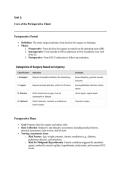
Perioperative Period
• Definition: The entire surgical episode, from decision for surgery to discharge.
• Phases:
1. Preoperative: From decision for surgery to transfer to the operating room (OR).
2. Intraoperative: From transfer to OR to admission in Post Anesthesia Care Unit
(PACU).
3. Postoperative: From PACU admission to follow-up evaluation.
Preoperative Phase
• Goal: Prepare client for surgery and reduce risks.
• Data Collection: Subjective and objective assessment, including medical history,
physical assessment, chart review, and lab tests.
• Nursing Assessment Areas:
o Risk Factors: Age, weight extremes, chronic conditions (e.g., diabetes,
pulmonary disease), and infections.
o Risk for Malignant Hyperthermia: Genetic condition triggered by anesthetic
agents, marked by muscle rigidity, hyperthermia, tachycardia, and increased CO2
levels.
NUR 170 Exam 1 Med-Surg: Perioperative Care & Fluid/Electrolyte Balance Notes
, NUR 170 Exam 1 Med-Surg: Perioperative Care & Fluid/Electrolyte Balance Notes
o Elderly Considerations: Monitor for confusion, delirium, and complications
from decreased physiological reserve.
o Obese Clients: Higher risk for infection, wound dehiscence, shallow breathing,
and poor wound healing.
Preoperative Interventions
• Goals: Minimize risks, promote optimal outcomes.
• Teachings:
1. Deep Breathing & Coughing: Prevent respiratory complications, improve
circulation.
2. Turning and Extremity Exercises: Prevent venous stasis and thrombosis.
3. Antiembolic Stockings & Pneumatic Compression: Help prevent deep vein
thrombosis (DVT).
4. Pain Control: Discuss pain expectations and control methods.
5. Preoperative Checklist: Ensure all preparatory steps are completed (ID, consent,
surgical site verification, dietary restrictions, etc.).
Intraoperative Phase
• Scope of Nursing Care:
o Positioning the client appropriately.
o Emotional support during induction.
o Ensure sterile field and equipment functioning.
o Safety measures (e.g., grounding of equipment, proper surgical attire).
• Surgical Asepsis:
o Adhere to strict sterile technique to prevent infection.
o Maintain sterile fields and proper handling of instruments.
• Types of Anesthesia:
1. General: Complete CNS depression, loss of reflexes, and muscle relaxation.
2. Regional (e.g., Epidural, Spinal): Blocks specific body areas, often for major
surgeries.
3. Local: Anesthetic at the surgical site for minor procedures.
4. Moderate Sedation: For procedures requiring some analgesia, but client remains
responsive.
• Malignant Hyperthermia:
o Signs: Increased CO2, tachycardia, muscular rigidity, rapid temperature increase.
o Treatment: Discontinue anesthesia, hyperventilate, administer Dantrolene.
Postoperative Phase
NUR 170 Exam 1 Med-Surg: Perioperative Care & Fluid/Electrolyte Balance Notes
, NUR 170 Exam 1 Med-Surg: Perioperative Care & Fluid/Electrolyte Balance Notes
• Initial Focus: Recovery from anesthesia, monitoring for complications, and preventing
infections.
Postoperative Monitoring:
1. Respiratory:
o Assess respiratory rate, depth, breath sounds, and oxygen saturation.
o Maintain airway patency and prevent hypoxemia.
2. Cardiac:
o Monitor vital signs, cardiac rhythm, and skin condition.
o Ensure adequate perfusion and oxygenation.
3. Wound and Neuro:
o Check for bleeding, infection, or dehiscence.
o Assess neurological status (e.g., confusion, orientation).
Postoperative Complications:
1. Thromboembolic Events (e.g., DVT):
o Prevention with early ambulation, antiembolic stockings, and pneumatic
compression devices.
o Monitor for calf pain or swelling, indicative of DVT.
2. Hemorrhage:
o Monitor for signs of concealed bleeding (e.g., hematomas), and intervene as
necessary.
3. Infection:
o Monitor surgical site for signs of infection (redness, swelling, discharge).
o Proper wound care and aseptic technique are essential.
4. Urinary Retention:
o Can be caused by anesthetics or surgical manipulation.
o Monitor for difficulty urinating or distended bladder.
5. Paralytic Ileus:
o Postoperative bowel dysfunction due to anesthesia or surgery on the intestines.
o Interventions include hydration, ambulation, and possible NG tube insertion.
6. Pain Control:
o Adequate pain management improves recovery outcomes.
o Use opioids or non-opioids depending on the pain intensity.
Postoperative Nursing Interventions:
• Early Ambulation: Encouraged as soon as possible to prevent complications such as
DVT, pneumonia, and constipation.
• Pain Management: Regularly assess pain levels and use a multimodal approach
(medications, positioning, non-pharmacological methods).
• Prevent Wound Dehiscence and Evisceration: Monitor incision sites, and educate on
proper splinting techniques.
NUR 170 Exam 1 Med-Surg: Perioperative Care & Fluid/Electrolyte Balance Notes
Unit 1:
Care of the Perioperative Client
Perioperative Period
• Definition: The entire surgical episode, from decision for surgery to discharge.
• Phases:
1. Preoperative: From decision for surgery to transfer to the operating room (OR).
2. Intraoperative: From transfer to OR to admission in Post Anesthesia Care Unit
(PACU).
3. Postoperative: From PACU admission to follow-up evaluation.
Preoperative Phase
• Goal: Prepare client for surgery and reduce risks.
• Data Collection: Subjective and objective assessment, including medical history,
physical assessment, chart review, and lab tests.
• Nursing Assessment Areas:
o Risk Factors: Age, weight extremes, chronic conditions (e.g., diabetes,
pulmonary disease), and infections.
o Risk for Malignant Hyperthermia: Genetic condition triggered by anesthetic
agents, marked by muscle rigidity, hyperthermia, tachycardia, and increased CO2
levels.
NUR 170 Exam 1 Med-Surg: Perioperative Care & Fluid/Electrolyte Balance Notes
, NUR 170 Exam 1 Med-Surg: Perioperative Care & Fluid/Electrolyte Balance Notes
o Elderly Considerations: Monitor for confusion, delirium, and complications
from decreased physiological reserve.
o Obese Clients: Higher risk for infection, wound dehiscence, shallow breathing,
and poor wound healing.
Preoperative Interventions
• Goals: Minimize risks, promote optimal outcomes.
• Teachings:
1. Deep Breathing & Coughing: Prevent respiratory complications, improve
circulation.
2. Turning and Extremity Exercises: Prevent venous stasis and thrombosis.
3. Antiembolic Stockings & Pneumatic Compression: Help prevent deep vein
thrombosis (DVT).
4. Pain Control: Discuss pain expectations and control methods.
5. Preoperative Checklist: Ensure all preparatory steps are completed (ID, consent,
surgical site verification, dietary restrictions, etc.).
Intraoperative Phase
• Scope of Nursing Care:
o Positioning the client appropriately.
o Emotional support during induction.
o Ensure sterile field and equipment functioning.
o Safety measures (e.g., grounding of equipment, proper surgical attire).
• Surgical Asepsis:
o Adhere to strict sterile technique to prevent infection.
o Maintain sterile fields and proper handling of instruments.
• Types of Anesthesia:
1. General: Complete CNS depression, loss of reflexes, and muscle relaxation.
2. Regional (e.g., Epidural, Spinal): Blocks specific body areas, often for major
surgeries.
3. Local: Anesthetic at the surgical site for minor procedures.
4. Moderate Sedation: For procedures requiring some analgesia, but client remains
responsive.
• Malignant Hyperthermia:
o Signs: Increased CO2, tachycardia, muscular rigidity, rapid temperature increase.
o Treatment: Discontinue anesthesia, hyperventilate, administer Dantrolene.
Postoperative Phase
NUR 170 Exam 1 Med-Surg: Perioperative Care & Fluid/Electrolyte Balance Notes
, NUR 170 Exam 1 Med-Surg: Perioperative Care & Fluid/Electrolyte Balance Notes
• Initial Focus: Recovery from anesthesia, monitoring for complications, and preventing
infections.
Postoperative Monitoring:
1. Respiratory:
o Assess respiratory rate, depth, breath sounds, and oxygen saturation.
o Maintain airway patency and prevent hypoxemia.
2. Cardiac:
o Monitor vital signs, cardiac rhythm, and skin condition.
o Ensure adequate perfusion and oxygenation.
3. Wound and Neuro:
o Check for bleeding, infection, or dehiscence.
o Assess neurological status (e.g., confusion, orientation).
Postoperative Complications:
1. Thromboembolic Events (e.g., DVT):
o Prevention with early ambulation, antiembolic stockings, and pneumatic
compression devices.
o Monitor for calf pain or swelling, indicative of DVT.
2. Hemorrhage:
o Monitor for signs of concealed bleeding (e.g., hematomas), and intervene as
necessary.
3. Infection:
o Monitor surgical site for signs of infection (redness, swelling, discharge).
o Proper wound care and aseptic technique are essential.
4. Urinary Retention:
o Can be caused by anesthetics or surgical manipulation.
o Monitor for difficulty urinating or distended bladder.
5. Paralytic Ileus:
o Postoperative bowel dysfunction due to anesthesia or surgery on the intestines.
o Interventions include hydration, ambulation, and possible NG tube insertion.
6. Pain Control:
o Adequate pain management improves recovery outcomes.
o Use opioids or non-opioids depending on the pain intensity.
Postoperative Nursing Interventions:
• Early Ambulation: Encouraged as soon as possible to prevent complications such as
DVT, pneumonia, and constipation.
• Pain Management: Regularly assess pain levels and use a multimodal approach
(medications, positioning, non-pharmacological methods).
• Prevent Wound Dehiscence and Evisceration: Monitor incision sites, and educate on
proper splinting techniques.
NUR 170 Exam 1 Med-Surg: Perioperative Care & Fluid/Electrolyte Balance Notes