

Page 1 of 89
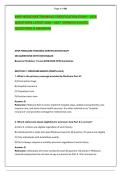
AHIP MEDICARE TRAINING CERTIFICATION EXAM - 2026
QUESTIONS LATEST 2026 – 2027 VERSION SOLVED
QUESTIONS & ANSWERS
AHIP MEDICARE TRAINING CERTIFICATION EXAM
250 QUESTIONS WITH RATIONALES
Based on Modules 1-5 and 2025/2026 CMS Guidelines
SECTION 1: MEDICARE BASICS (PARTS A & B)
1. What is the primary coverage provided by Medicare Part A?
A) Prescription drugs
B) Hospital insurance
C) Outpatient care
D) Routine vision care
Answer: B
Rationale: Medicare Part A covers inpatient hospital stays, skilled nursing facility care,
hospice care, and some home health services. It is often referred to as "hospital
insurance" and provides coverage for institutional care.
2. Which statement about eligibility for premium-free Part A is correct?
A) All U.S. citizens are eligible regardless of work history
B) Individuals 65 or older who paid Medicare taxes for 40 quarters (10 years) are eligible
C) Only individuals with disabilities qualify
D) Part A always requires a monthly premium regardless of work history
Answer: B
Rationale: Individuals who have worked at least 40 quarters (10 years) in Medicare-
covered employment do not have to pay a premium for Part A. This is known as
, Page 2 of 89
premium-free Part A. Some individuals who are not eligible for premium-free Part A may
purchase coverage by paying a monthly premium.
3. What services does Medicare Part B primarily cover?
A) Inpatient hospital care
B) Outpatient physician services, preventive care, and durable medical equipment
C) Prescription drugs
D) Long-term custodial care
Answer: B
Rationale: Medicare Part B covers medically necessary outpatient services, doctor
visits, durable medical equipment (DME), and preventive services. Part B requires
payment of a monthly premium and an annual deductible.
4. What is the standard monthly premium for Medicare Part B based upon?
A) The beneficiary's zip code
B) The beneficiary's modified adjusted gross income (MAGI)
C) The beneficiary's health status
D) The number of years the beneficiary has been retired
Answer: B
Rationale: Higher-income beneficiaries pay a higher Part B premium based on their
Modified Adjusted Gross Income (MAGI), known as the Income-Related Monthly
Adjustment Amount (IRMAA). The base premium for 2025 is approximately $174.70,
with income-adjusted variations.
5. What percentage of the Medicare-approved amount does a beneficiary typically
pay for Part B covered services after meeting their annual deductible?
A) 10%
B) 20%
C) 30%
D) 50%
, Page 3 of 89
Answer: B
Rationale: Under Original Medicare Part B, the beneficiary is responsible for a 20%
coinsurance after the annual deductible is satisfied. This 20% co-payment applies to
most Part B services, with the exception of many preventive and screening tests which
are covered at no cost-sharing.
6. Mrs. Chen will be 65 soon and has been a U.S. citizen for twelve years, employed
full time, and paid taxes during that entire period. She is concerned she will not
qualify for Part A coverage because she was not born in the United States. What
should you tell her?
A) She must wait five more years before she can qualify
B) Most individuals who are citizens and age 65 or over are covered under Part A by
virtue of having paid Medicare taxes while working
C) She will not qualify because she was not born in the U.S.
D) She must purchase Part A at full cost
Answer: B
Rationale: Most individuals who are citizens and over age 65 are covered under Part A
by virtue of having paid Medicare taxes while working, regardless of their country of
birth. Citizenship and sufficient work history are the key requirements, not country of
birth.
7. Mrs. Quinn recently turned 66 and began receiving Social Security benefits. She
received a letter informing her she had been automatically enrolled in Medicare
Part B. What does this mean?
A) Part B is free and covers all her medical costs
B) Part B primarily covers physician services; she will pay a monthly premium and
generally 20% co-payments plus an annual deductible
C) She can decline Part B without any penalty
D) Part B covers her prescription drugs
Answer: B
Rationale: Part B primarily covers physician services. She will be paying a monthly
premium and, with the exception of many preventive and screening tests, generally will
have 20% co-payments for these services, in addition to an annual deductible.
, Page 4 of 89
8. Mr. Xi will soon turn 65 and asks what services are provided under Original
Medicare. What should you tell him that best describes the health coverage?
A) Beneficiaries pay cost-sharing for all services
B) Beneficiaries under Original Medicare have no cost-sharing for most preventive
services
C) Original Medicare covers no preventive services
D) All services require prior authorization
Answer: B
Rationale: Beneficiaries under Original Medicare have no cost-sharing for most
preventive services, which include immunizations such as annual flu shots. This is an
important feature of Original Medicare.
9. What is the Part B deductible for 2025?
A) $174.70
B) $226
C) $240
D) $257
Answer: C
Rationale: The Part B deductible for 2025 is $240. This amount changes annually. After
meeting the deductible, the beneficiary pays 20% coinsurance for most covered
services. (Note: The 2025 Part B deductible is $240; this is subject to annual
adjustment.)
10. What is a common cost-sharing feature of Original Medicare?
A) No deductibles
B) Annual deductibles and coinsurance
C) Fixed monthly premiums only
D) No out-of-pocket costs
Answer: B
Rationale: Original Medicare includes annual deductibles and 20% coinsurance as
common cost-sharing features. Medicare Part A also has a deductible for inpatient
hospital stays and per-day coinsurance for extended stays.
AHIP MEDICARE TRAINING CERTIFICATION EXAM - 2026
QUESTIONS LATEST 2026 – 2027 VERSION SOLVED
QUESTIONS & ANSWERS
AHIP MEDICARE TRAINING CERTIFICATION EXAM
250 QUESTIONS WITH RATIONALES
Based on Modules 1-5 and 2025/2026 CMS Guidelines
SECTION 1: MEDICARE BASICS (PARTS A & B)
1. What is the primary coverage provided by Medicare Part A?
A) Prescription drugs
B) Hospital insurance
C) Outpatient care
D) Routine vision care
Answer: B
Rationale: Medicare Part A covers inpatient hospital stays, skilled nursing facility care,
hospice care, and some home health services. It is often referred to as "hospital
insurance" and provides coverage for institutional care.
2. Which statement about eligibility for premium-free Part A is correct?
A) All U.S. citizens are eligible regardless of work history
B) Individuals 65 or older who paid Medicare taxes for 40 quarters (10 years) are eligible
C) Only individuals with disabilities qualify
D) Part A always requires a monthly premium regardless of work history
Answer: B
Rationale: Individuals who have worked at least 40 quarters (10 years) in Medicare-
covered employment do not have to pay a premium for Part A. This is known as
, Page 2 of 89
premium-free Part A. Some individuals who are not eligible for premium-free Part A may
purchase coverage by paying a monthly premium.
3. What services does Medicare Part B primarily cover?
A) Inpatient hospital care
B) Outpatient physician services, preventive care, and durable medical equipment
C) Prescription drugs
D) Long-term custodial care
Answer: B
Rationale: Medicare Part B covers medically necessary outpatient services, doctor
visits, durable medical equipment (DME), and preventive services. Part B requires
payment of a monthly premium and an annual deductible.
4. What is the standard monthly premium for Medicare Part B based upon?
A) The beneficiary's zip code
B) The beneficiary's modified adjusted gross income (MAGI)
C) The beneficiary's health status
D) The number of years the beneficiary has been retired
Answer: B
Rationale: Higher-income beneficiaries pay a higher Part B premium based on their
Modified Adjusted Gross Income (MAGI), known as the Income-Related Monthly
Adjustment Amount (IRMAA). The base premium for 2025 is approximately $174.70,
with income-adjusted variations.
5. What percentage of the Medicare-approved amount does a beneficiary typically
pay for Part B covered services after meeting their annual deductible?
A) 10%
B) 20%
C) 30%
D) 50%
, Page 3 of 89
Answer: B
Rationale: Under Original Medicare Part B, the beneficiary is responsible for a 20%
coinsurance after the annual deductible is satisfied. This 20% co-payment applies to
most Part B services, with the exception of many preventive and screening tests which
are covered at no cost-sharing.
6. Mrs. Chen will be 65 soon and has been a U.S. citizen for twelve years, employed
full time, and paid taxes during that entire period. She is concerned she will not
qualify for Part A coverage because she was not born in the United States. What
should you tell her?
A) She must wait five more years before she can qualify
B) Most individuals who are citizens and age 65 or over are covered under Part A by
virtue of having paid Medicare taxes while working
C) She will not qualify because she was not born in the U.S.
D) She must purchase Part A at full cost
Answer: B
Rationale: Most individuals who are citizens and over age 65 are covered under Part A
by virtue of having paid Medicare taxes while working, regardless of their country of
birth. Citizenship and sufficient work history are the key requirements, not country of
birth.
7. Mrs. Quinn recently turned 66 and began receiving Social Security benefits. She
received a letter informing her she had been automatically enrolled in Medicare
Part B. What does this mean?
A) Part B is free and covers all her medical costs
B) Part B primarily covers physician services; she will pay a monthly premium and
generally 20% co-payments plus an annual deductible
C) She can decline Part B without any penalty
D) Part B covers her prescription drugs
Answer: B
Rationale: Part B primarily covers physician services. She will be paying a monthly
premium and, with the exception of many preventive and screening tests, generally will
have 20% co-payments for these services, in addition to an annual deductible.
, Page 4 of 89
8. Mr. Xi will soon turn 65 and asks what services are provided under Original
Medicare. What should you tell him that best describes the health coverage?
A) Beneficiaries pay cost-sharing for all services
B) Beneficiaries under Original Medicare have no cost-sharing for most preventive
services
C) Original Medicare covers no preventive services
D) All services require prior authorization
Answer: B
Rationale: Beneficiaries under Original Medicare have no cost-sharing for most
preventive services, which include immunizations such as annual flu shots. This is an
important feature of Original Medicare.
9. What is the Part B deductible for 2025?
A) $174.70
B) $226
C) $240
D) $257
Answer: C
Rationale: The Part B deductible for 2025 is $240. This amount changes annually. After
meeting the deductible, the beneficiary pays 20% coinsurance for most covered
services. (Note: The 2025 Part B deductible is $240; this is subject to annual
adjustment.)
10. What is a common cost-sharing feature of Original Medicare?
A) No deductibles
B) Annual deductibles and coinsurance
C) Fixed monthly premiums only
D) No out-of-pocket costs
Answer: B
Rationale: Original Medicare includes annual deductibles and 20% coinsurance as
common cost-sharing features. Medicare Part A also has a deductible for inpatient
hospital stays and per-day coinsurance for extended stays.

