

Menopause Society Certified Practitioner Study Guide
Study online at https://quizlet.com/_h8e8bu
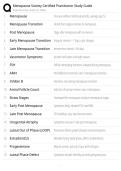
1. Menopause One year without menstrual periods, average age 52.
2. Menopause Transition Period from regular menses to menopause.
3. Post Menopause Stage after menopause with no menses.
4. Early Menopause Transition Irregular menses > 7 days, cycle changes.
5. Late Menopause Transition Amenorrhea interval > 60 days.
6. Vasomotor Symptoms Include hot flashes and night sweats.
7. FSH Follicle-stimulating hormone, elevated during menopause.
8. AMH Anti-Müllerian hormone, low in menopause transition.
9. Inhibin B Hormone, low during menopause transition.
10. Antral Follicle Count Indicator of ovarian reserve, low in menopause.
11. Straw Stages Framework for menopause and post-menopause stages.
12. Early Post Menopause Symptoms likely, elevated FSH, low AMH.
13. Late Post Menopause FSH stabilizes, very low hormone levels.
14. Urogenital Atrophy Symptoms increase in late post menopause.
15. Luteal Out of Phase (LOOP) Premature follicle growth disrupts hormonal balance.
16. Estradiol (E2) Elevated during luteal phase, affects endometrium.
17. Progesterone May be normal, but out of sync with estrogen.
18. Luteal Phase Defect Symptoms include infertility and early pregnancy loss.
1/6
, Menopause Society Certified Practitioner Study Guide
Study online at https://quizlet.com/_h8e8bu
19. Androgens Hormones like testosterone, decline with age.
20. Hypoestrogenism Low estrogen levels post-menopause.
21. Cardiovascular Changes Loss of estrogen leads to hypertension and heart disease.
22. Bone Physiology Estrogen inhibits osteoclasts, affecting bone density.
23. Estrogen Loss Accelerates bone reabsorption, leading to osteoporosis.
24. Antimullerian Hormone Measures ovarian reserve; >1 indicates normal reserve.
(AMH)
25. Ovarian Reserve Quantitative assessment of egg quantity and quality.
26. Aneuploidy Abnormal number of chromosomes in eggs.
27. Antral Follicle Count Normal count is 8-15 follicles on ultrasound.
28. Amenorrhea Absence of menstruation; classified as primary or secondary.
29. PRAISE Mnemonic for differential diagnosis of amenorrhea.
30. Primary Ovarian Insufficien- Ovarian dysfunction before age 45; elevated FSH.
cy
31. Hormone Replacement Ther- Recommended until natural menopause for symptom relief.
apy (HRT)
32. Surgical Menopause Induced menopause; HRT often requires higher doses.
33. Central Adiposity Increased abdominal fat linked to menopause risks.
34. DHEAS Levels Decrease in menopause; supplementation ineffective for weight.
35. Vasomotor Symptoms (VMS) Hot flashes and night sweats during menopause.
2/6
Study online at https://quizlet.com/_h8e8bu
1. Menopause One year without menstrual periods, average age 52.
2. Menopause Transition Period from regular menses to menopause.
3. Post Menopause Stage after menopause with no menses.
4. Early Menopause Transition Irregular menses > 7 days, cycle changes.
5. Late Menopause Transition Amenorrhea interval > 60 days.
6. Vasomotor Symptoms Include hot flashes and night sweats.
7. FSH Follicle-stimulating hormone, elevated during menopause.
8. AMH Anti-Müllerian hormone, low in menopause transition.
9. Inhibin B Hormone, low during menopause transition.
10. Antral Follicle Count Indicator of ovarian reserve, low in menopause.
11. Straw Stages Framework for menopause and post-menopause stages.
12. Early Post Menopause Symptoms likely, elevated FSH, low AMH.
13. Late Post Menopause FSH stabilizes, very low hormone levels.
14. Urogenital Atrophy Symptoms increase in late post menopause.
15. Luteal Out of Phase (LOOP) Premature follicle growth disrupts hormonal balance.
16. Estradiol (E2) Elevated during luteal phase, affects endometrium.
17. Progesterone May be normal, but out of sync with estrogen.
18. Luteal Phase Defect Symptoms include infertility and early pregnancy loss.
1/6
, Menopause Society Certified Practitioner Study Guide
Study online at https://quizlet.com/_h8e8bu
19. Androgens Hormones like testosterone, decline with age.
20. Hypoestrogenism Low estrogen levels post-menopause.
21. Cardiovascular Changes Loss of estrogen leads to hypertension and heart disease.
22. Bone Physiology Estrogen inhibits osteoclasts, affecting bone density.
23. Estrogen Loss Accelerates bone reabsorption, leading to osteoporosis.
24. Antimullerian Hormone Measures ovarian reserve; >1 indicates normal reserve.
(AMH)
25. Ovarian Reserve Quantitative assessment of egg quantity and quality.
26. Aneuploidy Abnormal number of chromosomes in eggs.
27. Antral Follicle Count Normal count is 8-15 follicles on ultrasound.
28. Amenorrhea Absence of menstruation; classified as primary or secondary.
29. PRAISE Mnemonic for differential diagnosis of amenorrhea.
30. Primary Ovarian Insufficien- Ovarian dysfunction before age 45; elevated FSH.
cy
31. Hormone Replacement Ther- Recommended until natural menopause for symptom relief.
apy (HRT)
32. Surgical Menopause Induced menopause; HRT often requires higher doses.
33. Central Adiposity Increased abdominal fat linked to menopause risks.
34. DHEAS Levels Decrease in menopause; supplementation ineffective for weight.
35. Vasomotor Symptoms (VMS) Hot flashes and night sweats during menopause.
2/6

