

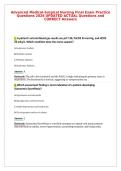
Advanced Medical-Surgical Nursing Final Exam Practice
Questions 2026 UPDATED ACTUAL Questions and
CORRECT Answers
1. A patient’s arterial blood gas results are pH 7.30, PaCO2 55 mm Hg, and HCO3
24 mEq/L. Which condition does the nurse suspect?
A. Respiratory Acidosis
B. Metabolic Acidosis
C. Metabolic Alkalosis
D. Respiratory Alkalosis
Answer: A
Rationale: The pH is low (acidosis) and the PaCO2 is high, indicating the primary cause is
respiratory. The bicarbonate is normal, suggesting no compensation yet.
2. Which assessment finding is most indicative of a patient developing
Autonomic Dysreflexia?
A. Hypotension and tachycardia
B. Hyperglycemia and fruity breath
C. Sudden hypertension and bradycardia
D. Flaccid paralysis and loss of reflexes
Answer: C
Rationale: Autonomic Dysreflexia is a medical emergency in spinal cord injury patients
characterized by sudden, severe hypertension, a pounding headache, and bradycardia.
,3. The nurse is caring for a patient on a mechanical ventilator. The high-pressure
alarm sounds. What is the most likely cause?
A. Disconnection of the ventilator tubing
B. The patient needs suctioning due to secretions
C. A leak in the endotracheal tube cuff
D. The patient has stopped breathing spontaneously
Answer: B
Rationale: High-pressure alarms are triggered by increased resistance, such as secretions,
biting the tube, or kinking. Low-pressure alarms indicate disconnections or leaks.
4. In the emergent phase of a burn injury, what is the primary goal of nursing
care?
A. Infection prevention
B. Emotional counseling
C. Nutritional support
D. Fluid resuscitation
Answer: D
Rationale: During the first 24-48 hours (emergent phase), preventing hypovolemic shock
through aggressive fluid resuscitation is the highest priority.
5. A patient with a head injury has a Glasgow Coma Scale score of 7. How should
the nurse interpret this result?
A. The patient is fully alert and oriented
B. The patient has a minor head injury
C. The patient has moderate neurological impairment
D. The patient is in a coma and requires airway protection
Answer: D
Rationale: A GCS score of 8 or less is generally accepted as the definition of a coma and
often necessitates intubation to protect the airway.
, 6. Which medication is the priority for a patient experiencing a hypertensive
crisis with evidence of target organ damage?
A. Oral Lisinopril
B. Intravenous Sodium Nitroprusside
C. Sublingual Nitroglycerin
D. Oral Amlodipine
Answer: B
Rationale: Hypertensive emergencies require immediate, controlled reduction of blood
pressure using intravenous vasodilators like Sodium Nitroprusside.
7. The nurse is monitoring a patient with Acute Respiratory Distress Syndrome
(ARDS). Which positioning strategy is often used to improve oxygenation?
A. High-Fowler’s position
B. Trendelenburg position
C. Supine positioning
D. Prone positioning
Answer: D
Rationale: Prone positioning helps recruit collapsed alveoli in the posterior lung fields and
improves ventilation-perfusion matching in ARDS patients.
8. A patient with Chronic Kidney Disease has a serum potassium level of 6.8
mEq/L. Which ECG change should the nurse expect to see?
A. ST-segment depression
B. Prominent U waves
C. Prolonged QT interval
D. Tall, peaked T waves
Answer: D
Rationale: Hyperkalemia (potassium > 5.0) typically causes tall, peaked T waves. If left
untreated, it can progress to wide QRS complexes and cardiac arrest.
Questions 2026 UPDATED ACTUAL Questions and
CORRECT Answers
1. A patient’s arterial blood gas results are pH 7.30, PaCO2 55 mm Hg, and HCO3
24 mEq/L. Which condition does the nurse suspect?
A. Respiratory Acidosis
B. Metabolic Acidosis
C. Metabolic Alkalosis
D. Respiratory Alkalosis
Answer: A
Rationale: The pH is low (acidosis) and the PaCO2 is high, indicating the primary cause is
respiratory. The bicarbonate is normal, suggesting no compensation yet.
2. Which assessment finding is most indicative of a patient developing
Autonomic Dysreflexia?
A. Hypotension and tachycardia
B. Hyperglycemia and fruity breath
C. Sudden hypertension and bradycardia
D. Flaccid paralysis and loss of reflexes
Answer: C
Rationale: Autonomic Dysreflexia is a medical emergency in spinal cord injury patients
characterized by sudden, severe hypertension, a pounding headache, and bradycardia.
,3. The nurse is caring for a patient on a mechanical ventilator. The high-pressure
alarm sounds. What is the most likely cause?
A. Disconnection of the ventilator tubing
B. The patient needs suctioning due to secretions
C. A leak in the endotracheal tube cuff
D. The patient has stopped breathing spontaneously
Answer: B
Rationale: High-pressure alarms are triggered by increased resistance, such as secretions,
biting the tube, or kinking. Low-pressure alarms indicate disconnections or leaks.
4. In the emergent phase of a burn injury, what is the primary goal of nursing
care?
A. Infection prevention
B. Emotional counseling
C. Nutritional support
D. Fluid resuscitation
Answer: D
Rationale: During the first 24-48 hours (emergent phase), preventing hypovolemic shock
through aggressive fluid resuscitation is the highest priority.
5. A patient with a head injury has a Glasgow Coma Scale score of 7. How should
the nurse interpret this result?
A. The patient is fully alert and oriented
B. The patient has a minor head injury
C. The patient has moderate neurological impairment
D. The patient is in a coma and requires airway protection
Answer: D
Rationale: A GCS score of 8 or less is generally accepted as the definition of a coma and
often necessitates intubation to protect the airway.
, 6. Which medication is the priority for a patient experiencing a hypertensive
crisis with evidence of target organ damage?
A. Oral Lisinopril
B. Intravenous Sodium Nitroprusside
C. Sublingual Nitroglycerin
D. Oral Amlodipine
Answer: B
Rationale: Hypertensive emergencies require immediate, controlled reduction of blood
pressure using intravenous vasodilators like Sodium Nitroprusside.
7. The nurse is monitoring a patient with Acute Respiratory Distress Syndrome
(ARDS). Which positioning strategy is often used to improve oxygenation?
A. High-Fowler’s position
B. Trendelenburg position
C. Supine positioning
D. Prone positioning
Answer: D
Rationale: Prone positioning helps recruit collapsed alveoli in the posterior lung fields and
improves ventilation-perfusion matching in ARDS patients.
8. A patient with Chronic Kidney Disease has a serum potassium level of 6.8
mEq/L. Which ECG change should the nurse expect to see?
A. ST-segment depression
B. Prominent U waves
C. Prolonged QT interval
D. Tall, peaked T waves
Answer: D
Rationale: Hyperkalemia (potassium > 5.0) typically causes tall, peaked T waves. If left
untreated, it can progress to wide QRS complexes and cardiac arrest.

