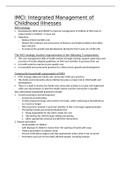
IMCI: Integrated Management of
Childhood Illnesses
IMCI strategy
Developed by WHO and UNICEF to improve management of children at PHC level to
reduce death in children <5 years old
Objectives
Reduce infant mortality rate
Reduce the incidence and seriousness of illnesses and health problems that affect
boys and girls
To improve the growth and development during the first 5 years of a child’s life
The IMCI strategy involves improvements in the following 3 components:
The case management skills of health workers through training, support supervision and
provision of locally adopted guidelines on IMCI and activities to promote their use
In health systems requires to give quality care
In household and community practices for child survival, growth and development
Community household components of IMCI
IMCI strategy addresses family and community child-care practices
The family and community where children live plays a major role in child health and
development
There is a need to involve the family and community actively so to plan and implement
child-care interventions in both the health system and the community in parallel
Key community household practices include:
1. Growth promotion and development
Exclusively breastfeeding
Freshly prepared energy and nutrient rich foods, while continuing to breastfeed up
to 2 years or longer
Micronutrients (vitamin A and iron) whether in diet or through supplementation
Promoting mental and social development by:
Being responsible for the child’s needs for care
Stimulating the child through talking and playing
Other appropriate physical and affective interactions
2. Disease prevention
Immunisation of children
Safe disposal of children’s faeces then the washing of hands with soap
Malaria prevention is endemic areas
Prevent child abuse/neglect and take appropriate action when it has occurred
Prevention and care for HIV/AIDS affected people, including orphans
Childhood Illnesses
IMCI strategy
Developed by WHO and UNICEF to improve management of children at PHC level to
reduce death in children <5 years old
Objectives
Reduce infant mortality rate
Reduce the incidence and seriousness of illnesses and health problems that affect
boys and girls
To improve the growth and development during the first 5 years of a child’s life
The IMCI strategy involves improvements in the following 3 components:
The case management skills of health workers through training, support supervision and
provision of locally adopted guidelines on IMCI and activities to promote their use
In health systems requires to give quality care
In household and community practices for child survival, growth and development
Community household components of IMCI
IMCI strategy addresses family and community child-care practices
The family and community where children live plays a major role in child health and
development
There is a need to involve the family and community actively so to plan and implement
child-care interventions in both the health system and the community in parallel
Key community household practices include:
1. Growth promotion and development
Exclusively breastfeeding
Freshly prepared energy and nutrient rich foods, while continuing to breastfeed up
to 2 years or longer
Micronutrients (vitamin A and iron) whether in diet or through supplementation
Promoting mental and social development by:
Being responsible for the child’s needs for care
Stimulating the child through talking and playing
Other appropriate physical and affective interactions
2. Disease prevention
Immunisation of children
Safe disposal of children’s faeces then the washing of hands with soap
Malaria prevention is endemic areas
Prevent child abuse/neglect and take appropriate action when it has occurred
Prevention and care for HIV/AIDS affected people, including orphans