

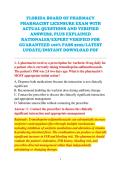
FLORIDA BOARD OF PHARMACY
PHARMACIST LICENSURE EXAM WITH
ACTUAL QUESTIONS AND VERIFIED
ANSWERS, PLUS EXPLAINED
RATIONALES/EXPERT VERIFIED FOR
GUARANTEED 100% PASS 2026/LATEST
UPDATE/INSTANT DOWNLOAD PDF
1. A pharmacist receives a prescription for warfarin 10 mg daily for
a patient who is currently taking trimethoprim-sulfamethoxazole.
The patient's INR was 2.4 two days ago. What is the pharmacist's
MOST appropriate initial action?
A. Dispense both medications because the interaction is not clinically
significant
B. Recommend doubling the warfarin dose during antibiotic therapy
C. Contact the prescriber to discuss the clinically significant interaction
and appropriate management
D. Substitute amoxicillin without contacting the prescriber
Answer: C. Contact the prescriber to discuss the clinically
significant interaction and appropriate management
Rationale: Trimethoprim-sulfamethoxazole can substantially increase
warfarin's anticoagulant effect through multiple mechanisms,
including inhibition of warfarin metabolism and alteration of vitamin
K-producing intestinal flora. The combination can produce a clinically
significant increase in INR and bleeding risk. The pharmacist should
evaluate the patient's indication, INR history, bleeding risk, and
prescriber-directed management rather than independently
substituting or changing therapy.
1
,2. A patient with type 2 diabetes takes metformin and is prescribed
glyburide. Which counseling point is MOST important regarding
glyburide?
A. It commonly causes severe constipation
B. It can cause hypoglycemia, particularly when meals are skipped
C. It should always be taken at bedtime
D. It causes predictable hyperkalemia
Answer: B. It can cause hypoglycemia, particularly when meals are
skipped
Rationale: Glyburide is a sulfonylurea that stimulates pancreatic
insulin secretion regardless of the prevailing glucose concentration.
Consequently, hypoglycemia is a major adverse effect. Patients should
understand the importance of consistent meals and recognize
symptoms such as sweating, tremor, palpitations, hunger, confusion,
and weakness.
3. A prescription is presented for amoxicillin 500 mg three times
daily. The patient reports a history of anaphylaxis to penicillin.
What should the pharmacist do?
A. Dispense the medication because amoxicillin is chemically different
from penicillin G
B. Dispense half the dose
C. Contact the prescriber before dispensing
D. Tell the patient to take diphenhydramine with each dose
Answer: C. Contact the prescriber before dispensing
Rationale: A documented history of anaphylaxis to a penicillin
represents a serious immediate hypersensitivity reaction. Amoxicillin is
a penicillin-class beta-lactam and can cause a potentially life-
2
,threatening reaction. The pharmacist should withhold dispensing until
the prescriber evaluates an appropriate alternative.
4. A patient taking lisinopril develops facial swelling and difficulty
breathing. Which adverse drug reaction is MOST likely?
A. Angioedema
B. Stevens-Johnson syndrome
C. Serotonin syndrome
D. Red-man syndrome
Answer: A. Angioedema
Rationale: ACE inhibitors such as lisinopril can cause bradykinin-
mediated angioedema. Facial, lip, tongue, or airway swelling can
progress rapidly to life-threatening airway obstruction. This is an
emergency requiring immediate medical evaluation, and the ACE
inhibitor should generally be discontinued.
5. A pharmacist calculates a patient's creatinine clearance before
determining an appropriate dose of a renally eliminated medication.
Which information is generally required for the Cockcroft-Gault
calculation?
A. Serum creatinine, age, weight, and sex
B. Hemoglobin, sodium, potassium, and chloride
C. AST, ALT, bilirubin, and albumin
D. INR, PT, PTT, and platelet count
Answer: A. Serum creatinine, age, weight, and sex
Rationale: The Cockcroft-Gault equation estimates creatinine
clearance using age, body weight, serum creatinine, and a sex-related
adjustment. Pharmacists frequently use the estimate when evaluating
3
, renal dosing for medications whose dosing recommendations are
based on renal function.
6. A patient taking digoxin presents with nausea, vomiting,
confusion, and yellow-green visual disturbances. The pharmacist
should suspect:
A. Digoxin toxicity
B. Acetaminophen toxicity
C. Lithium withdrawal
D. Metformin-associated lactic acidosis
Answer: A. Digoxin toxicity
Rationale: Digoxin toxicity can produce gastrointestinal symptoms,
neurologic changes, visual disturbances, and potentially dangerous
cardiac dysrhythmias. Risk increases with renal impairment, advanced
age, electrolyte abnormalities—especially hypokalemia—and excessive
dosing. The pharmacist should urgently evaluate the situation and
communicate with the prescriber.
7. Which medication is classified as a Schedule II controlled
substance under federal law?
A. Alprazolam
B. Lorazepam
C. Methylphenidate
D. Pregabalin
Answer: C. Methylphenidate
Rationale: Methylphenidate is a Schedule II controlled substance
because of its accepted medical use together with a significant
4
PHARMACIST LICENSURE EXAM WITH
ACTUAL QUESTIONS AND VERIFIED
ANSWERS, PLUS EXPLAINED
RATIONALES/EXPERT VERIFIED FOR
GUARANTEED 100% PASS 2026/LATEST
UPDATE/INSTANT DOWNLOAD PDF
1. A pharmacist receives a prescription for warfarin 10 mg daily for
a patient who is currently taking trimethoprim-sulfamethoxazole.
The patient's INR was 2.4 two days ago. What is the pharmacist's
MOST appropriate initial action?
A. Dispense both medications because the interaction is not clinically
significant
B. Recommend doubling the warfarin dose during antibiotic therapy
C. Contact the prescriber to discuss the clinically significant interaction
and appropriate management
D. Substitute amoxicillin without contacting the prescriber
Answer: C. Contact the prescriber to discuss the clinically
significant interaction and appropriate management
Rationale: Trimethoprim-sulfamethoxazole can substantially increase
warfarin's anticoagulant effect through multiple mechanisms,
including inhibition of warfarin metabolism and alteration of vitamin
K-producing intestinal flora. The combination can produce a clinically
significant increase in INR and bleeding risk. The pharmacist should
evaluate the patient's indication, INR history, bleeding risk, and
prescriber-directed management rather than independently
substituting or changing therapy.
1
,2. A patient with type 2 diabetes takes metformin and is prescribed
glyburide. Which counseling point is MOST important regarding
glyburide?
A. It commonly causes severe constipation
B. It can cause hypoglycemia, particularly when meals are skipped
C. It should always be taken at bedtime
D. It causes predictable hyperkalemia
Answer: B. It can cause hypoglycemia, particularly when meals are
skipped
Rationale: Glyburide is a sulfonylurea that stimulates pancreatic
insulin secretion regardless of the prevailing glucose concentration.
Consequently, hypoglycemia is a major adverse effect. Patients should
understand the importance of consistent meals and recognize
symptoms such as sweating, tremor, palpitations, hunger, confusion,
and weakness.
3. A prescription is presented for amoxicillin 500 mg three times
daily. The patient reports a history of anaphylaxis to penicillin.
What should the pharmacist do?
A. Dispense the medication because amoxicillin is chemically different
from penicillin G
B. Dispense half the dose
C. Contact the prescriber before dispensing
D. Tell the patient to take diphenhydramine with each dose
Answer: C. Contact the prescriber before dispensing
Rationale: A documented history of anaphylaxis to a penicillin
represents a serious immediate hypersensitivity reaction. Amoxicillin is
a penicillin-class beta-lactam and can cause a potentially life-
2
,threatening reaction. The pharmacist should withhold dispensing until
the prescriber evaluates an appropriate alternative.
4. A patient taking lisinopril develops facial swelling and difficulty
breathing. Which adverse drug reaction is MOST likely?
A. Angioedema
B. Stevens-Johnson syndrome
C. Serotonin syndrome
D. Red-man syndrome
Answer: A. Angioedema
Rationale: ACE inhibitors such as lisinopril can cause bradykinin-
mediated angioedema. Facial, lip, tongue, or airway swelling can
progress rapidly to life-threatening airway obstruction. This is an
emergency requiring immediate medical evaluation, and the ACE
inhibitor should generally be discontinued.
5. A pharmacist calculates a patient's creatinine clearance before
determining an appropriate dose of a renally eliminated medication.
Which information is generally required for the Cockcroft-Gault
calculation?
A. Serum creatinine, age, weight, and sex
B. Hemoglobin, sodium, potassium, and chloride
C. AST, ALT, bilirubin, and albumin
D. INR, PT, PTT, and platelet count
Answer: A. Serum creatinine, age, weight, and sex
Rationale: The Cockcroft-Gault equation estimates creatinine
clearance using age, body weight, serum creatinine, and a sex-related
adjustment. Pharmacists frequently use the estimate when evaluating
3
, renal dosing for medications whose dosing recommendations are
based on renal function.
6. A patient taking digoxin presents with nausea, vomiting,
confusion, and yellow-green visual disturbances. The pharmacist
should suspect:
A. Digoxin toxicity
B. Acetaminophen toxicity
C. Lithium withdrawal
D. Metformin-associated lactic acidosis
Answer: A. Digoxin toxicity
Rationale: Digoxin toxicity can produce gastrointestinal symptoms,
neurologic changes, visual disturbances, and potentially dangerous
cardiac dysrhythmias. Risk increases with renal impairment, advanced
age, electrolyte abnormalities—especially hypokalemia—and excessive
dosing. The pharmacist should urgently evaluate the situation and
communicate with the prescriber.
7. Which medication is classified as a Schedule II controlled
substance under federal law?
A. Alprazolam
B. Lorazepam
C. Methylphenidate
D. Pregabalin
Answer: C. Methylphenidate
Rationale: Methylphenidate is a Schedule II controlled substance
because of its accepted medical use together with a significant
4

