IHUMAN
CLINICAL
CASE
REPORT
Advanced Health
Assessment & Clinical
Reasoning
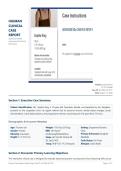
Patient: Sophia King |
79 Y/O Female
Case ID: IH-2026-SK-7911
Date: August 15, 2026
Section 1: Executive Case Summary
Patient Identification: Ms. Sophia King, a 79-year-old Caucasian female, accompanied by her daughter,
presents to the outpatient clinic via urgent referral due to acute-on-chronic mental status changes, acute
disorientation, visual hallucinations, and progressive memory worsening over the past 48 to 72 hours.
Demographics & Encounter Metadata
Age: 79 years old Weight: 110.0 lbs (50.0 kg) Setting: Outpatient Geriatric
Gender: Female BMI: 18.9 kg/m² Clinic
Ethnicity: Caucasian (Underweight/Borderline) Primary Informant: Daughter
Height: 5′ 4″ (163 cm) Vitals: HR 104, BP 102/64, RR (Reliable)
20, SpO2 96% Code Status: Full Code
Temp: 99.8°F (37.7°C) Temporal Allergies: Sulfa (Rash)
Section 2: Encounter Primary Learning Objectives
This interactive clinical case is designed to evaluate advanced practice nursing and clinical reasoning skills across
iHuman Case Report: Sophia King | Case ID: IH-2026-SK-7911 Page 1 of 17
,five core domains:
1. Differential Diagnosis of Acute Encephalopathy: Distinguish between primary neurodegenerative dementia, acute
delirium secondary to systemic illness, and metabolic/medication-induced encephalopathy in a vulnerable geriatric host.
2. Structured Geriatric History Acquisition: Execute a targeted, informant-assisted history using standardized operational
frameworks (OLD-CARTS) to establish precise temporal onset, baseline functional status, and toxicological exposures.
3. Evidence-Based Multi-System Examination: Apply specialized clinical bedside maneuvers (including mini-cognitive
scoring, Confusion Assessment Method [CAM], and focused neurological/urological physical exams) to detect subtle
organic pathology.
4. Diagnostic Synthesis & Lab Interpretation: Interpret emergency laboratory panels, geriatric urinalysis, inflammatory
markers, and neuroimaging modalities to isolate the primary triggers of delirium.
5. Holistic Management & EHR Documentation: Formulate an evidence-based, pharmacologically safe inpatient
management plan including fluid resuscitation, antimicrobial stewardship, avoidance of inappropriate medications (Beers
Criteria), and clear discharge planning.
CLINICAL PEARL: DELIRIUM VS. DEMENTIA
Delirium is a medical emergency characterized by acute onset, fluctuating course, inattention, and altered level of
consciousness. Unlike dementia, which is insidious and chronic, delirium is frequently reversible if the underlying
organic etiology (such as infection, dehydration, or electrolyte imbalance) is rapidly identified and treated.
iHuman Case Report: Sophia King | Case ID: IH-2026-SK-7911 Page 2 of 17
, COMPREHENSIVE PATIENT HISTORY LOG Patient: Sophia King
Interview Question Analysis & Clinical Rationales (Part 1)
DOB: 04/12/1947
Section 3: Structured Clinical Interview Log
Below is the structured transcript of essential questions asked during the iHuman patient simulation, detailing
responses from the patient and her primary caregiver (daughter), along with the diagnostic rationale for each
inquiry.
# INTERVIEW QUESTION (IHUMAN) PATIENT / INFORMANT RESPONSE CLINICAL RATIONALE
1 "What brings you to the clinic today?" Daughter: "My mother has become Establishes chief complaint;
terribly confused over the last two days. highlights acute onset of
She didn't recognize her room yesterday confusion and visual
and was seeing bugs on the wall that hallucinations characteristic
weren't there." of delirium.
2 "How fast did these changes in her Daughter: "It was very sudden. She was Differentiates acute
memory and behavior begin?" fine on Tuesday morning, but by encephalopathy (hours/days)
Wednesday evening she was disoriented, from chronic
calling me by her sister's name." neurodegenerative decline
(months/years).
3 "Does her confusion stay the same, or Daughter: "It fluctuates wildly. In the Assesses for the classic
does it come and go?" morning she seems almost normal, but by fluctuating course and
late afternoon and evening she gets "sundowning" pattern
severely agitated and confused." characteristic of delirium
superimposed on dementia.
4 "Has she had any fever, chills, or Daughter: "She felt warm to touch last Screens for infectious
sweating?" night, and she had mild night sweats, but etiologies (e.g., urinary tract
we didn't take her temperature." infection, pneumonia,
bacteremia) triggering acute
mental changes.
5 "Have you noticed any changes in her Daughter: "Yes! She's been going to the Identifies classic lower urinary
urination, such as frequency, urgency, or bathroom twice as often, complained of tract symptoms (LUTS)
foul odor?" burning once on Tuesday, and her urine pointing toward a urinary
smells very strong." tract infection (UTI) as the
primary cause.
6 "Has she had any cough, shortness of Daughter: "No cough, no chest pain. Her Evaluates lower respiratory
breath, or chest pain?" breathing seems slightly faster than usual tract infection (pneumonia)
when she's confused, but no wheezing." or cardiac ischemia as
potential drivers of delirium.
CRITICAL DIAGNOSTIC ALERT
Elderly patients frequently present with non-specific functional or cognitive decline rather than classic localized
symptoms (such as high fever or flank pain) during severe acute infections.
iHuman Case Report: Sophia King | Case ID: IH-2026-SK-7911 Page 3 of 17
CLINICAL
CASE
REPORT
Advanced Health
Assessment & Clinical
Reasoning
Patient: Sophia King |
79 Y/O Female
Case ID: IH-2026-SK-7911
Date: August 15, 2026
Section 1: Executive Case Summary
Patient Identification: Ms. Sophia King, a 79-year-old Caucasian female, accompanied by her daughter,
presents to the outpatient clinic via urgent referral due to acute-on-chronic mental status changes, acute
disorientation, visual hallucinations, and progressive memory worsening over the past 48 to 72 hours.
Demographics & Encounter Metadata
Age: 79 years old Weight: 110.0 lbs (50.0 kg) Setting: Outpatient Geriatric
Gender: Female BMI: 18.9 kg/m² Clinic
Ethnicity: Caucasian (Underweight/Borderline) Primary Informant: Daughter
Height: 5′ 4″ (163 cm) Vitals: HR 104, BP 102/64, RR (Reliable)
20, SpO2 96% Code Status: Full Code
Temp: 99.8°F (37.7°C) Temporal Allergies: Sulfa (Rash)
Section 2: Encounter Primary Learning Objectives
This interactive clinical case is designed to evaluate advanced practice nursing and clinical reasoning skills across
iHuman Case Report: Sophia King | Case ID: IH-2026-SK-7911 Page 1 of 17
,five core domains:
1. Differential Diagnosis of Acute Encephalopathy: Distinguish between primary neurodegenerative dementia, acute
delirium secondary to systemic illness, and metabolic/medication-induced encephalopathy in a vulnerable geriatric host.
2. Structured Geriatric History Acquisition: Execute a targeted, informant-assisted history using standardized operational
frameworks (OLD-CARTS) to establish precise temporal onset, baseline functional status, and toxicological exposures.
3. Evidence-Based Multi-System Examination: Apply specialized clinical bedside maneuvers (including mini-cognitive
scoring, Confusion Assessment Method [CAM], and focused neurological/urological physical exams) to detect subtle
organic pathology.
4. Diagnostic Synthesis & Lab Interpretation: Interpret emergency laboratory panels, geriatric urinalysis, inflammatory
markers, and neuroimaging modalities to isolate the primary triggers of delirium.
5. Holistic Management & EHR Documentation: Formulate an evidence-based, pharmacologically safe inpatient
management plan including fluid resuscitation, antimicrobial stewardship, avoidance of inappropriate medications (Beers
Criteria), and clear discharge planning.
CLINICAL PEARL: DELIRIUM VS. DEMENTIA
Delirium is a medical emergency characterized by acute onset, fluctuating course, inattention, and altered level of
consciousness. Unlike dementia, which is insidious and chronic, delirium is frequently reversible if the underlying
organic etiology (such as infection, dehydration, or electrolyte imbalance) is rapidly identified and treated.
iHuman Case Report: Sophia King | Case ID: IH-2026-SK-7911 Page 2 of 17
, COMPREHENSIVE PATIENT HISTORY LOG Patient: Sophia King
Interview Question Analysis & Clinical Rationales (Part 1)
DOB: 04/12/1947
Section 3: Structured Clinical Interview Log
Below is the structured transcript of essential questions asked during the iHuman patient simulation, detailing
responses from the patient and her primary caregiver (daughter), along with the diagnostic rationale for each
inquiry.
# INTERVIEW QUESTION (IHUMAN) PATIENT / INFORMANT RESPONSE CLINICAL RATIONALE
1 "What brings you to the clinic today?" Daughter: "My mother has become Establishes chief complaint;
terribly confused over the last two days. highlights acute onset of
She didn't recognize her room yesterday confusion and visual
and was seeing bugs on the wall that hallucinations characteristic
weren't there." of delirium.
2 "How fast did these changes in her Daughter: "It was very sudden. She was Differentiates acute
memory and behavior begin?" fine on Tuesday morning, but by encephalopathy (hours/days)
Wednesday evening she was disoriented, from chronic
calling me by her sister's name." neurodegenerative decline
(months/years).
3 "Does her confusion stay the same, or Daughter: "It fluctuates wildly. In the Assesses for the classic
does it come and go?" morning she seems almost normal, but by fluctuating course and
late afternoon and evening she gets "sundowning" pattern
severely agitated and confused." characteristic of delirium
superimposed on dementia.
4 "Has she had any fever, chills, or Daughter: "She felt warm to touch last Screens for infectious
sweating?" night, and she had mild night sweats, but etiologies (e.g., urinary tract
we didn't take her temperature." infection, pneumonia,
bacteremia) triggering acute
mental changes.
5 "Have you noticed any changes in her Daughter: "Yes! She's been going to the Identifies classic lower urinary
urination, such as frequency, urgency, or bathroom twice as often, complained of tract symptoms (LUTS)
foul odor?" burning once on Tuesday, and her urine pointing toward a urinary
smells very strong." tract infection (UTI) as the
primary cause.
6 "Has she had any cough, shortness of Daughter: "No cough, no chest pain. Her Evaluates lower respiratory
breath, or chest pain?" breathing seems slightly faster than usual tract infection (pneumonia)
when she's confused, but no wheezing." or cardiac ischemia as
potential drivers of delirium.
CRITICAL DIAGNOSTIC ALERT
Elderly patients frequently present with non-specific functional or cognitive decline rather than classic localized
symptoms (such as high fever or flank pain) during severe acute infections.
iHuman Case Report: Sophia King | Case ID: IH-2026-SK-7911 Page 3 of 17