

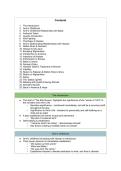
Contents
1. The Introduction
2. Amir’s Childhood
3. Amir’s Childhood Relationship with Baba
4. Authorial Talent
5. Assef’s Introduction
6. Kite Fighting
7. The Rape of Hassan
8. Amir’s Deteriorating Relationships with Hassan
9. Rahim Khan & Homaira
10.Hassan & Ali Leave
11.Escaping Afghanistan
12.Introduction to America
13.Injections of Hassan
14.Introduction to Soraya
15.Baba’s Cancer
16.Soraya’s Story
17.General Taheri’s Treatment of Women
18.Infertility
19.Return to Pakistan & Rahim Khan’s Story
20.Return to Afghanistan
21.Kabul
22.The Taliban (p248)
23.Meeting with Assef & Saving Sohrab
24.Sohrab’s Suicide
25.Back in America & Hope
The Introduction
● The start of ‘The Kite Runner’ highlights the significance of the “winter of 1975” to
the narrative and Amir’s life
○ Narrative significance - mentioned immediately, and will be a recurring motif
throughout the play
○ Significance to Amir’s life - dictates his personality and self-loathing as a
child and an adult
● It also establishes the theme of guilt and atonement
○ “My past of unatoned sins”
● Self-loathing is established
○ “I became what I am today” - dehumanises himself
○ Key theme of being incredibly harsh on himself
Amir’s Childhood
● Amir’s childhood of playing with Hassan is introduced
● Their power dynamic is immediately established
○ “We spoke our first words”
○ “Mine was Baba.”
○ “His was Amir. My name.”
○ Establishes Hassan’s ultimate dedication to Amir, and Amir’s ultimate
, dedication to his father
● Racial tensions are displayed
○ “Hazara”
○ Ali called “flat-nosed” because of their “characteristic Hazara Mongoloid
features”; the inescapable manifestation of racial division
● Sanaubar is introduced
○ Cruel - theme of atonement for her is introduced later in the play
○ Hassan’s birth is presented as painless, establishing Hassan’s
characteristic inability to cause pain
○ Racial description of Hassan is introduced before his character is even
established - primacy of ethnicity over personality
Amir’s Childhood Relationship with Baba
● Baba’s personality as a dominating “Mr Hurricane” is established
○ Amir’s childhood misery
○ Fighting for his father’s love
● Baba’s orphanage project displays his guilt (which we discover later in the novel),
and also Amir’s complex mix of hatred and pride with his father.
● Amir’s childhood insufficiency is detailed
○ Love for poetry
○ “Marrying a poet was one thing, but fathering a son who preferred burying
his face in poetry books to hunting…”
● Amir is horrified at the death of a “chapandaz” and cries on the way home
● He overhears a conversation between Rahim Khan and Baba, where Rahim Khan
attempts to convince Baba that nothing is wrong with Amir just because he
“doesn’t have a mean streak”
○ Baba’s cruelty and disconnection with his son; “if I hadn’t seen the doctor
pull him out of my wife, I’d never believe he’s my son.”
Amir’s Authorial Talent
● Amir’s authorial talent is introduced after an anecdote about Baba and Ali growing
up together, where “in none of his stories did Baba ever refer to Ali as his friend.”
● Amir exploits Hassan’s illiteracy
○ “When it comes to words, Hassan is an imbecile”
○ Contrasts Soraya later on - his childhood cruelty, which he didn’t know any
better than due to ethnic divides, ends up being one of his key regrets
● Amir makes up a story, and Hassan loves it
○ But Hassan criticises it, and the frequently injected racism appears; “what
does he know, that illiterate Hazara?”
Assef’s Introduction
● Assef is introduced after the 1973 Coup, which is the start of Afghanistan’s
troubles.
● He is a microcosm of the oppressive regimes to come, targeting minorities and
eventually becoming a leader of the Taliban.
● Assef “terrorises the Wazir Akbar Khan district” with his “brass knuckles” and
sycophant friends
● He is racist and cruel
1. The Introduction
2. Amir’s Childhood
3. Amir’s Childhood Relationship with Baba
4. Authorial Talent
5. Assef’s Introduction
6. Kite Fighting
7. The Rape of Hassan
8. Amir’s Deteriorating Relationships with Hassan
9. Rahim Khan & Homaira
10.Hassan & Ali Leave
11.Escaping Afghanistan
12.Introduction to America
13.Injections of Hassan
14.Introduction to Soraya
15.Baba’s Cancer
16.Soraya’s Story
17.General Taheri’s Treatment of Women
18.Infertility
19.Return to Pakistan & Rahim Khan’s Story
20.Return to Afghanistan
21.Kabul
22.The Taliban (p248)
23.Meeting with Assef & Saving Sohrab
24.Sohrab’s Suicide
25.Back in America & Hope
The Introduction
● The start of ‘The Kite Runner’ highlights the significance of the “winter of 1975” to
the narrative and Amir’s life
○ Narrative significance - mentioned immediately, and will be a recurring motif
throughout the play
○ Significance to Amir’s life - dictates his personality and self-loathing as a
child and an adult
● It also establishes the theme of guilt and atonement
○ “My past of unatoned sins”
● Self-loathing is established
○ “I became what I am today” - dehumanises himself
○ Key theme of being incredibly harsh on himself
Amir’s Childhood
● Amir’s childhood of playing with Hassan is introduced
● Their power dynamic is immediately established
○ “We spoke our first words”
○ “Mine was Baba.”
○ “His was Amir. My name.”
○ Establishes Hassan’s ultimate dedication to Amir, and Amir’s ultimate
, dedication to his father
● Racial tensions are displayed
○ “Hazara”
○ Ali called “flat-nosed” because of their “characteristic Hazara Mongoloid
features”; the inescapable manifestation of racial division
● Sanaubar is introduced
○ Cruel - theme of atonement for her is introduced later in the play
○ Hassan’s birth is presented as painless, establishing Hassan’s
characteristic inability to cause pain
○ Racial description of Hassan is introduced before his character is even
established - primacy of ethnicity over personality
Amir’s Childhood Relationship with Baba
● Baba’s personality as a dominating “Mr Hurricane” is established
○ Amir’s childhood misery
○ Fighting for his father’s love
● Baba’s orphanage project displays his guilt (which we discover later in the novel),
and also Amir’s complex mix of hatred and pride with his father.
● Amir’s childhood insufficiency is detailed
○ Love for poetry
○ “Marrying a poet was one thing, but fathering a son who preferred burying
his face in poetry books to hunting…”
● Amir is horrified at the death of a “chapandaz” and cries on the way home
● He overhears a conversation between Rahim Khan and Baba, where Rahim Khan
attempts to convince Baba that nothing is wrong with Amir just because he
“doesn’t have a mean streak”
○ Baba’s cruelty and disconnection with his son; “if I hadn’t seen the doctor
pull him out of my wife, I’d never believe he’s my son.”
Amir’s Authorial Talent
● Amir’s authorial talent is introduced after an anecdote about Baba and Ali growing
up together, where “in none of his stories did Baba ever refer to Ali as his friend.”
● Amir exploits Hassan’s illiteracy
○ “When it comes to words, Hassan is an imbecile”
○ Contrasts Soraya later on - his childhood cruelty, which he didn’t know any
better than due to ethnic divides, ends up being one of his key regrets
● Amir makes up a story, and Hassan loves it
○ But Hassan criticises it, and the frequently injected racism appears; “what
does he know, that illiterate Hazara?”
Assef’s Introduction
● Assef is introduced after the 1973 Coup, which is the start of Afghanistan’s
troubles.
● He is a microcosm of the oppressive regimes to come, targeting minorities and
eventually becoming a leader of the Taliban.
● Assef “terrorises the Wazir Akbar Khan district” with his “brass knuckles” and
sycophant friends
● He is racist and cruel

