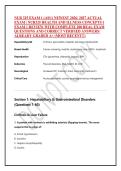
NUR 325 EXAM 1 (ASU) NEWEST 2026/ 2027 ACTUAL
EXAM | NUR325 HEALTH AND ILLNESS CONCEPTS I
EXAM 1 REVIEW WITH COMPLETE 200 REAL EXAM
QUESTIONS AND CORRECT VERIFIED ANSWERS/
ALREADY GRADED A+ (MOST RECENT!!)
Hepatobiliary/GI Cirrhosis, pancreatitis, hepatitis (serology), cholecystitis
Breast Health Cancer screening, mastitis, mastectomy care, HER2+ treatment
Reproductive STIs (gonorrhea, chlamydia, herpes), BPH
Endocrine Thyroid disorders, DKA, SIADH, DI, CKD
Neurological Increased ICP, Cushing's triad, meningitis, Parkinson's
Critical Care Acute pancreatitis, ascites, esophageal varices management
Section 1: Hepatobiliary & Gastrointestinal Disorders
(Questions 1-60)
Cirrhosis & Liver Failure
1. A patient with cirrhosis is exhibiting asterixis (flapping tremor). The nurse
suspects this is a sign of:
A. Portal hypertension
B. Jaundice
C. Hepatic encephalopathy
D. Ascites
,Answer: C. Asterixis is a hallmark sign of hepatic encephalopathy, caused by increased
ammonia levels crossing the blood-brain barrier .
2. A patient with cirrhosis has ascites and dyspnea. What is the priority nursing
assessment?
A. Daily weight
B. Abdominal girth
C. Respiratory status and oxygen saturation
D. Intake and output
Answer: C. Severe ascites can splint the diaphragm, impairing ventilation. Respiratory
compromise is an immediate threat .
3. Which data obtained by the nurse during assessment of a patient with cirrhosis
is of most concern?
A. The patient's hands flap back and forth when arms are extended
B. The patient has ascites and a 2-kg weight gain from the previous day
C. The patient's skin has multiple spider-shaped blood vessels on the abdomen
D. The patient complains of right upper-quadrant pain with abdominal palpation
Answer: A. Asterixis indicates hepatic encephalopathy, which can progress to hepatic
coma .
,4. A patient with cirrhosis and esophageal varices has a new prescription for
propranolol. Which assessment finding best indicates the medication has been
effective?
A. The apical pulse rate is 68 beats/minute
B. Stools test negative for occult blood
C. The patient denies chest pain
D. Blood pressure is less than 140/90 mm Hg
Answer: B. Propranolol reduces portal hypertension and decreases the risk of bleeding
from varices .
5. A patient with advanced cirrhosis is receiving lactulose. Which finding indicates
the medication is effective?
A. The patient is alert and oriented
B. The patient denies nausea or anorexia
C. The patient's bilirubin level decreases
D. The patient has at least one stool daily
Answer: A. Lactulose lowers ammonia levels; an alert and oriented patient indicates
effectiveness .
6. What is the most common cause of acute liver failure?
A. Viral hepatitis
B. Drugs and alcohol (e.g., acetaminophen with alcohol)
, C. Biliary obstruction
D. Genetic disorders
Answer: B. Drugs and alcohol, particularly acetaminophen in combination with alcohol,
are the most common cause of acute liver failure .
7. The nurse is reviewing liver function tests. Which finding indicates hepatitis or
cirrhosis?
A. ALT elevation
B. Decreased ALT
C. Normal ALT
D. Low AST
Answer: A. Alanine aminotransferase (ALT) elevation occurs with hepatitis or cirrhosis .
8. A patient with cirrhosis has low serum albumin. The nurse understands this may
lead to:
A. Ascites
B. Jaundice
C. Portal hypertension
D. Hepatic encephalopathy
Answer: A. Low albumin decreases oncotic pressure, leading to fluid shifting into the
peritoneal cavity.
EXAM | NUR325 HEALTH AND ILLNESS CONCEPTS I
EXAM 1 REVIEW WITH COMPLETE 200 REAL EXAM
QUESTIONS AND CORRECT VERIFIED ANSWERS/
ALREADY GRADED A+ (MOST RECENT!!)
Hepatobiliary/GI Cirrhosis, pancreatitis, hepatitis (serology), cholecystitis
Breast Health Cancer screening, mastitis, mastectomy care, HER2+ treatment
Reproductive STIs (gonorrhea, chlamydia, herpes), BPH
Endocrine Thyroid disorders, DKA, SIADH, DI, CKD
Neurological Increased ICP, Cushing's triad, meningitis, Parkinson's
Critical Care Acute pancreatitis, ascites, esophageal varices management
Section 1: Hepatobiliary & Gastrointestinal Disorders
(Questions 1-60)
Cirrhosis & Liver Failure
1. A patient with cirrhosis is exhibiting asterixis (flapping tremor). The nurse
suspects this is a sign of:
A. Portal hypertension
B. Jaundice
C. Hepatic encephalopathy
D. Ascites
,Answer: C. Asterixis is a hallmark sign of hepatic encephalopathy, caused by increased
ammonia levels crossing the blood-brain barrier .
2. A patient with cirrhosis has ascites and dyspnea. What is the priority nursing
assessment?
A. Daily weight
B. Abdominal girth
C. Respiratory status and oxygen saturation
D. Intake and output
Answer: C. Severe ascites can splint the diaphragm, impairing ventilation. Respiratory
compromise is an immediate threat .
3. Which data obtained by the nurse during assessment of a patient with cirrhosis
is of most concern?
A. The patient's hands flap back and forth when arms are extended
B. The patient has ascites and a 2-kg weight gain from the previous day
C. The patient's skin has multiple spider-shaped blood vessels on the abdomen
D. The patient complains of right upper-quadrant pain with abdominal palpation
Answer: A. Asterixis indicates hepatic encephalopathy, which can progress to hepatic
coma .
,4. A patient with cirrhosis and esophageal varices has a new prescription for
propranolol. Which assessment finding best indicates the medication has been
effective?
A. The apical pulse rate is 68 beats/minute
B. Stools test negative for occult blood
C. The patient denies chest pain
D. Blood pressure is less than 140/90 mm Hg
Answer: B. Propranolol reduces portal hypertension and decreases the risk of bleeding
from varices .
5. A patient with advanced cirrhosis is receiving lactulose. Which finding indicates
the medication is effective?
A. The patient is alert and oriented
B. The patient denies nausea or anorexia
C. The patient's bilirubin level decreases
D. The patient has at least one stool daily
Answer: A. Lactulose lowers ammonia levels; an alert and oriented patient indicates
effectiveness .
6. What is the most common cause of acute liver failure?
A. Viral hepatitis
B. Drugs and alcohol (e.g., acetaminophen with alcohol)
, C. Biliary obstruction
D. Genetic disorders
Answer: B. Drugs and alcohol, particularly acetaminophen in combination with alcohol,
are the most common cause of acute liver failure .
7. The nurse is reviewing liver function tests. Which finding indicates hepatitis or
cirrhosis?
A. ALT elevation
B. Decreased ALT
C. Normal ALT
D. Low AST
Answer: A. Alanine aminotransferase (ALT) elevation occurs with hepatitis or cirrhosis .
8. A patient with cirrhosis has low serum albumin. The nurse understands this may
lead to:
A. Ascites
B. Jaundice
C. Portal hypertension
D. Hepatic encephalopathy
Answer: A. Low albumin decreases oncotic pressure, leading to fluid shifting into the
peritoneal cavity.