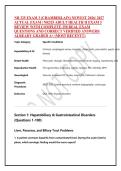
NR 325 EXAM 3 (CHAMBERLAIN) NEWEST 2026/ 2027
ACTUAL EXAM | NR325 ADULT HEALTH II EXAM 3
REVIEW WITH COMPLETE 250 REAL EXAM
QUESTIONS AND CORRECT VERIFIED ANSWERS/
ALREADY GRADED A+ (MOST RECENT!!)
Topic Category Specific Conditions
Cirrhosis, esophageal varices, hepatitis, cholecystitis, pancreatitis, peptic ulcer
Hepatobiliary & GI
disease
Breast Health Fibrocystic changes, fibroadenoma, breast cancer staging, mastectomy care
Reproductive Health STIs (gonorrhea, chlamydia, syphilis, herpes), PID, infertility, BPH
Neurological Seizures, increased ICP, stroke, meningitis, Parkinson's disease
Diagnostic
ERCP, EGD, lumbar puncture, cerebral angiography, cystoscopy
Procedures
Endocrine DKA, HHS, thyroid disorders
Section 1: Hepatobiliary & Gastrointestinal Disorders
(Questions 1-100)
Liver, Pancreas, and Biliary Tract Problems
1. A patient contracts hepatitis from contaminated food. During the acute (icteric)
phase, which serologic finding would the nurse expect?
,A. Antibody to hepatitis D (anti-HDV)
B. Hepatitis B surface antigen (HBsAg)
C. Anti-hepatitis A virus immunoglobulin G (anti-HAV IgG)
D. Anti-hepatitis A virus immunoglobulin M (anti-HAV IgM)
Answer: D. Hepatitis A is transmitted via the fecal-oral route. Anti-HAV IgM appears
during the acute phase of hepatitis A infection. Anti-HAV IgG indicates past infection
and immunity .
2. The nurse is caring for a patient who has just returned to the nursing unit after
an esophagogastroduodenoscopy (EGD). Which action by nursing assistive
personnel requires the RN to intervene?
A. Offering the patient a glass of water
B. Positioning the patient on the right side
C. Checking vital signs every 30 minutes
D. Swabbing the patient's mouth with cold water
Answer: A. After EGD, the patient has a decreased gag reflex and is at risk for
aspiration. The RN should assess for return of the gag reflex before offering fluids .
3. The provider orders an endoscopic retrograde cholangiopancreatography
(ERCP) as soon as possible. Which action should the nurse take first?
A. Place the patient on NPO status
B. Administer sedative medications
C. Ensure the consent form is signed
D. Explain the procedure to the patient
,Answer: A. The patient must be NPO for 8 hours before ERCP; this is the priority initial
action .
4. A patient with cirrhosis is exhibiting asterixis (flapping tremor). The nurse
suspects this is a sign of:
A. Portal hypertension
B. Jaundice
C. Hepatic encephalopathy
D. Ascites
Answer: C. Asterixis is a hallmark sign of hepatic encephalopathy, caused by increased
ammonia levels crossing the blood-brain barrier .
5. A patient with cirrhosis has ascites and dyspnea. What is the priority nursing
assessment?
A. Daily weight
B. Abdominal girth
C. Respiratory status and oxygen saturation
D. Intake and output
Answer: C. Severe ascites can splint the diaphragm, impairing ventilation. Respiratory
compromise is an immediate threat .
, 6. Which data obtained by the nurse during assessment of a patient with cirrhosis
is of most concern?
A. The patient's hands flap back and forth when arms are extended
B. The patient has ascites and a 2-kg weight gain from the previous day
C. The patient's skin has multiple spider-shaped blood vessels on the abdomen
D. The patient complains of right upper-quadrant pain with abdominal palpation
Answer: A. Asterixis indicates hepatic encephalopathy, which can progress to hepatic
coma. The other findings, while concerning, do not indicate an immediate life-
threatening change .
7. A patient with cirrhosis and esophageal varices has a new prescription for
propranolol (Inderal). Which assessment finding best indicates the medication has
been effective?
A. The apical pulse rate is 68 beats/minute
B. Stools test negative for occult blood
C. The patient denies chest pain
D. Blood pressure is less than 140/90 mm Hg
Answer: B. Propranolol reduces portal hypertension and decreases the risk of bleeding
from esophageal varices. The best indicator of effectiveness is the absence of blood in
stools .
8. A patient who has advanced cirrhosis is receiving lactulose. Which finding
indicates the medication is effective?
ACTUAL EXAM | NR325 ADULT HEALTH II EXAM 3
REVIEW WITH COMPLETE 250 REAL EXAM
QUESTIONS AND CORRECT VERIFIED ANSWERS/
ALREADY GRADED A+ (MOST RECENT!!)
Topic Category Specific Conditions
Cirrhosis, esophageal varices, hepatitis, cholecystitis, pancreatitis, peptic ulcer
Hepatobiliary & GI
disease
Breast Health Fibrocystic changes, fibroadenoma, breast cancer staging, mastectomy care
Reproductive Health STIs (gonorrhea, chlamydia, syphilis, herpes), PID, infertility, BPH
Neurological Seizures, increased ICP, stroke, meningitis, Parkinson's disease
Diagnostic
ERCP, EGD, lumbar puncture, cerebral angiography, cystoscopy
Procedures
Endocrine DKA, HHS, thyroid disorders
Section 1: Hepatobiliary & Gastrointestinal Disorders
(Questions 1-100)
Liver, Pancreas, and Biliary Tract Problems
1. A patient contracts hepatitis from contaminated food. During the acute (icteric)
phase, which serologic finding would the nurse expect?
,A. Antibody to hepatitis D (anti-HDV)
B. Hepatitis B surface antigen (HBsAg)
C. Anti-hepatitis A virus immunoglobulin G (anti-HAV IgG)
D. Anti-hepatitis A virus immunoglobulin M (anti-HAV IgM)
Answer: D. Hepatitis A is transmitted via the fecal-oral route. Anti-HAV IgM appears
during the acute phase of hepatitis A infection. Anti-HAV IgG indicates past infection
and immunity .
2. The nurse is caring for a patient who has just returned to the nursing unit after
an esophagogastroduodenoscopy (EGD). Which action by nursing assistive
personnel requires the RN to intervene?
A. Offering the patient a glass of water
B. Positioning the patient on the right side
C. Checking vital signs every 30 minutes
D. Swabbing the patient's mouth with cold water
Answer: A. After EGD, the patient has a decreased gag reflex and is at risk for
aspiration. The RN should assess for return of the gag reflex before offering fluids .
3. The provider orders an endoscopic retrograde cholangiopancreatography
(ERCP) as soon as possible. Which action should the nurse take first?
A. Place the patient on NPO status
B. Administer sedative medications
C. Ensure the consent form is signed
D. Explain the procedure to the patient
,Answer: A. The patient must be NPO for 8 hours before ERCP; this is the priority initial
action .
4. A patient with cirrhosis is exhibiting asterixis (flapping tremor). The nurse
suspects this is a sign of:
A. Portal hypertension
B. Jaundice
C. Hepatic encephalopathy
D. Ascites
Answer: C. Asterixis is a hallmark sign of hepatic encephalopathy, caused by increased
ammonia levels crossing the blood-brain barrier .
5. A patient with cirrhosis has ascites and dyspnea. What is the priority nursing
assessment?
A. Daily weight
B. Abdominal girth
C. Respiratory status and oxygen saturation
D. Intake and output
Answer: C. Severe ascites can splint the diaphragm, impairing ventilation. Respiratory
compromise is an immediate threat .
, 6. Which data obtained by the nurse during assessment of a patient with cirrhosis
is of most concern?
A. The patient's hands flap back and forth when arms are extended
B. The patient has ascites and a 2-kg weight gain from the previous day
C. The patient's skin has multiple spider-shaped blood vessels on the abdomen
D. The patient complains of right upper-quadrant pain with abdominal palpation
Answer: A. Asterixis indicates hepatic encephalopathy, which can progress to hepatic
coma. The other findings, while concerning, do not indicate an immediate life-
threatening change .
7. A patient with cirrhosis and esophageal varices has a new prescription for
propranolol (Inderal). Which assessment finding best indicates the medication has
been effective?
A. The apical pulse rate is 68 beats/minute
B. Stools test negative for occult blood
C. The patient denies chest pain
D. Blood pressure is less than 140/90 mm Hg
Answer: B. Propranolol reduces portal hypertension and decreases the risk of bleeding
from esophageal varices. The best indicator of effectiveness is the absence of blood in
stools .
8. A patient who has advanced cirrhosis is receiving lactulose. Which finding
indicates the medication is effective?