
NR 507 Week 8 Final EXAM Questions & Answers | With 100% Correct
Answers graded A+ (updated 2026) Guaranteed Success!!
Study online at https://quizlet.com/_jtn0ea
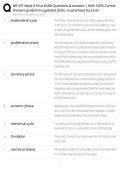
1. endometrial cycle The 28 days of the menstrual cycle as they apply to the events
in the uterus. The endometrial cycle has four subphases: men-
struation, the proliferative phase, and the secretory phase, and
the ischemic phase .
2. proliferative phase The second phase of the uterine (endometrial) cycle, during
which the endometrium (shed off during menstration is rebuilt).
This phase of the cycle is under the control of estrogen, secreted
from the follicle developing in the ovary during this time period.
The proliferative phase typically lasts from day 6 to day 14 of the
menstrual cycle.
3. secretory phase The third phase of the uterin (endometrial) cycle, during which
the rebuilt endometrium is enhanced with glycogen and lipid
stores. The secretory phase is primarily under the controll of
progestone and estrogen (secreted from the copus luteum dur-
ing this time period), adn typically lasts from day 15 to day 28
of the menstrual cycle.
4. ischemic phase Approximately 3 days before menstruation to onset of menstru-
ation. due to the decreased production of estrogen or proges-
terone and the endometrium becomes blood starved
5. menstrual cycle Cycle during which an egg develops and is released from an
ovary and the uterus is prepared to receive a fertilized egg.
6. Ovulation The process of releasing a mature ovum into the fallopian tube
each month
7. uterine prolapse the condition in which the uterus slides from its normal position
in the pelvic cavity and sags into the vagina
, NR 507 Week 8 Final EXAM Questions & Answers | With 100% Correct
Answers graded A+ (updated 2026) Guaranteed Success!!
Study online at https://quizlet.com/_jtn0ea
8. risk factors for uterine pro- menopause, pregnancy, coughing, constipation, obesity, pelvic
lapse floor trauma, vaginal birth, hysterectomy, connective tissue dis-
orders, spina bifida
9. uterine prolapse treatment - kegel exercises
- estrogen therapy
- maintaining a healthy bmi, preventing constipation, treating
chronic cough
- pessary
- surgical option s last resort
10. polycystic ovarian syndrome defined as two of the following three features
- irregular ovulation
-elevated adrogens (testosterone)
- and the appearance of polycystic ovaries on ultrasound
11. differentials for pcos - thyroid dysfunction
- hyperprolactinemia
- congenital adrenal hyperplasia
12. Characteristics associated -metabolic dysfunction
with PCOS - dyslipidemia
- insulin resistance
- obesity
13. polycystic ovarian syndrome (1) diagnosis and education;
treatment (2) lifestyle change - loss of 10% of body weight may help;
(3) birth control pills help with some symptoms;
(4) diabetes medications & dietary treatment may slowly nor-
malize physiology (lower sugar, lower insulin, fewer androgens)
14. testicular cancer
, NR 507 Week 8 Final EXAM Questions & Answers | With 100% Correct
Answers graded A+ (updated 2026) Guaranteed Success!!
Study online at https://quizlet.com/_jtn0ea
malignant tumor in one or both testicles commonly developing
from the germ cells that produce sperm; classified in two groups
according to growth potential
15. conditions that increase risk - being a man between the ages of 20-45
of testicular cancer - cryptochidism (undescended testicle)
- family history
- previous testicle cancer
- white men are more likely
16. symptoms of breast cancer change in the shape or appearance of your breasts, skin or
nipple changes such as dimpling of the skin, Squeeze each
nipple gently to identify any discharge, chest pain (mets to the
lung)
17. signs of premenstrual dys- physical - breast tenderness, abdominal bloating, headache
phoric disorder and swelling of extremities
emotional - depression anger, irritability and fatigue
resolve with menstruation
18. causes of dysfunctional uter- can be due to structural (polyp, malignancies and hyperplasia)
ine bleeding or non structural causes (coagulopathy, ovulatory dysfuction,
endometrial
19. treatment for abnormal uter- - NSAIDS
ine bleeding (reduce prostaglandin, causes vasoconstriction, and decreased
menstrual bleeding)
- Oral contraceptives
- Depo provera
- Levonorgestrel intrauterine device
20.
Answers graded A+ (updated 2026) Guaranteed Success!!
Study online at https://quizlet.com/_jtn0ea
1. endometrial cycle The 28 days of the menstrual cycle as they apply to the events
in the uterus. The endometrial cycle has four subphases: men-
struation, the proliferative phase, and the secretory phase, and
the ischemic phase .
2. proliferative phase The second phase of the uterine (endometrial) cycle, during
which the endometrium (shed off during menstration is rebuilt).
This phase of the cycle is under the control of estrogen, secreted
from the follicle developing in the ovary during this time period.
The proliferative phase typically lasts from day 6 to day 14 of the
menstrual cycle.
3. secretory phase The third phase of the uterin (endometrial) cycle, during which
the rebuilt endometrium is enhanced with glycogen and lipid
stores. The secretory phase is primarily under the controll of
progestone and estrogen (secreted from the copus luteum dur-
ing this time period), adn typically lasts from day 15 to day 28
of the menstrual cycle.
4. ischemic phase Approximately 3 days before menstruation to onset of menstru-
ation. due to the decreased production of estrogen or proges-
terone and the endometrium becomes blood starved
5. menstrual cycle Cycle during which an egg develops and is released from an
ovary and the uterus is prepared to receive a fertilized egg.
6. Ovulation The process of releasing a mature ovum into the fallopian tube
each month
7. uterine prolapse the condition in which the uterus slides from its normal position
in the pelvic cavity and sags into the vagina
, NR 507 Week 8 Final EXAM Questions & Answers | With 100% Correct
Answers graded A+ (updated 2026) Guaranteed Success!!
Study online at https://quizlet.com/_jtn0ea
8. risk factors for uterine pro- menopause, pregnancy, coughing, constipation, obesity, pelvic
lapse floor trauma, vaginal birth, hysterectomy, connective tissue dis-
orders, spina bifida
9. uterine prolapse treatment - kegel exercises
- estrogen therapy
- maintaining a healthy bmi, preventing constipation, treating
chronic cough
- pessary
- surgical option s last resort
10. polycystic ovarian syndrome defined as two of the following three features
- irregular ovulation
-elevated adrogens (testosterone)
- and the appearance of polycystic ovaries on ultrasound
11. differentials for pcos - thyroid dysfunction
- hyperprolactinemia
- congenital adrenal hyperplasia
12. Characteristics associated -metabolic dysfunction
with PCOS - dyslipidemia
- insulin resistance
- obesity
13. polycystic ovarian syndrome (1) diagnosis and education;
treatment (2) lifestyle change - loss of 10% of body weight may help;
(3) birth control pills help with some symptoms;
(4) diabetes medications & dietary treatment may slowly nor-
malize physiology (lower sugar, lower insulin, fewer androgens)
14. testicular cancer
, NR 507 Week 8 Final EXAM Questions & Answers | With 100% Correct
Answers graded A+ (updated 2026) Guaranteed Success!!
Study online at https://quizlet.com/_jtn0ea
malignant tumor in one or both testicles commonly developing
from the germ cells that produce sperm; classified in two groups
according to growth potential
15. conditions that increase risk - being a man between the ages of 20-45
of testicular cancer - cryptochidism (undescended testicle)
- family history
- previous testicle cancer
- white men are more likely
16. symptoms of breast cancer change in the shape or appearance of your breasts, skin or
nipple changes such as dimpling of the skin, Squeeze each
nipple gently to identify any discharge, chest pain (mets to the
lung)
17. signs of premenstrual dys- physical - breast tenderness, abdominal bloating, headache
phoric disorder and swelling of extremities
emotional - depression anger, irritability and fatigue
resolve with menstruation
18. causes of dysfunctional uter- can be due to structural (polyp, malignancies and hyperplasia)
ine bleeding or non structural causes (coagulopathy, ovulatory dysfuction,
endometrial
19. treatment for abnormal uter- - NSAIDS
ine bleeding (reduce prostaglandin, causes vasoconstriction, and decreased
menstrual bleeding)
- Oral contraceptives
- Depo provera
- Levonorgestrel intrauterine device
20.

