

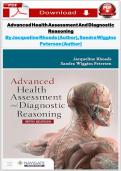
Advanced Health Assessment And Diagnostic
v v v v
Reasoning
v
By Jacqueline Rhoads (Author), Sandra Wiggins
v v v v v
Petersen (Author)
v v
, TABLEOFCONTENTS
➢ Chapter1.AssessmentandClinicalDecisionMaking:AnOverview
v v v v v v v v
➢ Chapter2.GenomicAssessment: InterpretingFindings andFormulatingDifferentialDiagnoses
v v v v v v v v v
➢ Chapter3.Skin
v v
➢ Chapter4.Head,Face,andNeck
v v v v v
➢ Chapter5.TheEye
v v v
➢ Chapter6.Ear,Nose,Mouth,andThroat
v v v v v v
➢ Chapter7.CardiacandPeripheralVascularSystems
v v v v v v
➢ Chapter8.RespiratorySystem
v v v
➢ Chapter9.Breasts
v v
➢ Chapter10.Abdomen
v v
➢ Chapter11.GenitourinarySystem
v v v
➢ Chapter12.MaleReproductiveSystem
v v v v
➢ Chapter13.FemaleReproductiveSystem
v v v v
➢ Chapter14.Musculoskeletal System
v v v
➢ Chapter15.NeurologicalSystem
v v v
➢ Chapter16.NonspecificComplaints
v v v
➢ Chapter17.PsychiatricMentalHealth
v v v v
➢ Chapter18.PediatricPatients
v v v
➢ Chapter19.PregnantPatients
v v v
➢ Chapter20.AssessmentoftheTransgenderorGenderDiverseAdult
v v v v v v v v v
➢ Chapter21.OlderPatients
v v v
➢ Chapter22.PersonsWithDisabilities
v v v v
, ➢ Chapter1.AssessmentandClinicalDecisionMaking:AnOverview
v v v v v v v v
Multiple Choice
v
Identify thechoicethatbestcompletesthestatement oranswers thequestion.
v v v
1. Which typeofclinical decision-making is most reliable?
v v v q v v
A. Intuitive
B. Analytical
C. Experiential
D. Augenblick
2. Whichofthefollowing isfalse?Toobtain adequatehistory, q q v v health-careprovidersmustbe:
A. Methodicalandsystematic
B. Attentivetothe patient’sverbal and nonverballanguage
v q v q
C. Able to accuratelyinterpret thepatient’s responses
v q v q
D. Adept atreadinginto thepatient’s statements
v v q q
3. Essential partsofa health historyinclude all of the following except: q v v q q
A. Chiefcomplaint
B. Historyofthepresent illness v v
C. Currentvitalsigns
D. Alloftheaboveareessential historycomponents
v v v v
4. Whichofthe following is false?Whileperforming thephysical examination, theexaminer mustbeableto:
q v q v q v q
A. Differentiatebetween normal and abnormalfindings q v q
B. Recallknowledgeofarangeofconditionsandtheirassociated signsandsymptoms q q q
C. Recognizehowcertainconditionsaffect the responseto other conditions v q v
D. Foreseeunpredictablefindings
5. The followingis theleast reliablesource of information for diagnosticstatistics: q v q v v
A. Evidence-basedinvestigations
B. Primaryreports ofresearch v
C. Estimation based on aprovider’s experience q v q
D. Published meta-analyses q
6. Thefollowingcan beused to assist in sound clinical decision-making: q v q v q v
A. Algorithmpublished in apeer-reviewed journal article
q v v v v
B. Clinicalpractice guidelines q q
C. Evidence-based research q
D. Allof theabove
v q
7. If a diagnostic studyhas high sensitivity, this indicates a:
q q q v v v v v
A. Highpercentageofpersons withthe given condition willhavean abnormal result v q q v v q
B. Lowpercentage ofpersons with thegiven condition will havean abnormal result q q q v v v
C. Lowlikelihood of normal result inpersons withoutagiven condition
q q v v v v
D. Noneoftheabove
8. If adiagnosticstudyhas highspecificity, thisindicatesa:
q v v v v v
A. Lowpercentageofhealthyindividuals willshowanormalresult v
B. Highpercentage of healthyindividualswill showanormal result
v v q v v v
C. High percentage of individuals with adisorderwillshowanormalresult
q q v v
D. Lowpercentageof individuals withadisorder willshowan abnormalresult q v v
9. Alikelihood ratio above 1indicates that a diagnostictest showing a:
v v v v v v q v v
A. Positiveresultisstronglyassociated withthedisease
v v v
B. Negativeresult is stronglyassociated with absence ofthedisease q q v
C. Positiveresultisweaklyassociatedwiththedisease
D. Negativeresultis weaklyassociated with absence of thedisease v v v v q
, 10. Which of thefollowingclinicalreasoningtoolsisdefinedasevidence-based resource based onmathematical modeling
q q v v v q v v
toexpressthe likelihoodofa conditionin select situations, settings,and/orpatients?
v q v v q v v v
v v v v
Reasoning
v
By Jacqueline Rhoads (Author), Sandra Wiggins
v v v v v
Petersen (Author)
v v
, TABLEOFCONTENTS
➢ Chapter1.AssessmentandClinicalDecisionMaking:AnOverview
v v v v v v v v
➢ Chapter2.GenomicAssessment: InterpretingFindings andFormulatingDifferentialDiagnoses
v v v v v v v v v
➢ Chapter3.Skin
v v
➢ Chapter4.Head,Face,andNeck
v v v v v
➢ Chapter5.TheEye
v v v
➢ Chapter6.Ear,Nose,Mouth,andThroat
v v v v v v
➢ Chapter7.CardiacandPeripheralVascularSystems
v v v v v v
➢ Chapter8.RespiratorySystem
v v v
➢ Chapter9.Breasts
v v
➢ Chapter10.Abdomen
v v
➢ Chapter11.GenitourinarySystem
v v v
➢ Chapter12.MaleReproductiveSystem
v v v v
➢ Chapter13.FemaleReproductiveSystem
v v v v
➢ Chapter14.Musculoskeletal System
v v v
➢ Chapter15.NeurologicalSystem
v v v
➢ Chapter16.NonspecificComplaints
v v v
➢ Chapter17.PsychiatricMentalHealth
v v v v
➢ Chapter18.PediatricPatients
v v v
➢ Chapter19.PregnantPatients
v v v
➢ Chapter20.AssessmentoftheTransgenderorGenderDiverseAdult
v v v v v v v v v
➢ Chapter21.OlderPatients
v v v
➢ Chapter22.PersonsWithDisabilities
v v v v
, ➢ Chapter1.AssessmentandClinicalDecisionMaking:AnOverview
v v v v v v v v
Multiple Choice
v
Identify thechoicethatbestcompletesthestatement oranswers thequestion.
v v v
1. Which typeofclinical decision-making is most reliable?
v v v q v v
A. Intuitive
B. Analytical
C. Experiential
D. Augenblick
2. Whichofthefollowing isfalse?Toobtain adequatehistory, q q v v health-careprovidersmustbe:
A. Methodicalandsystematic
B. Attentivetothe patient’sverbal and nonverballanguage
v q v q
C. Able to accuratelyinterpret thepatient’s responses
v q v q
D. Adept atreadinginto thepatient’s statements
v v q q
3. Essential partsofa health historyinclude all of the following except: q v v q q
A. Chiefcomplaint
B. Historyofthepresent illness v v
C. Currentvitalsigns
D. Alloftheaboveareessential historycomponents
v v v v
4. Whichofthe following is false?Whileperforming thephysical examination, theexaminer mustbeableto:
q v q v q v q
A. Differentiatebetween normal and abnormalfindings q v q
B. Recallknowledgeofarangeofconditionsandtheirassociated signsandsymptoms q q q
C. Recognizehowcertainconditionsaffect the responseto other conditions v q v
D. Foreseeunpredictablefindings
5. The followingis theleast reliablesource of information for diagnosticstatistics: q v q v v
A. Evidence-basedinvestigations
B. Primaryreports ofresearch v
C. Estimation based on aprovider’s experience q v q
D. Published meta-analyses q
6. Thefollowingcan beused to assist in sound clinical decision-making: q v q v q v
A. Algorithmpublished in apeer-reviewed journal article
q v v v v
B. Clinicalpractice guidelines q q
C. Evidence-based research q
D. Allof theabove
v q
7. If a diagnostic studyhas high sensitivity, this indicates a:
q q q v v v v v
A. Highpercentageofpersons withthe given condition willhavean abnormal result v q q v v q
B. Lowpercentage ofpersons with thegiven condition will havean abnormal result q q q v v v
C. Lowlikelihood of normal result inpersons withoutagiven condition
q q v v v v
D. Noneoftheabove
8. If adiagnosticstudyhas highspecificity, thisindicatesa:
q v v v v v
A. Lowpercentageofhealthyindividuals willshowanormalresult v
B. Highpercentage of healthyindividualswill showanormal result
v v q v v v
C. High percentage of individuals with adisorderwillshowanormalresult
q q v v
D. Lowpercentageof individuals withadisorder willshowan abnormalresult q v v
9. Alikelihood ratio above 1indicates that a diagnostictest showing a:
v v v v v v q v v
A. Positiveresultisstronglyassociated withthedisease
v v v
B. Negativeresult is stronglyassociated with absence ofthedisease q q v
C. Positiveresultisweaklyassociatedwiththedisease
D. Negativeresultis weaklyassociated with absence of thedisease v v v v q
, 10. Which of thefollowingclinicalreasoningtoolsisdefinedasevidence-based resource based onmathematical modeling
q q v v v q v v
toexpressthe likelihoodofa conditionin select situations, settings,and/orpatients?
v q v v q v v v

