

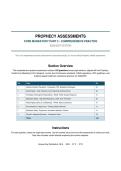
PROPHECY ASSESSMENTS
CORE MANDATORY PART 2 - COMPREHENSIVE PRACTICE
2026/2027 EDITION
This is an independent practice assessment for educational study; it is not an official Prophecy Health assessment.
Section Overview
This comprehensive practice assessment contains 150 questions across eight sections, aligned with the Prophecy
Health Core Mandatory Part 2 blueprint, current Joint Commission standards, OSHA regulations, CDC guidelines, and
evidence-based healthcare compliance practices for 2026/2027.
Sec Topic Qs
1 Infection Control & Prevention - Precautions, PPE, Bloodborne Pathogens 25
2 Patient Safety - Falls, Restraints, Event Reporting, Sentinel Events 20
3 Fire Safety & Emergency Preparedness - RACE, PASS, Disaster Response 15
4 Medication Safety - High-Alert Medications, LASA, Error Prevention 20
5 Patient Rights, Ethics, & Confidentiality - HIPAA, Advance Directives 15
6 Documentation & Legal Issues - Charting, Medical Records 15
7 Workplace Safety - Ergonomics, Hazardous Materials, Violence 15
8 Clinical & Integrated Scenarios - Compliance Cases 25
TOTAL 150
Instructions
For each question, select the single best answer. Use the answer key at the end of the assessment to check your work.
Each item includes a brief rationale explaining the correct response.
Answer Key Distribution: 38 A · 38 B · 37 C · 37 D
, Section 1: Infection Control & Prevention - Standard/Transmission-Based Precautions,
PPE, and Bloodborne Pathogens
Q1: The single most important measure to prevent the spread of infection in healthcare is:
A. Wearing gloves at all times
B. Giving antibiotics to everyone
C. Hand hygiene [CORRECT]
D. Closing all doors
Correct Answer: C
Rationale: Hand hygiene is the most effective infection-prevention measure. The other options are not appropriate or effective.
Q2: Standard precautions apply to:
A. Only patients with known infections
B. Only surgical patients
C. Only immunocompromised patients
D. All patients whenever there is potential contact with blood or body fluids [CORRECT]
Correct Answer: D
Rationale: Standard precautions apply universally to all patients when blood/body-fluid contact is possible. They are not selective.
Q3: A patient with a suspected airborne infection (e.g., measles or TB) requires:
A. Contact precautions
B. Droplet precautions
C. Airborne precautions with a negative-pressure room and N95 respirator [CORRECT]
D. Standard precautions only
Correct Answer: C
Rationale: Airborne infections require negative-pressure rooms and N95 respirators. The other precautions are insufficient.
Q4: A patient with a droplet-spread infection (e.g., influenza) requires:
A. Airborne precautions
B. Contact precautions only
C. Droplet precautions with a surgical mask [CORRECT]
D. No precautions
Correct Answer: C
Rationale: Droplet precautions require a surgical mask and private room/cohorting. The other options are incorrect.
Q5: A patient with Clostridioides difficile (C. diff) requires:
A. Airborne precautions
B. Droplet precautions
C. Contact precautions, with hand washing using soap and water [CORRECT]
D. Standard precautions only
Correct Answer: C
Rationale: C. diff requires contact precautions, and soap-and-water hand washing is preferred because alcohol sanitizer does not
destroy spores.
Q6: The correct order for donning (putting on) PPE is:
A. Gloves, then gown
B. Mask last
C. Gown, mask/respirator, goggles, gloves [CORRECT]
D. Any order
Correct Answer: C
Rationale: PPE is donned in the order gown, mask, goggles, gloves. The other orders are incorrect.
Q7: The correct order for removing PPE is:
A. Mask first
B. Gloves, goggles, gown, then mask [CORRECT]
Prophecy Assessments Core Mandatory Part 2 - 2026/2027 Practice Page 2
, C. Gown first
D. Any order
Correct Answer: B
Rationale: PPE is removed gloves, goggles, gown, then mask, with hand hygiene after. This minimizes contamination.
Q8: Under OSHA's Bloodborne Pathogens Standard, the employer must provide:
A. Free PPE, hepatitis B vaccination, and training [CORRECT]
B. PPE only after exposure
C. No training
D. Vaccination only on request
Correct Answer: A
Rationale: Employers must provide free PPE, hepatitis B vaccination, and training. The other options are incorrect.
Q9: The Needlestick Safety and Prevention Act requires:
A. Hand recapping of needles
B. No reporting
C. The use of safer needle devices and prompt reporting of exposures [CORRECT]
D. Reuse of needles
Correct Answer: C
Rationale: The Act mandates safer devices and exposure reporting. Hand recapping and reuse are unsafe.
Q10: After a needlestick exposure, the worker should:
A. Wait for symptoms
B. Ignore it
C. Wash the site, report the exposure, and follow post-exposure protocol [CORRECT]
D. Rub the site
Correct Answer: C
Rationale: Immediate washing, reporting, and post-exposure follow-up are required. Delaying or ignoring is unsafe.
Q11: The major bloodborne pathogens of concern in healthcare include:
A. Influenza
B. The common cold
C. Hepatitis B, hepatitis C, and HIV [CORRECT]
D. Food-borne bacteria
Correct Answer: C
Rationale: HBV, HCV, and HIV are the major bloodborne pathogens. The others are not primarily bloodborne.
Q12: Which of the following is NOT part of standard precautions?
A. Hand hygiene
B. Gloves for potential body-fluid contact
C. Safe injection practices
D. Wearing a mask at all times regardless of the task [CORRECT]
Correct Answer: D
Rationale: Wearing a mask at all times is not a standard precaution; masks are used for specific tasks/precautions. The others are
standard precautions.
Q13: Hand hygiene should be performed:
A. Before and after patient contact and after removing gloves [CORRECT]
B. Only before meals
C. Once a day
D. Only after using the restroom
Correct Answer: A
Rationale: Hand hygiene is required before/after patient contact and after glove removal. The other options are insufficient.
Q14: The chain of infection includes which link?
A. Infectious agent [CORRECT]
Prophecy Assessments Core Mandatory Part 2 - 2026/2027 Practice Page 3
CORE MANDATORY PART 2 - COMPREHENSIVE PRACTICE
2026/2027 EDITION
This is an independent practice assessment for educational study; it is not an official Prophecy Health assessment.
Section Overview
This comprehensive practice assessment contains 150 questions across eight sections, aligned with the Prophecy
Health Core Mandatory Part 2 blueprint, current Joint Commission standards, OSHA regulations, CDC guidelines, and
evidence-based healthcare compliance practices for 2026/2027.
Sec Topic Qs
1 Infection Control & Prevention - Precautions, PPE, Bloodborne Pathogens 25
2 Patient Safety - Falls, Restraints, Event Reporting, Sentinel Events 20
3 Fire Safety & Emergency Preparedness - RACE, PASS, Disaster Response 15
4 Medication Safety - High-Alert Medications, LASA, Error Prevention 20
5 Patient Rights, Ethics, & Confidentiality - HIPAA, Advance Directives 15
6 Documentation & Legal Issues - Charting, Medical Records 15
7 Workplace Safety - Ergonomics, Hazardous Materials, Violence 15
8 Clinical & Integrated Scenarios - Compliance Cases 25
TOTAL 150
Instructions
For each question, select the single best answer. Use the answer key at the end of the assessment to check your work.
Each item includes a brief rationale explaining the correct response.
Answer Key Distribution: 38 A · 38 B · 37 C · 37 D
, Section 1: Infection Control & Prevention - Standard/Transmission-Based Precautions,
PPE, and Bloodborne Pathogens
Q1: The single most important measure to prevent the spread of infection in healthcare is:
A. Wearing gloves at all times
B. Giving antibiotics to everyone
C. Hand hygiene [CORRECT]
D. Closing all doors
Correct Answer: C
Rationale: Hand hygiene is the most effective infection-prevention measure. The other options are not appropriate or effective.
Q2: Standard precautions apply to:
A. Only patients with known infections
B. Only surgical patients
C. Only immunocompromised patients
D. All patients whenever there is potential contact with blood or body fluids [CORRECT]
Correct Answer: D
Rationale: Standard precautions apply universally to all patients when blood/body-fluid contact is possible. They are not selective.
Q3: A patient with a suspected airborne infection (e.g., measles or TB) requires:
A. Contact precautions
B. Droplet precautions
C. Airborne precautions with a negative-pressure room and N95 respirator [CORRECT]
D. Standard precautions only
Correct Answer: C
Rationale: Airborne infections require negative-pressure rooms and N95 respirators. The other precautions are insufficient.
Q4: A patient with a droplet-spread infection (e.g., influenza) requires:
A. Airborne precautions
B. Contact precautions only
C. Droplet precautions with a surgical mask [CORRECT]
D. No precautions
Correct Answer: C
Rationale: Droplet precautions require a surgical mask and private room/cohorting. The other options are incorrect.
Q5: A patient with Clostridioides difficile (C. diff) requires:
A. Airborne precautions
B. Droplet precautions
C. Contact precautions, with hand washing using soap and water [CORRECT]
D. Standard precautions only
Correct Answer: C
Rationale: C. diff requires contact precautions, and soap-and-water hand washing is preferred because alcohol sanitizer does not
destroy spores.
Q6: The correct order for donning (putting on) PPE is:
A. Gloves, then gown
B. Mask last
C. Gown, mask/respirator, goggles, gloves [CORRECT]
D. Any order
Correct Answer: C
Rationale: PPE is donned in the order gown, mask, goggles, gloves. The other orders are incorrect.
Q7: The correct order for removing PPE is:
A. Mask first
B. Gloves, goggles, gown, then mask [CORRECT]
Prophecy Assessments Core Mandatory Part 2 - 2026/2027 Practice Page 2
, C. Gown first
D. Any order
Correct Answer: B
Rationale: PPE is removed gloves, goggles, gown, then mask, with hand hygiene after. This minimizes contamination.
Q8: Under OSHA's Bloodborne Pathogens Standard, the employer must provide:
A. Free PPE, hepatitis B vaccination, and training [CORRECT]
B. PPE only after exposure
C. No training
D. Vaccination only on request
Correct Answer: A
Rationale: Employers must provide free PPE, hepatitis B vaccination, and training. The other options are incorrect.
Q9: The Needlestick Safety and Prevention Act requires:
A. Hand recapping of needles
B. No reporting
C. The use of safer needle devices and prompt reporting of exposures [CORRECT]
D. Reuse of needles
Correct Answer: C
Rationale: The Act mandates safer devices and exposure reporting. Hand recapping and reuse are unsafe.
Q10: After a needlestick exposure, the worker should:
A. Wait for symptoms
B. Ignore it
C. Wash the site, report the exposure, and follow post-exposure protocol [CORRECT]
D. Rub the site
Correct Answer: C
Rationale: Immediate washing, reporting, and post-exposure follow-up are required. Delaying or ignoring is unsafe.
Q11: The major bloodborne pathogens of concern in healthcare include:
A. Influenza
B. The common cold
C. Hepatitis B, hepatitis C, and HIV [CORRECT]
D. Food-borne bacteria
Correct Answer: C
Rationale: HBV, HCV, and HIV are the major bloodborne pathogens. The others are not primarily bloodborne.
Q12: Which of the following is NOT part of standard precautions?
A. Hand hygiene
B. Gloves for potential body-fluid contact
C. Safe injection practices
D. Wearing a mask at all times regardless of the task [CORRECT]
Correct Answer: D
Rationale: Wearing a mask at all times is not a standard precaution; masks are used for specific tasks/precautions. The others are
standard precautions.
Q13: Hand hygiene should be performed:
A. Before and after patient contact and after removing gloves [CORRECT]
B. Only before meals
C. Once a day
D. Only after using the restroom
Correct Answer: A
Rationale: Hand hygiene is required before/after patient contact and after glove removal. The other options are insufficient.
Q14: The chain of infection includes which link?
A. Infectious agent [CORRECT]
Prophecy Assessments Core Mandatory Part 2 - 2026/2027 Practice Page 3

