SCI 225 PATHOPHYSIOLOGY — FINAL EXAM REVIEW
Nightingale College | Official Practice Exam 2026/2027
Total Questions: 50 | Time: 120 min | Passing Score: 80%
Name: ____________________ Date: ____________________ Score: ______ / 50
Instructions: Choose the single best answer for each question. Passing Score: 80% (40/50 correct) in 120 minutes.
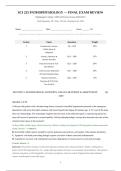
Section Topics Questions Weight
1 Foundational Concepts, Q1 – Q10 20%
Cellular Injury &
Adaptation
2 Genetics, Immunity & Q11 – Q20 25%
Immune Disorders
3 Fluid, Electrolyte & Acid- Q21 – Q30 20%
Base Balance
4 Cardiovascular, Respiratory Q31 – Q40 20%
& Renal Pathophysiology
5 Endocrine Disorders, Q41 – Q50 15%
Neoplasia & NGN-Style
Case Analysis
SECTION 1: FOUNDATIONAL CONCEPTS, CELLULAR INJURY & ADAPTATION Q1
– Q10
Question 1 of 50
A 68-year-old patient with a decades-long history of poorly controlled hypertension presents to the emergency
department with acute left-sided weakness and slurred speech that began 45 minutes ago. A CT scan of the head
shows no hemorrhage. The neurologist explains that the tissue in the affected region is experiencing injury but
may still recover if perfusion is restored quickly. Which pathophysiologic concept best describes the state of this
ischemic brain tissue at this moment?
A. Reversible cellular injury characterized by cellular swelling and impaired ATP-dependent sodium-potassium
pump function ✓ CORRECT
B. Irreversible cellular injury marked by nuclear pyknosis, karyorrhexis, and rupture of the plasma membrane
C. Apoptotic cell death proceeding through caspase activation without associated inflammation
D. Liquefactive necrosis with widespread enzymatic degradation of neural tissue by activated microglia
Correct Answer: A
Rationale: Reversible cell injury results from hypoxia-ischemia and is characterized by cellular swelling due to
failure of the ATP-dependent Na+/K+ pump, allowing sodium and water to accumulate intracellularly. This patient's
ischemic penumbra is still salvageable with timely reperfusion, whereas nuclear fragmentation and membrane
rupture would signal irreversible injury.
1
,Question 2 of 50
A 55-year-old smoker with a 40-pack-year history is diagnosed with chronic bronchitis. Biopsy of the bronchial
epithelium reveals that the normal ciliated columnar epithelial cells have been replaced by stratified squamous
epithelium. The pathologist notes this is a potentially reversible adaptive response to chronic irritation. Which
type of cellular adaptation does this histologic finding represent?
A. Hypertrophy of existing bronchial epithelial cells in response to chronic toxin exposure
B. Hyperplasia of the basal cell layer leading to thickened bronchial walls
C. Metaplasia in which one differentiated cell type is replaced by another more resilient cell type ✓ CORRECT
D. Dysplasia characterized by disordered cellular maturation and atypical nuclear features
Correct Answer: C
Rationale: Metaplasia is the reversible replacement of one differentiated cell type by another, in this case ciliated
columnar epithelium being replaced by stratified squamous epithelium in response to chronic cigarette smoke
irritation. Dysplasia refers to disordered, atypical cellular changes that are considered preneoplastic, not the
organized replacement seen here.
Question 3 of 50
A 72-year-old bedridden patient develops a large, deep pressure ulcer on the sacrum. When the necrotic tissue is
debrided, the wound base is foul-smelling, soft, and liquefied. A tissue specimen sent to pathology shows
complete dissolution of cells with formation of a viscous, debris-filled exudate. Which specific type of necrosis
is most consistent with these findings?
A. Coagulative necrosis preserving the architectural outline of the affected tissue
B. Liquefactive necrosis resulting from enzymatic degradation of necrotic tissue by neutrophils and bacteria ✓
CORRECT
C. Caseous necrosis with a granulomatous inflammatory response and cheese-like debris
D. Fat necrosis involving saponification of adipose tissue by activated lipases
Correct Answer: B
Rationale: Liquefactive necrosis is characterized by complete enzymatic dissolution of necrotic tissue, producing a
soft, liquefied debris-filled exudate, and it typically occurs in the brain and in infected tissue where bacterial and
neutrophil hydrolytic enzymes degrade the tissue. Coagulative necrosis preserves tissue architecture and is seen in
myocardial infarction, while caseous necrosis has a cheese-like appearance associated with tuberculosis granulomas.
Question 4 of 50
A 45-year-old patient with a 20-year history of alcohol abuse presents with jaundice, ascites, and tender
hepatomegaly. Liver biopsy reveals hepatocyte injury with ballooning degeneration and accumulation of lipid
vacuoles within the cytoplasm of hepatocytes. The pathologist explains that the lipid accumulation is a
manifestation of reversible cellular injury. Which pathophysiologic mechanism best explains the intracellular
lipid accumulation in these hepatocytes?
A. Increased beta-oxidation of fatty acids due to mitochondrial dysfunction and impaired ATP production
B. Decreased assembly and secretion of lipoproteins from injured hepatocytes into the circulation ✓ CORRECT
C. Enhanced uptake of circulating free fatty acids by upregulated hepatocyte membrane transporters
D. Activation of apoptotic pathways causing release of intracellular lipid stores into the cytoplasm
2
, Correct Answer: B
Rationale: Fatty change (steatosis) in hepatocytes occurs primarily because alcohol-induced injury disrupts the
assembly and secretion of very-low-density lipoproteins (VLDL), causing triglycerides to accumulate within the
cytoplasm. This is a hallmark of reversible cell injury, distinct from the membrane rupture and nuclear changes that
define irreversible injury.
Question 5 of 50
A 32-year-old man who was a competitive weightlifter has been immobilized in a long leg cast for 6 weeks
following a femoral fracture. At follow-up, the orthopedic surgeon notes significant reduction in the size and
strength of the quadriceps and gastrocnemius muscles on the affected limb. The surgeon explains that the muscle
atrophy is a reversible adaptive response to disuse. Which pathophysiologic process underlies this type of
cellular adaptation?
A. Reduced protein synthesis and increased proteolysis in response to decreased mechanical loading and neural
stimulation ✓ CORRECT
B. Apoptotic elimination of myocytes due to ischemic injury from reduced blood flow to the immobilized limb
C. Hypertrophy of antagonistic muscle groups compressing the immobilized muscles and reducing their vascular
supply
D. Metaplastic transformation of skeletal muscle fibers into connective tissue as a response to chronic disuse
Correct Answer: A
Rationale: Disuse atrophy occurs when cells, in this case skeletal muscle fibers, undergo a reduction in size due to
decreased workload, reduced neural stimulation, and diminished blood supply, leading to a decrease in protein
synthesis and an increase in protein degradation. This is a reversible adaptation, unlike apoptosis which is
programmed cell death, or metaplasia which involves replacement by a different cell type.
Question 6 of 50
A pathologist examines a tissue specimen from a patient with a long-standing history of gastroesophageal reflux
disease (GERD). The biopsy from the distal esophagus shows replacement of the normal stratified squamous
epithelium by columnar epithelium with goblet cells, and there are areas of irregular nuclear enlargement,
hyperchromasia, and loss of normal polarity. The pathologist explains that the patient has progressed from a
purely adaptive change to a preneoplastic condition. What is the most accurate interpretation of these sequential
histologic changes?
A. The patient has developed squamous cell carcinoma as a direct consequence of chronic acid exposure
B. The columnar replacement represents metaplasia, while the nuclear atypia indicates progression to dysplasia
✓ CORRECT
C. The findings represent hypertrophy of the esophageal epithelium with secondary inflammatory changes
D. The goblet cell presence indicates hyperplasia of the gastric mucosa that has migrated superiorly
Correct Answer: B
Rationale: Barrett esophagus involves metaplastic replacement of squamous epithelium by intestinal-type columnar
epithelium with goblet cells, and when nuclear atypia, hyperchromasia, and loss of polarity develop, the process has
advanced to dysplasia, which is a preneoplastic change. Squamous cell carcinoma arises from squamous epithelium,
not from the intestinal metaplasia seen in Barrett esophagus.
3
Nightingale College | Official Practice Exam 2026/2027
Total Questions: 50 | Time: 120 min | Passing Score: 80%
Name: ____________________ Date: ____________________ Score: ______ / 50
Instructions: Choose the single best answer for each question. Passing Score: 80% (40/50 correct) in 120 minutes.
Section Topics Questions Weight
1 Foundational Concepts, Q1 – Q10 20%
Cellular Injury &
Adaptation
2 Genetics, Immunity & Q11 – Q20 25%
Immune Disorders
3 Fluid, Electrolyte & Acid- Q21 – Q30 20%
Base Balance
4 Cardiovascular, Respiratory Q31 – Q40 20%
& Renal Pathophysiology
5 Endocrine Disorders, Q41 – Q50 15%
Neoplasia & NGN-Style
Case Analysis
SECTION 1: FOUNDATIONAL CONCEPTS, CELLULAR INJURY & ADAPTATION Q1
– Q10
Question 1 of 50
A 68-year-old patient with a decades-long history of poorly controlled hypertension presents to the emergency
department with acute left-sided weakness and slurred speech that began 45 minutes ago. A CT scan of the head
shows no hemorrhage. The neurologist explains that the tissue in the affected region is experiencing injury but
may still recover if perfusion is restored quickly. Which pathophysiologic concept best describes the state of this
ischemic brain tissue at this moment?
A. Reversible cellular injury characterized by cellular swelling and impaired ATP-dependent sodium-potassium
pump function ✓ CORRECT
B. Irreversible cellular injury marked by nuclear pyknosis, karyorrhexis, and rupture of the plasma membrane
C. Apoptotic cell death proceeding through caspase activation without associated inflammation
D. Liquefactive necrosis with widespread enzymatic degradation of neural tissue by activated microglia
Correct Answer: A
Rationale: Reversible cell injury results from hypoxia-ischemia and is characterized by cellular swelling due to
failure of the ATP-dependent Na+/K+ pump, allowing sodium and water to accumulate intracellularly. This patient's
ischemic penumbra is still salvageable with timely reperfusion, whereas nuclear fragmentation and membrane
rupture would signal irreversible injury.
1
,Question 2 of 50
A 55-year-old smoker with a 40-pack-year history is diagnosed with chronic bronchitis. Biopsy of the bronchial
epithelium reveals that the normal ciliated columnar epithelial cells have been replaced by stratified squamous
epithelium. The pathologist notes this is a potentially reversible adaptive response to chronic irritation. Which
type of cellular adaptation does this histologic finding represent?
A. Hypertrophy of existing bronchial epithelial cells in response to chronic toxin exposure
B. Hyperplasia of the basal cell layer leading to thickened bronchial walls
C. Metaplasia in which one differentiated cell type is replaced by another more resilient cell type ✓ CORRECT
D. Dysplasia characterized by disordered cellular maturation and atypical nuclear features
Correct Answer: C
Rationale: Metaplasia is the reversible replacement of one differentiated cell type by another, in this case ciliated
columnar epithelium being replaced by stratified squamous epithelium in response to chronic cigarette smoke
irritation. Dysplasia refers to disordered, atypical cellular changes that are considered preneoplastic, not the
organized replacement seen here.
Question 3 of 50
A 72-year-old bedridden patient develops a large, deep pressure ulcer on the sacrum. When the necrotic tissue is
debrided, the wound base is foul-smelling, soft, and liquefied. A tissue specimen sent to pathology shows
complete dissolution of cells with formation of a viscous, debris-filled exudate. Which specific type of necrosis
is most consistent with these findings?
A. Coagulative necrosis preserving the architectural outline of the affected tissue
B. Liquefactive necrosis resulting from enzymatic degradation of necrotic tissue by neutrophils and bacteria ✓
CORRECT
C. Caseous necrosis with a granulomatous inflammatory response and cheese-like debris
D. Fat necrosis involving saponification of adipose tissue by activated lipases
Correct Answer: B
Rationale: Liquefactive necrosis is characterized by complete enzymatic dissolution of necrotic tissue, producing a
soft, liquefied debris-filled exudate, and it typically occurs in the brain and in infected tissue where bacterial and
neutrophil hydrolytic enzymes degrade the tissue. Coagulative necrosis preserves tissue architecture and is seen in
myocardial infarction, while caseous necrosis has a cheese-like appearance associated with tuberculosis granulomas.
Question 4 of 50
A 45-year-old patient with a 20-year history of alcohol abuse presents with jaundice, ascites, and tender
hepatomegaly. Liver biopsy reveals hepatocyte injury with ballooning degeneration and accumulation of lipid
vacuoles within the cytoplasm of hepatocytes. The pathologist explains that the lipid accumulation is a
manifestation of reversible cellular injury. Which pathophysiologic mechanism best explains the intracellular
lipid accumulation in these hepatocytes?
A. Increased beta-oxidation of fatty acids due to mitochondrial dysfunction and impaired ATP production
B. Decreased assembly and secretion of lipoproteins from injured hepatocytes into the circulation ✓ CORRECT
C. Enhanced uptake of circulating free fatty acids by upregulated hepatocyte membrane transporters
D. Activation of apoptotic pathways causing release of intracellular lipid stores into the cytoplasm
2
, Correct Answer: B
Rationale: Fatty change (steatosis) in hepatocytes occurs primarily because alcohol-induced injury disrupts the
assembly and secretion of very-low-density lipoproteins (VLDL), causing triglycerides to accumulate within the
cytoplasm. This is a hallmark of reversible cell injury, distinct from the membrane rupture and nuclear changes that
define irreversible injury.
Question 5 of 50
A 32-year-old man who was a competitive weightlifter has been immobilized in a long leg cast for 6 weeks
following a femoral fracture. At follow-up, the orthopedic surgeon notes significant reduction in the size and
strength of the quadriceps and gastrocnemius muscles on the affected limb. The surgeon explains that the muscle
atrophy is a reversible adaptive response to disuse. Which pathophysiologic process underlies this type of
cellular adaptation?
A. Reduced protein synthesis and increased proteolysis in response to decreased mechanical loading and neural
stimulation ✓ CORRECT
B. Apoptotic elimination of myocytes due to ischemic injury from reduced blood flow to the immobilized limb
C. Hypertrophy of antagonistic muscle groups compressing the immobilized muscles and reducing their vascular
supply
D. Metaplastic transformation of skeletal muscle fibers into connective tissue as a response to chronic disuse
Correct Answer: A
Rationale: Disuse atrophy occurs when cells, in this case skeletal muscle fibers, undergo a reduction in size due to
decreased workload, reduced neural stimulation, and diminished blood supply, leading to a decrease in protein
synthesis and an increase in protein degradation. This is a reversible adaptation, unlike apoptosis which is
programmed cell death, or metaplasia which involves replacement by a different cell type.
Question 6 of 50
A pathologist examines a tissue specimen from a patient with a long-standing history of gastroesophageal reflux
disease (GERD). The biopsy from the distal esophagus shows replacement of the normal stratified squamous
epithelium by columnar epithelium with goblet cells, and there are areas of irregular nuclear enlargement,
hyperchromasia, and loss of normal polarity. The pathologist explains that the patient has progressed from a
purely adaptive change to a preneoplastic condition. What is the most accurate interpretation of these sequential
histologic changes?
A. The patient has developed squamous cell carcinoma as a direct consequence of chronic acid exposure
B. The columnar replacement represents metaplasia, while the nuclear atypia indicates progression to dysplasia
✓ CORRECT
C. The findings represent hypertrophy of the esophageal epithelium with secondary inflammatory changes
D. The goblet cell presence indicates hyperplasia of the gastric mucosa that has migrated superiorly
Correct Answer: B
Rationale: Barrett esophagus involves metaplastic replacement of squamous epithelium by intestinal-type columnar
epithelium with goblet cells, and when nuclear atypia, hyperchromasia, and loss of polarity develop, the process has
advanced to dysplasia, which is a preneoplastic change. Squamous cell carcinoma arises from squamous epithelium,
not from the intestinal metaplasia seen in Barrett esophagus.
3