

Pharmacotherapeutics for Advanced Practice Nurses Test Bank
Study online at https://quizlet.com/_hydbwf
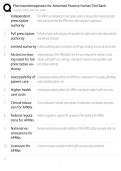
1. Independent The APRN has independent prescriptive authority because the regulating body
prescriptive does not require that the APRN work under physician supervision.
authority
2. Full prescriptive Full prescriptive authority gives the provider the right to prescribe independently
authority and without limitation.
3. Limited authority Limited authority places restrictions on the types of drugs that can be prescribed.
4. Factors increas- Implementation of the Affordable Care Act has increased the number of indi-
ing need for full viduals with health care coverage, creating the need for more providers with
prescriptive au- prescriptive authority.
thority
5. Inaccessibility of Limiting prescriptive authority for APRNs can create barriers to quality, affordable,
patient care and accessible patient care.
6. Higher health Limiting prescriptive authority for APRNs may lead to higher health care costs.
care costs
7. Clinical educa- Clinical education includes prescription of medications and disease processes.
tion for APRNs
8. Federal regula- Federal regulations support the provision of full authority for APRNs.
tions for APRNs
9. National ex- National examinations provide validation of the APRN's ability to provide safe care.
aminations for
APRNs
10. Licensure for Licensure ensures compliance with health care and safety standards.
APRNs
11.
, Pharmacotherapeutics for Advanced Practice Nurses Test Bank
Study online at https://quizlet.com/_hydbwf
Barriers to pa- Limited prescriptive authority creates numerous barriers to quality, affordable,
tient care and accessible patient care.
12. APRNs Advanced Practice Registered Nurses who are educated to practice and prescribe
independently without supervision.
13. National exami- Tests that provide validation of the APRN's ability to provide safe care.
nations
14. Licensure A process that ensures compliance with health care and safety standards.
15. Limited prescrip- A restriction that creates barriers to quality, affordable, and accessible patient care.
tive authority
16. Prescriptive au- Limited prescriptive authority compared to Maine, where certified nurse practi-
thority in Virginia tioners have full authority.
17. Collaboration Working together to improve positive outcomes for patients through shared
with pharmacists information.
18. Pharmacists' role Pharmacists can suggest adequate medication dosing and have additional infor-
in patient care mation on drug interactions.
19. Telephone order An acceptable action in emergency situations, such as delirium tremens with
in emergencies seizure activity.
20. Chronic pain The process of addressing a patient's ongoing pain, which may include medica-
management tion refills.
21. Delirium A severe form of alcohol withdrawal that may require urgent medical intervention.
tremens
22. Oxycontin refill A situation where a patient with chronic pain calls to request a refill on their
request medication.
, Pharmacotherapeutics for Advanced Practice Nurses Test Bank
Study online at https://quizlet.com/_hydbwf
23. Federal regula- Regulations that do not govern prescriptive authority for APRNs.
tions on prescrip-
tive authority
24. Impact of state The aspect of practice that may change for the APRN when moving from one state
lines on APRN to another.
practice
25. Provider collabo- Providers should collaborate with pharmacists for formulary information and drug
ration with phar- interactions.
macists
26. Charge nurse's Writing an order is outside the scope of practice for the charge nurse.
role
27. Emergency care Protocols that dictate actions to be taken in urgent medical situations.
protocols
28. Patient safety in Ensuring that medication is administered safely and effectively to prevent harm.
medication ad-
ministration
29. Pharmacologic A category under NCLEX Client Needs focusing on medication management.
and Parenteral
Therapies
30. Cognitive Level: A level of understanding required to interpret and apply nursing knowledge.
Comprehension
31. Cognitive Level: A level of understanding that involves applying knowledge to real-world scenarios.
Application
32. Physiologic In- A category in nursing that focuses on maintaining the physical well-being of
tegrity patients.
, Pharmacotherapeutics for Advanced Practice Nurses Test Bank
Study online at https://quizlet.com/_hydbwf
33. Reduction of Risk A nursing category that emphasizes minimizing risks to patient safety.
Potential
34. Fax an order to An action to send a prescription order to the pharmacy via fax.
the pharmacy.
35. Schedule an ap- An action to arrange a meeting with the patient for evaluation.
pointment with
the patient.
36. Verify the pa- The process of checking if the patient is following their prescribed medication
tient's adherence plan.
to drug regimen.
37. Determine the The action of finding out how much medication the patient is currently taking.
patient's cur-
rent medication
dosage.
38. Schedule II med- Medications that are not eligible for refills and must be handwritten.
ications
39. Amoxicillin for An antibiotic prescribed for bacterial throat infection.
streptococcal
pharyngitis
40. Flat, itchy red A skin reaction that may indicate an allergic response to medication.
rash
41. Discontinue the The priority action to stop administering a drug to prevent worsening symptoms.
medication.
42. COPD
Study online at https://quizlet.com/_hydbwf
1. Independent The APRN has independent prescriptive authority because the regulating body
prescriptive does not require that the APRN work under physician supervision.
authority
2. Full prescriptive Full prescriptive authority gives the provider the right to prescribe independently
authority and without limitation.
3. Limited authority Limited authority places restrictions on the types of drugs that can be prescribed.
4. Factors increas- Implementation of the Affordable Care Act has increased the number of indi-
ing need for full viduals with health care coverage, creating the need for more providers with
prescriptive au- prescriptive authority.
thority
5. Inaccessibility of Limiting prescriptive authority for APRNs can create barriers to quality, affordable,
patient care and accessible patient care.
6. Higher health Limiting prescriptive authority for APRNs may lead to higher health care costs.
care costs
7. Clinical educa- Clinical education includes prescription of medications and disease processes.
tion for APRNs
8. Federal regula- Federal regulations support the provision of full authority for APRNs.
tions for APRNs
9. National ex- National examinations provide validation of the APRN's ability to provide safe care.
aminations for
APRNs
10. Licensure for Licensure ensures compliance with health care and safety standards.
APRNs
11.
, Pharmacotherapeutics for Advanced Practice Nurses Test Bank
Study online at https://quizlet.com/_hydbwf
Barriers to pa- Limited prescriptive authority creates numerous barriers to quality, affordable,
tient care and accessible patient care.
12. APRNs Advanced Practice Registered Nurses who are educated to practice and prescribe
independently without supervision.
13. National exami- Tests that provide validation of the APRN's ability to provide safe care.
nations
14. Licensure A process that ensures compliance with health care and safety standards.
15. Limited prescrip- A restriction that creates barriers to quality, affordable, and accessible patient care.
tive authority
16. Prescriptive au- Limited prescriptive authority compared to Maine, where certified nurse practi-
thority in Virginia tioners have full authority.
17. Collaboration Working together to improve positive outcomes for patients through shared
with pharmacists information.
18. Pharmacists' role Pharmacists can suggest adequate medication dosing and have additional infor-
in patient care mation on drug interactions.
19. Telephone order An acceptable action in emergency situations, such as delirium tremens with
in emergencies seizure activity.
20. Chronic pain The process of addressing a patient's ongoing pain, which may include medica-
management tion refills.
21. Delirium A severe form of alcohol withdrawal that may require urgent medical intervention.
tremens
22. Oxycontin refill A situation where a patient with chronic pain calls to request a refill on their
request medication.
, Pharmacotherapeutics for Advanced Practice Nurses Test Bank
Study online at https://quizlet.com/_hydbwf
23. Federal regula- Regulations that do not govern prescriptive authority for APRNs.
tions on prescrip-
tive authority
24. Impact of state The aspect of practice that may change for the APRN when moving from one state
lines on APRN to another.
practice
25. Provider collabo- Providers should collaborate with pharmacists for formulary information and drug
ration with phar- interactions.
macists
26. Charge nurse's Writing an order is outside the scope of practice for the charge nurse.
role
27. Emergency care Protocols that dictate actions to be taken in urgent medical situations.
protocols
28. Patient safety in Ensuring that medication is administered safely and effectively to prevent harm.
medication ad-
ministration
29. Pharmacologic A category under NCLEX Client Needs focusing on medication management.
and Parenteral
Therapies
30. Cognitive Level: A level of understanding required to interpret and apply nursing knowledge.
Comprehension
31. Cognitive Level: A level of understanding that involves applying knowledge to real-world scenarios.
Application
32. Physiologic In- A category in nursing that focuses on maintaining the physical well-being of
tegrity patients.
, Pharmacotherapeutics for Advanced Practice Nurses Test Bank
Study online at https://quizlet.com/_hydbwf
33. Reduction of Risk A nursing category that emphasizes minimizing risks to patient safety.
Potential
34. Fax an order to An action to send a prescription order to the pharmacy via fax.
the pharmacy.
35. Schedule an ap- An action to arrange a meeting with the patient for evaluation.
pointment with
the patient.
36. Verify the pa- The process of checking if the patient is following their prescribed medication
tient's adherence plan.
to drug regimen.
37. Determine the The action of finding out how much medication the patient is currently taking.
patient's cur-
rent medication
dosage.
38. Schedule II med- Medications that are not eligible for refills and must be handwritten.
ications
39. Amoxicillin for An antibiotic prescribed for bacterial throat infection.
streptococcal
pharyngitis
40. Flat, itchy red A skin reaction that may indicate an allergic response to medication.
rash
41. Discontinue the The priority action to stop administering a drug to prevent worsening symptoms.
medication.
42. COPD

