

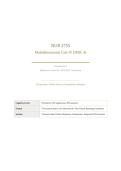
NUR 2755
Multidimensional Care IV (MDC 4)
Examination 2
Rasmussen University | 2026-2027 Curriculum
100 Questions | Verified Answers | Comprehensive Rationales
Cognitive Levels 25% Recall | 55% Application | 20% Analysis
Format 75% Scenario-based | 15% Direct Recall | 10% Clinical Reasoning/Calculation
Sections 5 Sections: Shock, Burns, Respiratory, Perioperative, Integrated NGN Scenarios
,Section 1: Shock States and Hemodynamic Management
Q1: A patient presents with a blood pressure of 78/50 mmHg, heart rate 128 bpm, respirations 28 breaths/min, and
temperature 39.2C. The patient appears flushed and warm to touch. Which type of shock is this patient most likely
experiencing?
A. Hypovolemic shock
B. Cardiogenic shock
C. Distributive shock (septic) [CORRECT]
D. Obstructive shock
Correct Answer: C
Rationale: This patient exhibits classic signs of distributive (septic) shock: fever, warm and flushed skin (vasodilation from
inflammatory mediators), hypotension, tachycardia, and tachypnea. In septic shock, vasodilation causes decreased systemic
vascular resistance and hypotension despite increased cardiac output initially. Hypovolemic shock presents with cool, clammy
skin from vasoconstriction. Cardiogenic shock presents with jugular venous distension, pulmonary crackles, and cool skin.
Obstructive shock presents with signs of mechanical obstruction (e.g., absent breath sounds in tension pneumothorax).
Q2: A nurse is caring for a patient who experienced massive blood loss from a motor vehicle collision. The
patient's skin is cool and clammy, capillary refill is 5 seconds, and urine output is 15 mL/hr. Which stage of shock
is this patient experiencing?
A. Initial stage
B. Compensatory stage
C. Progressive stage [CORRECT]
D. Refractory stage
Correct Answer: C
Rationale: The progressive stage of shock is characterized by inadequate tissue perfusion despite compensatory mechanisms.
Signs include prolonged capillary refill (>4-5 seconds), oliguria (<30 mL/hr indicating renal hypoperfusion), cool and
clammy skin from intense vasoconstriction, and worsening metabolic acidosis. The compensatory stage would show
tachycardia and mild tachypnea but adequate urine output (>30 mL/hr). The initial stage has minimal symptoms with slight
tachycardia. The refractory stage involves unresponsive hypotension, multi-organ failure, and is often fatal.
Q3: A nurse calculates the mean arterial pressure (MAP) for a patient with a blood pressure of 110/70 mmHg.
What is the MAP, and is it within the normal range?
A. MAP = 73 mmHg; within normal range
B. MAP = 83 mmHg; within normal range [CORRECT]
C. MAP = 90 mmHg; above normal range
D. MAP = 60 mmHg; below normal range
Correct Answer: B
Rationale: MAP = (SBP + 2 x DBP) / 3 = (110 + 2 x 70) / 3 = (110 + 140) / 3 = = 83.3 mmHg. The normal MAP is
70-100 mmHg, so 83 mmHg is within the normal range. MAP reflects tissue perfusion pressure. An MAP below 60 mmHg
indicates inadequate tissue perfusion and is a critical finding requiring immediate intervention. MAP is especially important
in critical care for guiding vasopressor therapy and assessing end-organ perfusion.
Q4: A patient in septic shock has a blood pressure of 82/50 mmHg despite adequate fluid resuscitation. The
provider orders norepinephrine. What is the primary mechanism by which norepinephrine increases MAP in this
patient?
A. Increasing heart rate and cardiac output
, B. Potent alpha-1 adrenergic vasoconstriction with mild beta-1 effects [CORRECT]
C. Pure beta-1 stimulation to increase cardiac contractility
D. Dopamine receptor agonism to increase renal perfusion
Correct Answer: B
Rationale: Norepinephrine is the first-line vasopressor for septic shock. Its primary mechanism is potent alpha-1 adrenergic
receptor stimulation causing vasoconstriction, which increases systemic vascular resistance and MAP. It also has mild beta-1
effects (increasing heart rate and contractility). In septic shock, vasodilation is the primary hemodynamic problem, so
vasoconstriction directly addresses the pathophysiology. Dopamine has dopaminergic effects at low doses. Dobutamine is
primarily a beta-1 agonist used for cardiogenic shock.
Q5: Which of the following is the earliest clinical manifestation of shock that a nurse should recognize?
A. Decreased blood pressure
B. Altered level of consciousness
C. Increased heart rate [CORRECT]
D. Decreased urine output
Correct Answer: C
Rationale: Increased heart rate (tachycardia) is the earliest clinical manifestation of shock, occurring as the sympathetic
nervous system (SNS) compensates for decreased perfusion by increasing heart rate, contractility, and vasoconstriction to
maintain cardiac output and MAP. Blood pressure is often maintained until later stages because of compensatory mechanisms.
Altered LOC and decreased urine output occur later as compensatory mechanisms fail. Recognizing tachycardia as an early
warning sign allows for earlier intervention before hypotension develops.
Q6: A patient with neurogenic shock following a spinal cord injury has warm, dry skin and bradycardia. What is
the primary pathophysiological mechanism for these findings?
A. Massive vasodilation from loss of sympathetic tone [CORRECT]
B. Fluid loss causing hypovolemia
C. Left ventricular failure reducing cardiac output
D. Mechanical obstruction to blood flow
Correct Answer: A
Rationale: Neurogenic shock results from loss of sympathetic nervous system function below the level of spinal cord injury.
Without sympathetic vasoconstriction, unopposed parasympathetic activity causes vasodilation (warm, dry skin, not
cool/clammy) and bradycardia (not tachycardia seen in other shock types). Hypovolemic shock causes cool, clammy skin and
tachycardia. Cardiogenic shock results from pump failure. Obstructive shock results from mechanical blockage of blood flow.
Q7: A patient develops anaphylactic shock after receiving IV penicillin. Which of the following is the priority
nursing intervention?
A. Administer diphenhydramine
B. Administer epinephrine 0.3-0.5 mg IM [CORRECT]
C. Establish IV access and begin fluid resuscitation
D. Administer methylprednisolone IV
Correct Answer: B
Rationale: Epinephrine is the first-line treatment for anaphylactic shock and must be given immediately. It acts as an alpha-1
agonist (vasoconstriction to reverse hypotension and angioedema) and beta-1 agonist (increases cardiac output) and beta-2
agonist (bronchodilation to relieve bronchospasm). IM injection in the lateral thigh is the preferred route. Antihistamines
(diphenhydramine), corticosteroids (methylprednisolone), and IV fluids are important adjunctive treatments but are not the
priority over epinephrine, which is life-saving.
Multidimensional Care IV (MDC 4)
Examination 2
Rasmussen University | 2026-2027 Curriculum
100 Questions | Verified Answers | Comprehensive Rationales
Cognitive Levels 25% Recall | 55% Application | 20% Analysis
Format 75% Scenario-based | 15% Direct Recall | 10% Clinical Reasoning/Calculation
Sections 5 Sections: Shock, Burns, Respiratory, Perioperative, Integrated NGN Scenarios
,Section 1: Shock States and Hemodynamic Management
Q1: A patient presents with a blood pressure of 78/50 mmHg, heart rate 128 bpm, respirations 28 breaths/min, and
temperature 39.2C. The patient appears flushed and warm to touch. Which type of shock is this patient most likely
experiencing?
A. Hypovolemic shock
B. Cardiogenic shock
C. Distributive shock (septic) [CORRECT]
D. Obstructive shock
Correct Answer: C
Rationale: This patient exhibits classic signs of distributive (septic) shock: fever, warm and flushed skin (vasodilation from
inflammatory mediators), hypotension, tachycardia, and tachypnea. In septic shock, vasodilation causes decreased systemic
vascular resistance and hypotension despite increased cardiac output initially. Hypovolemic shock presents with cool, clammy
skin from vasoconstriction. Cardiogenic shock presents with jugular venous distension, pulmonary crackles, and cool skin.
Obstructive shock presents with signs of mechanical obstruction (e.g., absent breath sounds in tension pneumothorax).
Q2: A nurse is caring for a patient who experienced massive blood loss from a motor vehicle collision. The
patient's skin is cool and clammy, capillary refill is 5 seconds, and urine output is 15 mL/hr. Which stage of shock
is this patient experiencing?
A. Initial stage
B. Compensatory stage
C. Progressive stage [CORRECT]
D. Refractory stage
Correct Answer: C
Rationale: The progressive stage of shock is characterized by inadequate tissue perfusion despite compensatory mechanisms.
Signs include prolonged capillary refill (>4-5 seconds), oliguria (<30 mL/hr indicating renal hypoperfusion), cool and
clammy skin from intense vasoconstriction, and worsening metabolic acidosis. The compensatory stage would show
tachycardia and mild tachypnea but adequate urine output (>30 mL/hr). The initial stage has minimal symptoms with slight
tachycardia. The refractory stage involves unresponsive hypotension, multi-organ failure, and is often fatal.
Q3: A nurse calculates the mean arterial pressure (MAP) for a patient with a blood pressure of 110/70 mmHg.
What is the MAP, and is it within the normal range?
A. MAP = 73 mmHg; within normal range
B. MAP = 83 mmHg; within normal range [CORRECT]
C. MAP = 90 mmHg; above normal range
D. MAP = 60 mmHg; below normal range
Correct Answer: B
Rationale: MAP = (SBP + 2 x DBP) / 3 = (110 + 2 x 70) / 3 = (110 + 140) / 3 = = 83.3 mmHg. The normal MAP is
70-100 mmHg, so 83 mmHg is within the normal range. MAP reflects tissue perfusion pressure. An MAP below 60 mmHg
indicates inadequate tissue perfusion and is a critical finding requiring immediate intervention. MAP is especially important
in critical care for guiding vasopressor therapy and assessing end-organ perfusion.
Q4: A patient in septic shock has a blood pressure of 82/50 mmHg despite adequate fluid resuscitation. The
provider orders norepinephrine. What is the primary mechanism by which norepinephrine increases MAP in this
patient?
A. Increasing heart rate and cardiac output
, B. Potent alpha-1 adrenergic vasoconstriction with mild beta-1 effects [CORRECT]
C. Pure beta-1 stimulation to increase cardiac contractility
D. Dopamine receptor agonism to increase renal perfusion
Correct Answer: B
Rationale: Norepinephrine is the first-line vasopressor for septic shock. Its primary mechanism is potent alpha-1 adrenergic
receptor stimulation causing vasoconstriction, which increases systemic vascular resistance and MAP. It also has mild beta-1
effects (increasing heart rate and contractility). In septic shock, vasodilation is the primary hemodynamic problem, so
vasoconstriction directly addresses the pathophysiology. Dopamine has dopaminergic effects at low doses. Dobutamine is
primarily a beta-1 agonist used for cardiogenic shock.
Q5: Which of the following is the earliest clinical manifestation of shock that a nurse should recognize?
A. Decreased blood pressure
B. Altered level of consciousness
C. Increased heart rate [CORRECT]
D. Decreased urine output
Correct Answer: C
Rationale: Increased heart rate (tachycardia) is the earliest clinical manifestation of shock, occurring as the sympathetic
nervous system (SNS) compensates for decreased perfusion by increasing heart rate, contractility, and vasoconstriction to
maintain cardiac output and MAP. Blood pressure is often maintained until later stages because of compensatory mechanisms.
Altered LOC and decreased urine output occur later as compensatory mechanisms fail. Recognizing tachycardia as an early
warning sign allows for earlier intervention before hypotension develops.
Q6: A patient with neurogenic shock following a spinal cord injury has warm, dry skin and bradycardia. What is
the primary pathophysiological mechanism for these findings?
A. Massive vasodilation from loss of sympathetic tone [CORRECT]
B. Fluid loss causing hypovolemia
C. Left ventricular failure reducing cardiac output
D. Mechanical obstruction to blood flow
Correct Answer: A
Rationale: Neurogenic shock results from loss of sympathetic nervous system function below the level of spinal cord injury.
Without sympathetic vasoconstriction, unopposed parasympathetic activity causes vasodilation (warm, dry skin, not
cool/clammy) and bradycardia (not tachycardia seen in other shock types). Hypovolemic shock causes cool, clammy skin and
tachycardia. Cardiogenic shock results from pump failure. Obstructive shock results from mechanical blockage of blood flow.
Q7: A patient develops anaphylactic shock after receiving IV penicillin. Which of the following is the priority
nursing intervention?
A. Administer diphenhydramine
B. Administer epinephrine 0.3-0.5 mg IM [CORRECT]
C. Establish IV access and begin fluid resuscitation
D. Administer methylprednisolone IV
Correct Answer: B
Rationale: Epinephrine is the first-line treatment for anaphylactic shock and must be given immediately. It acts as an alpha-1
agonist (vasoconstriction to reverse hypotension and angioedema) and beta-1 agonist (increases cardiac output) and beta-2
agonist (bronchodilation to relieve bronchospasm). IM injection in the lateral thigh is the preferred route. Antihistamines
(diphenhydramine), corticosteroids (methylprednisolone), and IV fluids are important adjunctive treatments but are not the
priority over epinephrine, which is life-saving.

