

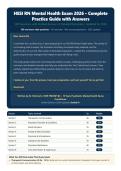
HESI RN Mental Health Exam 2026 – Complete
Practice Guide with Answers
300 Questions with Verified Answers & Detailed Rationales | Updated for 2026
300 real exam-style questions · Full rationales · Why wrong explanations · 2026 updated
Dear Future RN,
I remember the countless hours I spent preparing for my HESI RN Mental Health exam. The anxiety of
not knowing what to expect, the frustration of finding incomplete study materials, and the
determination to succeed. After weeks of dedicated preparation, I created this comprehensive practice
guide using the exact strategies that helped me pass with flying colors.
This study guide contains the most frequently tested concepts, challenging questions that mirror the
real exam, and detailed rationales that help you understand the "why" behind each answer. I have
carefully selected and refined these questions based on what I saw on my own exam and what my
peers reported seeing on theirs.
I believe in you. Trust the process, trust your preparation, and trust yourself. You've got this!
Good luck!
Written by Dr. Patricia K., DNP, PMHNP-BC – 15 Years Psychiatric Mental Health Nurse
Practitioner
Verified Solutions | 2026 Updated | Graded A+
Section Topics Covered Qs Weight
Section 1 Therapeutic Communication 40 13%
Section 2 Psychiatric Disorders & Conditions 45 15%
Section 3 Mood Disorders 35 12%
Section 4 Anxiety & Stress Disorders 35 12%
Section 5 Psychosis & Schizophrenia 35 12%
Section 6 Substance Use Disorders 35 12%
Section 7 Psychiatric Medications 40 13%
Section 8 Crisis Intervention & Legal Issues 35 11%
What You Will Find Inside This Study Guide
Therapeutic Communication (40 Qs - 13%): Verbal and non-verbal communication, therapeutic techniques, barriers to
communication, and active listening.
, Psychiatric Disorders & Conditions (45 Qs - 15%): Overview of major psychiatric disorders, diagnostic criteria, and
nursing interventions.
Mood Disorders (35 Qs - 12%): Depression, bipolar disorder, suicide risk assessment, and treatment approaches.
Anxiety & Stress Disorders (35 Qs - 12%): Generalized anxiety disorder, panic disorder, PTSD, OCD, and phobias.
Psychosis & Schizophrenia (35 Qs - 12%): Symptoms, types, nursing care, medication management, and communication
strategies.
Substance Use Disorders (35 Qs - 12%): Alcohol, drug, and substance abuse, withdrawal syndromes, and nursing
interventions.
Psychiatric Medications (40 Qs - 13%): Antidepressants, antipsychotics, mood stabilizers, anxiolytics, side effects, and
monitoring.
Crisis Intervention & Legal Issues (35 Qs - 11%): Crisis intervention, suicidal/homicidal ideation, abuse, legal and ethical
issues in psychiatric nursing.
Section 1: Therapeutic Communication (40 questions)
Q1. A patient states, "I don't think I'm going to make it through this." What is the nurse's most
therapeutic response?
A "What makes you feel that way?"
B "I understand, but you'll get through this."
C "Don't worry, everything will be fine."
D "This is the best place for you right now."
E "You should focus on the positive things in your life."
Correct answer: A. "What makes you feel that way?"
Rationale: The most therapeutic response is an open-ended question that encourages the patient to explore their
feelings. "What makes you feel that way?" allows the patient to express their thoughts and concerns.
Why wrong:
B: "I understand, but you'll get through this." is incorrect
C: "Don't worry, everything will be fine." is incorrect
D: "This is the best place for you right now." is incorrect
E: "You should focus on the positive things in your life." is incorrect
Reference: HESI RN Mental Health Study Guide · Varcarolis' Foundations of Psychiatric-Mental Health Nursing.
,Q2. A patient with depression states, "I don't feel like eating. I'm not hungry." What is the nurse's best
response?
A "Your body needs nutrition to heal. Let's try to eat something small."
B "You need to eat to get better."
C "I'll bring you a meal in a little while."
D "You'll feel better if you eat."
E "It's important to follow your treatment plan."
Correct answer: A. "Your body needs nutrition to heal. Let's try to eat something small."
Rationale: The best response validates the patient's feelings while gently encouraging nutrition. "Let's try to eat
something small" provides a reasonable and non-confrontational approach.
Why wrong:
B: "You need to eat to get better." is incorrect
C: "I'll bring you a meal in a little while." is incorrect
D: "You'll feel better if you eat." is incorrect
E: "It's important to follow your treatment plan." is incorrect
Reference: HESI RN Mental Health Study Guide · Varcarolis' Foundations of Psychiatric-Mental Health Nursing.
Q3. A patient is sitting alone and appears sad. What is the nurse's best intervention?
A Sit with the patient in silence
B Ask the patient if they want to talk
C Invite the patient to join a group activity
D Tell the patient you are there if they need you
E All of the above
Correct answer: E. All of the above
Rationale: All of these interventions are appropriate. Sitting with the patient, offering to talk, inviting to activities,
and being available are all therapeutic interventions for a patient who is withdrawn.
Why wrong:
A: Sit with the patient in silence is incorrect
B: Ask the patient if they want to talk is incorrect
C: Invite the patient to join a group activity is incorrect
D: Tell the patient you are there if they need you is incorrect
Reference: HESI RN Mental Health Study Guide · Varcarolis' Foundations of Psychiatric-Mental Health Nursing.
, Q4. A patient states, "I don't want to be here. I want to leave." What is the nurse's most appropriate
response?
A "I understand you want to leave. Can you tell me what's bothering you?"
B "You need to stay here to get better."
C "You can't leave until the doctor says you can."
D "If you leave, you will regret it."
E "I'll call the doctor so you can discuss this."
Correct answer: A. "I understand you want to leave. Can you tell me what's bothering you?"
Rationale: Acknowledging the patient's feelings and exploring the reason for wanting to leave is therapeutic. This
response validates feelings while maintaining a supportive approach.
Why wrong:
B: "You need to stay here to get better." is incorrect
C: "You can't leave until the doctor says you can." is incorrect
D: "If you leave, you will regret it." is incorrect
E: "I'll call the doctor so you can discuss this." is incorrect
Reference: HESI RN Mental Health Study Guide · Varcarolis' Foundations of Psychiatric-Mental Health Nursing.
Q5. A patient is silent during a conversation. What is the nurse's best response?
A Allow the silence and wait patiently
B Fill the silence with questions
C End the conversation and leave
D Tell the patient they need to talk
E Ask another patient to visit
Correct answer: A. Allow the silence and wait patiently
Rationale: Allowing silence is therapeutic. It gives the patient time to process thoughts and feelings. Silence should
be used therapeutically, not as an uncomfortable void to be filled.
Why wrong:
B: Fill the silence with questions is incorrect
C: End the conversation and leave is incorrect
D: Tell the patient they need to talk is incorrect
E: Ask another patient to visit is incorrect
Reference: HESI RN Mental Health Study Guide · Varcarolis' Foundations of Psychiatric-Mental Health Nursing.
Practice Guide with Answers
300 Questions with Verified Answers & Detailed Rationales | Updated for 2026
300 real exam-style questions · Full rationales · Why wrong explanations · 2026 updated
Dear Future RN,
I remember the countless hours I spent preparing for my HESI RN Mental Health exam. The anxiety of
not knowing what to expect, the frustration of finding incomplete study materials, and the
determination to succeed. After weeks of dedicated preparation, I created this comprehensive practice
guide using the exact strategies that helped me pass with flying colors.
This study guide contains the most frequently tested concepts, challenging questions that mirror the
real exam, and detailed rationales that help you understand the "why" behind each answer. I have
carefully selected and refined these questions based on what I saw on my own exam and what my
peers reported seeing on theirs.
I believe in you. Trust the process, trust your preparation, and trust yourself. You've got this!
Good luck!
Written by Dr. Patricia K., DNP, PMHNP-BC – 15 Years Psychiatric Mental Health Nurse
Practitioner
Verified Solutions | 2026 Updated | Graded A+
Section Topics Covered Qs Weight
Section 1 Therapeutic Communication 40 13%
Section 2 Psychiatric Disorders & Conditions 45 15%
Section 3 Mood Disorders 35 12%
Section 4 Anxiety & Stress Disorders 35 12%
Section 5 Psychosis & Schizophrenia 35 12%
Section 6 Substance Use Disorders 35 12%
Section 7 Psychiatric Medications 40 13%
Section 8 Crisis Intervention & Legal Issues 35 11%
What You Will Find Inside This Study Guide
Therapeutic Communication (40 Qs - 13%): Verbal and non-verbal communication, therapeutic techniques, barriers to
communication, and active listening.
, Psychiatric Disorders & Conditions (45 Qs - 15%): Overview of major psychiatric disorders, diagnostic criteria, and
nursing interventions.
Mood Disorders (35 Qs - 12%): Depression, bipolar disorder, suicide risk assessment, and treatment approaches.
Anxiety & Stress Disorders (35 Qs - 12%): Generalized anxiety disorder, panic disorder, PTSD, OCD, and phobias.
Psychosis & Schizophrenia (35 Qs - 12%): Symptoms, types, nursing care, medication management, and communication
strategies.
Substance Use Disorders (35 Qs - 12%): Alcohol, drug, and substance abuse, withdrawal syndromes, and nursing
interventions.
Psychiatric Medications (40 Qs - 13%): Antidepressants, antipsychotics, mood stabilizers, anxiolytics, side effects, and
monitoring.
Crisis Intervention & Legal Issues (35 Qs - 11%): Crisis intervention, suicidal/homicidal ideation, abuse, legal and ethical
issues in psychiatric nursing.
Section 1: Therapeutic Communication (40 questions)
Q1. A patient states, "I don't think I'm going to make it through this." What is the nurse's most
therapeutic response?
A "What makes you feel that way?"
B "I understand, but you'll get through this."
C "Don't worry, everything will be fine."
D "This is the best place for you right now."
E "You should focus on the positive things in your life."
Correct answer: A. "What makes you feel that way?"
Rationale: The most therapeutic response is an open-ended question that encourages the patient to explore their
feelings. "What makes you feel that way?" allows the patient to express their thoughts and concerns.
Why wrong:
B: "I understand, but you'll get through this." is incorrect
C: "Don't worry, everything will be fine." is incorrect
D: "This is the best place for you right now." is incorrect
E: "You should focus on the positive things in your life." is incorrect
Reference: HESI RN Mental Health Study Guide · Varcarolis' Foundations of Psychiatric-Mental Health Nursing.
,Q2. A patient with depression states, "I don't feel like eating. I'm not hungry." What is the nurse's best
response?
A "Your body needs nutrition to heal. Let's try to eat something small."
B "You need to eat to get better."
C "I'll bring you a meal in a little while."
D "You'll feel better if you eat."
E "It's important to follow your treatment plan."
Correct answer: A. "Your body needs nutrition to heal. Let's try to eat something small."
Rationale: The best response validates the patient's feelings while gently encouraging nutrition. "Let's try to eat
something small" provides a reasonable and non-confrontational approach.
Why wrong:
B: "You need to eat to get better." is incorrect
C: "I'll bring you a meal in a little while." is incorrect
D: "You'll feel better if you eat." is incorrect
E: "It's important to follow your treatment plan." is incorrect
Reference: HESI RN Mental Health Study Guide · Varcarolis' Foundations of Psychiatric-Mental Health Nursing.
Q3. A patient is sitting alone and appears sad. What is the nurse's best intervention?
A Sit with the patient in silence
B Ask the patient if they want to talk
C Invite the patient to join a group activity
D Tell the patient you are there if they need you
E All of the above
Correct answer: E. All of the above
Rationale: All of these interventions are appropriate. Sitting with the patient, offering to talk, inviting to activities,
and being available are all therapeutic interventions for a patient who is withdrawn.
Why wrong:
A: Sit with the patient in silence is incorrect
B: Ask the patient if they want to talk is incorrect
C: Invite the patient to join a group activity is incorrect
D: Tell the patient you are there if they need you is incorrect
Reference: HESI RN Mental Health Study Guide · Varcarolis' Foundations of Psychiatric-Mental Health Nursing.
, Q4. A patient states, "I don't want to be here. I want to leave." What is the nurse's most appropriate
response?
A "I understand you want to leave. Can you tell me what's bothering you?"
B "You need to stay here to get better."
C "You can't leave until the doctor says you can."
D "If you leave, you will regret it."
E "I'll call the doctor so you can discuss this."
Correct answer: A. "I understand you want to leave. Can you tell me what's bothering you?"
Rationale: Acknowledging the patient's feelings and exploring the reason for wanting to leave is therapeutic. This
response validates feelings while maintaining a supportive approach.
Why wrong:
B: "You need to stay here to get better." is incorrect
C: "You can't leave until the doctor says you can." is incorrect
D: "If you leave, you will regret it." is incorrect
E: "I'll call the doctor so you can discuss this." is incorrect
Reference: HESI RN Mental Health Study Guide · Varcarolis' Foundations of Psychiatric-Mental Health Nursing.
Q5. A patient is silent during a conversation. What is the nurse's best response?
A Allow the silence and wait patiently
B Fill the silence with questions
C End the conversation and leave
D Tell the patient they need to talk
E Ask another patient to visit
Correct answer: A. Allow the silence and wait patiently
Rationale: Allowing silence is therapeutic. It gives the patient time to process thoughts and feelings. Silence should
be used therapeutically, not as an uncomfortable void to be filled.
Why wrong:
B: Fill the silence with questions is incorrect
C: End the conversation and leave is incorrect
D: Tell the patient they need to talk is incorrect
E: Ask another patient to visit is incorrect
Reference: HESI RN Mental Health Study Guide · Varcarolis' Foundations of Psychiatric-Mental Health Nursing.

