

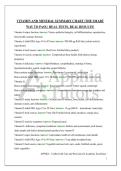
VITAMIN AND MINERAL SUMMARY CHART |THE SMART
WAY TO PASS | REAL TESTS, REAL RESULTS!
Vitamin A major function Answer: Vision, epithelial integrity, cell differentiation, reproduction,
bone health, immune function
Vitamin A Adult DRI, Ages 19 to 50 Years Answer: 700-900 μg RAE/day (retinol activity
equivalents)
Vitamin A food sources Answer: Beef liver, fortified dairy products
Vitamin A toxicity symptoms Answer: Compromised bone health, birth defects during
pregnancy
Vitamin A deficiency Answer: Night blindness, xerophthalmia, stunting of bones,
hyperkeratosis(dry, scaled, rough skin around follicles
Beta-carotene major functions Answer: Provitamin-A carotenoid, antioxidant
Beta-carotene Adult DRI, Ages 19 to 50 Years Answer: 700-900 μg RAE/day (converts to
Vitamin A)
Beta-carotene food sources Answer: Sweet potatoes, carrots, winter squash, cantaloupe
Beta-carotene toxicity symptoms Answer: Carotenodermia - harmless orange hue to palms and
palate
Vitamin D major function Answer: Calcium (and P) balance, bone health, cell differentiation,
immune system, anti-inflammatory
Vitamin D Adult DRI, Ages 19 to 50 Years Answer: 15 μg (600 lU - internationa l units)/day
Vitamin D food sources Answer: Fatty fish Fortified foods (dairy products, orange juice,
cereals)
Vitamin D toxicity symptoms Answer: Hypercalcemia
Vitamin D- deficiency symptoms/conditions Answer: Rickets and osteomalacia (soft bones);
older people and darker skinned people produce less vitamin D
Vitamin E major functions Answer: Antioxidant, health of cell membranes, heart health
Vitamin E Adult DRI, Ages 19 to 50 Years Answer: 15 mg alpha-tocopherol/day
Vitamin E food sources Answer: Vegetable and seed oils, nuts, seeds, fortified cereals, green
leafy vegetables
APPHIA – Crafted with Care and Precision for Academic Excellence.
1
, Vitamin E toxicity symptoms Answer: Interference with blood clotting and increased risk of
hemorrhage, esp with aspirin
Vitamin E deficiency symptoms/ conditions Answer: Nerve problems, muscle weakness, and
uncontrolled movement of body parts
Vitamin K Major functions Answer: Blood clotting, bone health (osteoblasts)
Vitamin K Adult DRI, Ages 19 to 50 Years Answer: 90-120 ug/day
Vitamin K food sources Answer: Green leafy vegetables, soybeans, canola and soybean oils,
beef liver
Vitamin K deficiency symptoms/conditions Answer: Excessive bleeding, newborns may receive
dose to initiate clotting factors
Fat soluble vitamins Answer: Vitamin A, D, E,K
Thiamin (B1) Major functions Answer: Coenzyme, needed for nerve function and energy
metabolism
Thiamin (B1) Adult DRI, Ages 19 to 50 Years Answer: 1.1 mg-1.2 mg/day
Thiamin (B1) food sources Answer: Pork, enriched and fortified foods, whole grains
Thiamin (B1) deficiency symptoms/conditions Answer: Beriberi (peripheral nerve damage,
edema,) may see with alcoholism
Riboflavin (B2) Major functions Answer: Coenzyme in energy metabolism, enhances function
of other B vitamins
Riboflavin (B2) Adult DRI, Ages 19 to 50 Years Answer: 1.1-1.3 mg/ day
Riboflavin (B2) food sources Answer: Milk, enriched and fortified grains, whole grains
Riboflavin (B2) toxicity symptoms Answer: Can turn urine bright yellow
Riboflavin (B2) deficiency symptoms/conditions Answer: Greasy, scaly skin, bloodshot tired
eyes inflammation of the mouth, tongue, and lips, magenta tongue
Niacin (B3) Major functions Answer: Coenzyme in energy metabolism, needed to synthesize
fat and cholesterol
Niacin (B3) Adult DRI, Ages 19 to 50 Years Answer: 14-16 mg/day; body can create niacin
from tryptophan
Niacin (B3) food sources Answer: Lean meats, fish, poultry, enriched and fortified grains and
cereals, whole grains, corn, sweet potatoes
APPHIA – Crafted with Care and Precision for Academic Excellence.
2
WAY TO PASS | REAL TESTS, REAL RESULTS!
Vitamin A major function Answer: Vision, epithelial integrity, cell differentiation, reproduction,
bone health, immune function
Vitamin A Adult DRI, Ages 19 to 50 Years Answer: 700-900 μg RAE/day (retinol activity
equivalents)
Vitamin A food sources Answer: Beef liver, fortified dairy products
Vitamin A toxicity symptoms Answer: Compromised bone health, birth defects during
pregnancy
Vitamin A deficiency Answer: Night blindness, xerophthalmia, stunting of bones,
hyperkeratosis(dry, scaled, rough skin around follicles
Beta-carotene major functions Answer: Provitamin-A carotenoid, antioxidant
Beta-carotene Adult DRI, Ages 19 to 50 Years Answer: 700-900 μg RAE/day (converts to
Vitamin A)
Beta-carotene food sources Answer: Sweet potatoes, carrots, winter squash, cantaloupe
Beta-carotene toxicity symptoms Answer: Carotenodermia - harmless orange hue to palms and
palate
Vitamin D major function Answer: Calcium (and P) balance, bone health, cell differentiation,
immune system, anti-inflammatory
Vitamin D Adult DRI, Ages 19 to 50 Years Answer: 15 μg (600 lU - internationa l units)/day
Vitamin D food sources Answer: Fatty fish Fortified foods (dairy products, orange juice,
cereals)
Vitamin D toxicity symptoms Answer: Hypercalcemia
Vitamin D- deficiency symptoms/conditions Answer: Rickets and osteomalacia (soft bones);
older people and darker skinned people produce less vitamin D
Vitamin E major functions Answer: Antioxidant, health of cell membranes, heart health
Vitamin E Adult DRI, Ages 19 to 50 Years Answer: 15 mg alpha-tocopherol/day
Vitamin E food sources Answer: Vegetable and seed oils, nuts, seeds, fortified cereals, green
leafy vegetables
APPHIA – Crafted with Care and Precision for Academic Excellence.
1
, Vitamin E toxicity symptoms Answer: Interference with blood clotting and increased risk of
hemorrhage, esp with aspirin
Vitamin E deficiency symptoms/ conditions Answer: Nerve problems, muscle weakness, and
uncontrolled movement of body parts
Vitamin K Major functions Answer: Blood clotting, bone health (osteoblasts)
Vitamin K Adult DRI, Ages 19 to 50 Years Answer: 90-120 ug/day
Vitamin K food sources Answer: Green leafy vegetables, soybeans, canola and soybean oils,
beef liver
Vitamin K deficiency symptoms/conditions Answer: Excessive bleeding, newborns may receive
dose to initiate clotting factors
Fat soluble vitamins Answer: Vitamin A, D, E,K
Thiamin (B1) Major functions Answer: Coenzyme, needed for nerve function and energy
metabolism
Thiamin (B1) Adult DRI, Ages 19 to 50 Years Answer: 1.1 mg-1.2 mg/day
Thiamin (B1) food sources Answer: Pork, enriched and fortified foods, whole grains
Thiamin (B1) deficiency symptoms/conditions Answer: Beriberi (peripheral nerve damage,
edema,) may see with alcoholism
Riboflavin (B2) Major functions Answer: Coenzyme in energy metabolism, enhances function
of other B vitamins
Riboflavin (B2) Adult DRI, Ages 19 to 50 Years Answer: 1.1-1.3 mg/ day
Riboflavin (B2) food sources Answer: Milk, enriched and fortified grains, whole grains
Riboflavin (B2) toxicity symptoms Answer: Can turn urine bright yellow
Riboflavin (B2) deficiency symptoms/conditions Answer: Greasy, scaly skin, bloodshot tired
eyes inflammation of the mouth, tongue, and lips, magenta tongue
Niacin (B3) Major functions Answer: Coenzyme in energy metabolism, needed to synthesize
fat and cholesterol
Niacin (B3) Adult DRI, Ages 19 to 50 Years Answer: 14-16 mg/day; body can create niacin
from tryptophan
Niacin (B3) food sources Answer: Lean meats, fish, poultry, enriched and fortified grains and
cereals, whole grains, corn, sweet potatoes
APPHIA – Crafted with Care and Precision for Academic Excellence.
2

