

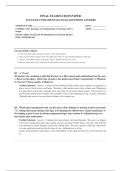
FINAL EXAMINATION PAPER dd dd
dd NCLEX RN FUNDAMENTALS EXAM QUESTIONS ANSWERS dd dd dd dd dd
STUDENT NAME: ________________________________ dd dd DATE: _____________ dd
COURSE: Nclex questions for Fundamentals of Nursing with ra
dd dd dd dd dd dd dd dd TIME: _____________ dd
tionale
EXAM CODE: NCLEX RN FUNDAMENTALS EXAM QUEST
dd dd dd dd dd dd
IONS ANSWERS-101 dd
EXAM INSTRUCTIONS: dd
1. Print your full name and date clearly in the header above.
dd dd dd dd dd dd dd dd dd dd dd
2. This exam booklet contains both Test Questions (Part I) and Verified Solutions (Part II).
dd dd dd dd dd dd dd dd dd dd dd dd dd dd
3. Answer all multiple-choice questions clearly. Double-check your work.
dd dd dd dd dd dd dd dd
4. Do not break the seal or open this booklet until instructed to do so by the proctor.
dd dd dd dd dd dd dd dd dd dd dd dd dd dd dd dd dd
Q1. A 73-year-
dddd dd
old patient who sustained a right hip fracture in a fall requests pain medication from the nurs
dd dd dd dd dd dd dd dd dd dd dd dd dd dd dd dd
e. Based on his injury, which type of pain is this patient most likely experiencing? 1) Phantom
dd dd dd dd dd dd dd dd dd dd dd dd dd dd dd dd dd
2) Visceral 3) Deep somatic 4) Referred
dd dd dd dd dd dd
[Verified Solution]: Answer: 3) Deep somatic Rationale: Deep somatic pain originates in ligaments, te
dd dddd dd dd dd dd dd dd dd dd dd dd dd
ndons, nerves, blood vessels, and bones. Therefore, a hip fracture causes deep somatic pain. Phantom pa
dd dd dd dd dd dd dd dd dd dd dd dd dd dd dd
in is pain that is perceived to originate from a part that was removed during surgery. Visceral pain is ca
dd dd dd dd dd dd dd dd dd dd dd dd dd dd dd dd dd dd dd
used by deep internal pain receptors and commonly occurs in the abdominal cavity, cranium, and thorax
dd dd dd dd dd dd dd dd dd dd dd dd dd dd dd
. Referred pain occurs in an area that is distant to the original site.
dd dd dd dd dd dd dd dd dd dd dd dd dd
Q2. Which pain management task can the nurse safely delegate to nursing assistive personnel
dddd dd dd dd dd dd dd dd dd dd dd dd dd
? 1) Asking about pain during vital signs 2) Evaluating the effectiveness of pain medication 3)
dd dd dd dd dd dd dd dd dd dd dd dd dd dd dd dd
Developing a plan of care involving nonpharmacologic interventions 4) Administering over-
dd dd dd dd dd dd dd dd dd dd
the-counter pain medications dd dd
[Verified Solution]: Answer: 1) Asking about pain during vital signs Rationale: The nurse can delegat
dd dddd dd dd dd dd dd dd dd dd dd dd dd dd
e the task of asking about pain when nursing assistive personnel (NAP) obtain vital signs. The NAP mu
dd dd dd dd dd dd dd dd dd dd dd dd dd dd dd dd dd
st be instructed to report findings to the nurse without delay. The nurse should evaluate the effectivenes
dd dd dd dd dd dd dd dd dd dd dd dd dd dd dd dd
s of pain medications and develop the plan of care. Administering over-the-
dd dd dd dd dd dd dd dd dd dd dd
counter and prescription medications is the responsibility of the registered nurse or licensed practical nu
dd dd dd dd dd dd dd dd dd dd dd dd dd dd
rse.
, Q3. Which factor in the patient's past medical history dictates that the nurse exercise caution
dddd dd dd dd dd dd dd dd dd dd dd dd dd dd dd
when administering acetaminophen (Tylenol)? 1) Hepatitis B 2) Occasional alcohol use 3) Aller
dd dd dd dd dd dd dd dd dd dd dd dd
gy to aspirin 4) Gastric irritation with bleeding
dd dd dd dd dd dd dd
[Verified Solution]: Answer: 1) Hepatitis B Rationale: Even in recommended doses, acetaminophen ca
dd dddd dd dd dd dd dd dd dd dd dd dd
n cause severe hepatotoxicity in patients with liver disease, such as hepatitis
dd dd dd dd dd dd dd dd dd dd dd
B. Patients who consume alcohol regularly should also use acetaminophen cautiously. Those allergic to
dd dd dd dd dd dd dd dd dd dd dd dd dd dd
aspirin or other nonsteroidal anti-
dd dd dd dd
inflammatory drugs (NSAIDs) can use acetaminophen safely. Acetaminophen rarely causes gastrointesti
dd dd dd dd dd dd dd dd dd dd
nal (GI) problems; therefore, it can be used for those with a history of gastric irritation and bleeding.
dd dd dd dd dd dd dd dd dd dd dd dd dd dd dd dd dd
Q4. Which action should the nurse take before administering morphine 4.0 mg intravenously
dddd dd dd dd dd dd dd dd dd dd dd dd dd
to a patient complaining of incisional pain? 1) Assess the patient's incision. 2) Clarify the orde
dd dd dd dd dd dd dd dd dd dd dd dd dd dd dd
r with the prescriber. 3) Assess the patient's respiratory status. 4) Monitor the patient's heart
dd dd dd dd dd dd dd dd dd dd dd dd dd dd dd
rate.
[Verified Solution]: Answer: 3) Assess the patient's respiratory status. Rationale: Before administering
dd dddd dd dd dd dd dd dd dd dd dd dd
an opioid analgesic, such as morphine, the nurse should assess the patient's respiratory status because op
dd dd dd dd dd dd dd dd dd dd dd dd dd dd dd
ioid analgesics can cause respiratory depression. It is not necessary to clarify the order with the physicia
dd dd dd dd dd dd dd dd dd dd dd dd dd dd dd dd
n because morphine 4 mg IV is an appropriate dose. It is not necessary to monitor the patient's heart rat
dd dd dd dd dd dd dd dd dd dd dd dd dd dd dd dd dd dd dd
e.
Q5. The nurse administers codeine sulfate 30 mg orally to a patient who underwent cranioto
dddd dd dd dd dd dd dd dd dd dd dd dd dd dd
my 3 days ago for a brain tumor. How soon after administration should the nurse reassess the
dd dd dd dd dd dd dd dd dd dd dd dd dd dd dd dd dd
patient's pain? 1) Immediately 2) In 10 minutes 3) In 15 minutes 4) In 60 minutes
dd dd dd dd dd dd dd dd dd dd dd dd dd dd dd
[Verified Solution]: Answer: 4) In 60 minutes Rationale: Codeine administered by the oral route reach
dd dddd dd dd dd dd dd dd dd dd dd dd dd dd
es peak concentration in 60 minutes; therefore, the nurse should reassess the patient's pain 60 minutes af
dd dd dd dd dd dd dd dd dd dd dd dd dd dd dd dd
ter administration. The nurse should reassess pain after 10 minutes when administering codeine by the i
dd dd dd dd dd dd dd dd dd dd dd dd dd dd dd
ntramuscular or subcutaneous routes. Drugs administered by the intravenous (IV) route are effective alm
dd dd dd dd dd dd dd dd dd dd dd dd dd
ost immediately; however, codeine is not recommended for IV administration.
dd dd dd dd dd dd dd dd dd
Q6. Which nonsteroidal anti-
dddd dd dd
inflammatory drug might be administered to inhibit platelet aggregation in a patient at risk fo
dd dd dd dd dd dd dd dd dd dd dd dd dd dd
r thrombophlebitis? 1) Ibuprofen (Motrin) 2) Celecoxib (Celebrex) 3) Aspirin (Ecotrin) 4) Ind
dd dd dd dd dd dd dd dd dd dd dd dd
omethacin (Indocin) dd
[Verified Solution]: Answer: 3) Aspirin (Ecotrin) Rationale: Aspirin is a unique NSAID that inhibits p
dd dddd dd dd dd dd dd dd dd dd dd dd dd dd
latelet aggregation. Low- dd dd
dose aspirin therapy is commonly administered to decrease the risk of thrombophlebitis, myocardial infa
dd dd dd dd dd dd dd dd dd dd dd dd dd
rction, and stroke. Ibuprofen, celecoxib, and indomethacin are NSAIDs, but they do not inhibit platelet
dd dd dd dd dd dd dd dd dd dd dd dd dd dd dd
aggregation.
dd NCLEX RN FUNDAMENTALS EXAM QUESTIONS ANSWERS dd dd dd dd dd
STUDENT NAME: ________________________________ dd dd DATE: _____________ dd
COURSE: Nclex questions for Fundamentals of Nursing with ra
dd dd dd dd dd dd dd dd TIME: _____________ dd
tionale
EXAM CODE: NCLEX RN FUNDAMENTALS EXAM QUEST
dd dd dd dd dd dd
IONS ANSWERS-101 dd
EXAM INSTRUCTIONS: dd
1. Print your full name and date clearly in the header above.
dd dd dd dd dd dd dd dd dd dd dd
2. This exam booklet contains both Test Questions (Part I) and Verified Solutions (Part II).
dd dd dd dd dd dd dd dd dd dd dd dd dd dd
3. Answer all multiple-choice questions clearly. Double-check your work.
dd dd dd dd dd dd dd dd
4. Do not break the seal or open this booklet until instructed to do so by the proctor.
dd dd dd dd dd dd dd dd dd dd dd dd dd dd dd dd dd
Q1. A 73-year-
dddd dd
old patient who sustained a right hip fracture in a fall requests pain medication from the nurs
dd dd dd dd dd dd dd dd dd dd dd dd dd dd dd dd
e. Based on his injury, which type of pain is this patient most likely experiencing? 1) Phantom
dd dd dd dd dd dd dd dd dd dd dd dd dd dd dd dd dd
2) Visceral 3) Deep somatic 4) Referred
dd dd dd dd dd dd
[Verified Solution]: Answer: 3) Deep somatic Rationale: Deep somatic pain originates in ligaments, te
dd dddd dd dd dd dd dd dd dd dd dd dd dd
ndons, nerves, blood vessels, and bones. Therefore, a hip fracture causes deep somatic pain. Phantom pa
dd dd dd dd dd dd dd dd dd dd dd dd dd dd dd
in is pain that is perceived to originate from a part that was removed during surgery. Visceral pain is ca
dd dd dd dd dd dd dd dd dd dd dd dd dd dd dd dd dd dd dd
used by deep internal pain receptors and commonly occurs in the abdominal cavity, cranium, and thorax
dd dd dd dd dd dd dd dd dd dd dd dd dd dd dd
. Referred pain occurs in an area that is distant to the original site.
dd dd dd dd dd dd dd dd dd dd dd dd dd
Q2. Which pain management task can the nurse safely delegate to nursing assistive personnel
dddd dd dd dd dd dd dd dd dd dd dd dd dd
? 1) Asking about pain during vital signs 2) Evaluating the effectiveness of pain medication 3)
dd dd dd dd dd dd dd dd dd dd dd dd dd dd dd dd
Developing a plan of care involving nonpharmacologic interventions 4) Administering over-
dd dd dd dd dd dd dd dd dd dd
the-counter pain medications dd dd
[Verified Solution]: Answer: 1) Asking about pain during vital signs Rationale: The nurse can delegat
dd dddd dd dd dd dd dd dd dd dd dd dd dd dd
e the task of asking about pain when nursing assistive personnel (NAP) obtain vital signs. The NAP mu
dd dd dd dd dd dd dd dd dd dd dd dd dd dd dd dd dd
st be instructed to report findings to the nurse without delay. The nurse should evaluate the effectivenes
dd dd dd dd dd dd dd dd dd dd dd dd dd dd dd dd
s of pain medications and develop the plan of care. Administering over-the-
dd dd dd dd dd dd dd dd dd dd dd
counter and prescription medications is the responsibility of the registered nurse or licensed practical nu
dd dd dd dd dd dd dd dd dd dd dd dd dd dd
rse.
, Q3. Which factor in the patient's past medical history dictates that the nurse exercise caution
dddd dd dd dd dd dd dd dd dd dd dd dd dd dd dd
when administering acetaminophen (Tylenol)? 1) Hepatitis B 2) Occasional alcohol use 3) Aller
dd dd dd dd dd dd dd dd dd dd dd dd
gy to aspirin 4) Gastric irritation with bleeding
dd dd dd dd dd dd dd
[Verified Solution]: Answer: 1) Hepatitis B Rationale: Even in recommended doses, acetaminophen ca
dd dddd dd dd dd dd dd dd dd dd dd dd
n cause severe hepatotoxicity in patients with liver disease, such as hepatitis
dd dd dd dd dd dd dd dd dd dd dd
B. Patients who consume alcohol regularly should also use acetaminophen cautiously. Those allergic to
dd dd dd dd dd dd dd dd dd dd dd dd dd dd
aspirin or other nonsteroidal anti-
dd dd dd dd
inflammatory drugs (NSAIDs) can use acetaminophen safely. Acetaminophen rarely causes gastrointesti
dd dd dd dd dd dd dd dd dd dd
nal (GI) problems; therefore, it can be used for those with a history of gastric irritation and bleeding.
dd dd dd dd dd dd dd dd dd dd dd dd dd dd dd dd dd
Q4. Which action should the nurse take before administering morphine 4.0 mg intravenously
dddd dd dd dd dd dd dd dd dd dd dd dd dd
to a patient complaining of incisional pain? 1) Assess the patient's incision. 2) Clarify the orde
dd dd dd dd dd dd dd dd dd dd dd dd dd dd dd
r with the prescriber. 3) Assess the patient's respiratory status. 4) Monitor the patient's heart
dd dd dd dd dd dd dd dd dd dd dd dd dd dd dd
rate.
[Verified Solution]: Answer: 3) Assess the patient's respiratory status. Rationale: Before administering
dd dddd dd dd dd dd dd dd dd dd dd dd
an opioid analgesic, such as morphine, the nurse should assess the patient's respiratory status because op
dd dd dd dd dd dd dd dd dd dd dd dd dd dd dd
ioid analgesics can cause respiratory depression. It is not necessary to clarify the order with the physicia
dd dd dd dd dd dd dd dd dd dd dd dd dd dd dd dd
n because morphine 4 mg IV is an appropriate dose. It is not necessary to monitor the patient's heart rat
dd dd dd dd dd dd dd dd dd dd dd dd dd dd dd dd dd dd dd
e.
Q5. The nurse administers codeine sulfate 30 mg orally to a patient who underwent cranioto
dddd dd dd dd dd dd dd dd dd dd dd dd dd dd
my 3 days ago for a brain tumor. How soon after administration should the nurse reassess the
dd dd dd dd dd dd dd dd dd dd dd dd dd dd dd dd dd
patient's pain? 1) Immediately 2) In 10 minutes 3) In 15 minutes 4) In 60 minutes
dd dd dd dd dd dd dd dd dd dd dd dd dd dd dd
[Verified Solution]: Answer: 4) In 60 minutes Rationale: Codeine administered by the oral route reach
dd dddd dd dd dd dd dd dd dd dd dd dd dd dd
es peak concentration in 60 minutes; therefore, the nurse should reassess the patient's pain 60 minutes af
dd dd dd dd dd dd dd dd dd dd dd dd dd dd dd dd
ter administration. The nurse should reassess pain after 10 minutes when administering codeine by the i
dd dd dd dd dd dd dd dd dd dd dd dd dd dd dd
ntramuscular or subcutaneous routes. Drugs administered by the intravenous (IV) route are effective alm
dd dd dd dd dd dd dd dd dd dd dd dd dd
ost immediately; however, codeine is not recommended for IV administration.
dd dd dd dd dd dd dd dd dd
Q6. Which nonsteroidal anti-
dddd dd dd
inflammatory drug might be administered to inhibit platelet aggregation in a patient at risk fo
dd dd dd dd dd dd dd dd dd dd dd dd dd dd
r thrombophlebitis? 1) Ibuprofen (Motrin) 2) Celecoxib (Celebrex) 3) Aspirin (Ecotrin) 4) Ind
dd dd dd dd dd dd dd dd dd dd dd dd
omethacin (Indocin) dd
[Verified Solution]: Answer: 3) Aspirin (Ecotrin) Rationale: Aspirin is a unique NSAID that inhibits p
dd dddd dd dd dd dd dd dd dd dd dd dd dd dd
latelet aggregation. Low- dd dd
dose aspirin therapy is commonly administered to decrease the risk of thrombophlebitis, myocardial infa
dd dd dd dd dd dd dd dd dd dd dd dd dd
rction, and stroke. Ibuprofen, celecoxib, and indomethacin are NSAIDs, but they do not inhibit platelet
dd dd dd dd dd dd dd dd dd dd dd dd dd dd dd
aggregation.

