Vancouver Island University Practical Nursing Diploma
Pediatric Nursing
15 studiers today 5.0 (5 reviews)
Students also studied
Flashcard sets Study guides
Pediatric Nursing Peds Exam 1 NCLEX style questions Pediatric Nursing Pediatr
111 terms 37 terms Teacher 247 terms 247 term
kate_telegus Preview alanna_buonanno Preview slack033 Preview Cha
Terms in this set (294) Hide definitions
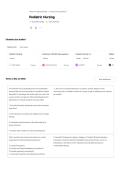
An 18-Month-Old is discharged from the hospital after . 2. The route of roseola transmission is unkown, and the disease is more
having a febrile seizure secondary to exanthem subitum commonly seen in children 6 months to 3 years of age, so siblings do not need to
(Roseola). On discharge, the mother asks the nurse if her be isolated.
6-year-old twins will get sick. Which teaching about the
transmission of roseola would be most accurate?
1. The child should be isolated at home until the vesicles
have dried.
2. The child does not need to be isolated from the older
siblings.
3. Administer acetaminophen to the older siblings to
prevent seizures.
4. Monitor older children for seizure development.
Which would be the priority intervention for a child 2. Varicella (Chickenpox) is highly contagious. Contact & Droplet respiratory
suspected of having varicella (chickenpox)? precautions should be started immediately because the primary source of
transmission is secretions of the respiratory tract (droplet) and also by
1. Contact Precautions contaminated objects.
2. Contact and Droplet Respiratory Precautions?
3. Droplet respiratory precautions?
4. Universal Precautions and standard precautions.
, Caladryl A lotion containing diphenhydramine. Should not be applied if child has already
been given benadryl (diphenhydramine) because it can cause toxicity.
Which s&s would the nurse expect with rheumatic fever? Ankle and knee joint pain.
1. Ankle and Knee Joint Pain.
2. Negative group A beta strep culture.
3. Large, red "bulls eye" - appearing rash.
4. stiff neck with photophobia.
The parents of a 12-month old with HIV are concerned "You are concerned about your child receiving immunizations. Let me explain why
about him receiving routine immunizations. What will the your child will NOT receive routine immunizations today"
nurse tell them about immunizations?
The nurse acknowledges a client's fears and then discusses the concerns to clarify
any misconceptions. Immunizations and influenza vaccine are recommended to
prevent infection. Immunocompromised HIV-infected children should not receive
MMR and varicella live vaccines.
Nursing Assessment suspects the newborn has cystic 1&3
fibrosis. Which interventions would the nurse begin.
1. Observe frequency and nature of stools. Cystic fibrosis is an inherited autsomal trait, causing exocrien gland dysfunction.
2. Provide Chest PT 7-10% present meconium ileus, so assessing stool frequency and consistency is
3. Observe for weight gain. important.
4. Assess parent's compliance with fluid restrictions.
5. Assess respiratory system frequently. Assessing weight is important in newborns because they lose up to 10% of their
birth weight, and can take 2 weeks for them to regain their birth weight.
Assessing the newborn's respiratory system frequently would be monitored as
frequently as other infants if the newborn has no respiratory symptoms. Chest PT
would not be initiated in a newborn without a definitive diagnosis.
Can a mother breastfeed their infant if they have PKU? Yes. Breast milk has low amounts of phenylalanine, so the mother can breast as
long as the infants phenylalanine level is monitored.
Vaccines given routinely at 15 months. Hib & DTaP
Which priority intervention for the newborn of a mother The newborn should receive both hepatitis B vaccine and hepatitis B immune
positive for hepatitis antigen? globulin within 12 hours of birth to prevent hepatitis B infection.
signs of intussusception bloody stools or "currant jelly stools", diarrhea, Large palpable sausage shaped
mass in the abdomen, abdominal distention, grunting, dehydration Fever, and pain
(legs pulled towards abdomen)!
Pediatric Nursing
15 studiers today 5.0 (5 reviews)
Students also studied
Flashcard sets Study guides
Pediatric Nursing Peds Exam 1 NCLEX style questions Pediatric Nursing Pediatr
111 terms 37 terms Teacher 247 terms 247 term
kate_telegus Preview alanna_buonanno Preview slack033 Preview Cha
Terms in this set (294) Hide definitions
An 18-Month-Old is discharged from the hospital after . 2. The route of roseola transmission is unkown, and the disease is more
having a febrile seizure secondary to exanthem subitum commonly seen in children 6 months to 3 years of age, so siblings do not need to
(Roseola). On discharge, the mother asks the nurse if her be isolated.
6-year-old twins will get sick. Which teaching about the
transmission of roseola would be most accurate?
1. The child should be isolated at home until the vesicles
have dried.
2. The child does not need to be isolated from the older
siblings.
3. Administer acetaminophen to the older siblings to
prevent seizures.
4. Monitor older children for seizure development.
Which would be the priority intervention for a child 2. Varicella (Chickenpox) is highly contagious. Contact & Droplet respiratory
suspected of having varicella (chickenpox)? precautions should be started immediately because the primary source of
transmission is secretions of the respiratory tract (droplet) and also by
1. Contact Precautions contaminated objects.
2. Contact and Droplet Respiratory Precautions?
3. Droplet respiratory precautions?
4. Universal Precautions and standard precautions.
, Caladryl A lotion containing diphenhydramine. Should not be applied if child has already
been given benadryl (diphenhydramine) because it can cause toxicity.
Which s&s would the nurse expect with rheumatic fever? Ankle and knee joint pain.
1. Ankle and Knee Joint Pain.
2. Negative group A beta strep culture.
3. Large, red "bulls eye" - appearing rash.
4. stiff neck with photophobia.
The parents of a 12-month old with HIV are concerned "You are concerned about your child receiving immunizations. Let me explain why
about him receiving routine immunizations. What will the your child will NOT receive routine immunizations today"
nurse tell them about immunizations?
The nurse acknowledges a client's fears and then discusses the concerns to clarify
any misconceptions. Immunizations and influenza vaccine are recommended to
prevent infection. Immunocompromised HIV-infected children should not receive
MMR and varicella live vaccines.
Nursing Assessment suspects the newborn has cystic 1&3
fibrosis. Which interventions would the nurse begin.
1. Observe frequency and nature of stools. Cystic fibrosis is an inherited autsomal trait, causing exocrien gland dysfunction.
2. Provide Chest PT 7-10% present meconium ileus, so assessing stool frequency and consistency is
3. Observe for weight gain. important.
4. Assess parent's compliance with fluid restrictions.
5. Assess respiratory system frequently. Assessing weight is important in newborns because they lose up to 10% of their
birth weight, and can take 2 weeks for them to regain their birth weight.
Assessing the newborn's respiratory system frequently would be monitored as
frequently as other infants if the newborn has no respiratory symptoms. Chest PT
would not be initiated in a newborn without a definitive diagnosis.
Can a mother breastfeed their infant if they have PKU? Yes. Breast milk has low amounts of phenylalanine, so the mother can breast as
long as the infants phenylalanine level is monitored.
Vaccines given routinely at 15 months. Hib & DTaP
Which priority intervention for the newborn of a mother The newborn should receive both hepatitis B vaccine and hepatitis B immune
positive for hepatitis antigen? globulin within 12 hours of birth to prevent hepatitis B infection.
signs of intussusception bloody stools or "currant jelly stools", diarrhea, Large palpable sausage shaped
mass in the abdomen, abdominal distention, grunting, dehydration Fever, and pain
(legs pulled towards abdomen)!