

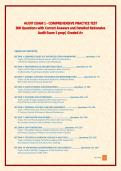
TABLE OF CONTENTS
SECTION 1: SARBANES-OXLEY ACT AND REGULATORY FRAMEWORK ..................... Questions 1-10
Topics: SOX Certification Requirements, Auditor Independence,
PCAOB, SEC Regulations, Quality Control Standards
SECTION 2: PROFESSIONAL STANDARDS AND ETHICS .............................. Questions 11-40
Topics: AICPA Code of Conduct, Independence Rules, Due Care,
Confidentiality, Fraud Responsibility, Audit Committees
SECTION 3: GENERAL AUDITING STANDARDS AND RESPONSIBILITIES ............... Questions 41-70
Topics: GAAS Principles, Professional Skepticism, Audit Risk Model,
Materiality, Internal Controls, Illegal Acts
SECTION 4: AUDIT EVIDENCE AND PROCEDURES .................................. Questions 71-100
Topics: Evidence Reliability, Confirmations, Analytical Procedures,
Audit Sampling, CAATs, Assertions, Risk Assessment
SECTION 5: PLANNING AND SUPERVISION ....................................... Questions 101-130
Topics: Audit Strategy, Engagement Planning, Supervision,
Fraud Risk Assessment, Related Parties, Going Concern
SECTION 6: INTERNAL CONTROL AND RISK ASSESSMENT .......................... Questions 131-160
Topics: COSO Framework, Control Environment, Control Activities,
IT Controls, Control Deficiencies, Material Weaknesses
SECTION 7: SUBSTANTIVE PROCEDURES ......................................... Questions 161-190
Topics: Tests of Details, Analytical Procedures, Revenue Testing,
Receivables, Inventory, Cash, Liabilities, Fixed Assets
SECTION 8: AUDIT REPORTING ................................................ Questions 191-220
Topics: Unmodified Opinions, Qualified Opinions, Adverse Opinions,
Disclaimers, Emphasis of Matter, Critical Audit Matters (CAMs)
SECTION 9: STATISTICAL SAMPLING AND DATA ANALYTICS ....................... Questions 221-250
Topics: Attribute Sampling, Variables Sampling, MUS, Sample Size,
Data Analytics, Regression Analysis, AI in Auditing
SECTION 10: PROFESSIONAL RESPONSIBILITIES AND LIABILITY ................... Questions 251-280
Topics: Auditor Liability, Negligence, Fraud, Securities Laws,
Statute of Limitations, PSLRA, FCPA
SCHOLARSOURCE 1
,SECTION 11: ADVANCED AUDITING CONCEPTS .................................... Questions 281-300
Topics: Sustainability Reporting, Climate Risks, Continuous Auditing,
Agile Auditing, AI, Cryptocurrencies, Cloud Computing, Blockchain
SECTION 1: SARBANES-OXLEY ACT AND REGULATORY FRAMEWORK
1. Which of the following is not true with respect to the auditors' report for an issuer?
1) The report title should contain the word "independent"
2) The report provides a detailed listing of major auditing procedures performed during
the examination
3) The opinion assesses the financial statements against an applicable financial reporting
framework
4) The report specifically identifies the financial statements and years examined by the
auditor
Correct Answer: 2
Rationale: The standard auditor's report for an issuer includes an opinion, basis for opinion
(including independence and scope), and critical audit matters. It does not provide a
detailed listing of auditing procedures performed, as that would be unnecessary and
potentially misleading. Such details are contained in the audit documentation, not the
public report.
2. The Sarbanes-Oxley Act of 2002 requires that the key company officials certify the
financial statements. Certification means that the company CEO and CFO must sign a
statement indicating:
1) They have read the financial statements
2) They are not aware of any false or misleading statements (or any key omitted
disclosures)
3) They believe that the financial statements present an accurate picture of the company's
financial condition
SCHOLARSOURCE 2
,4) All of the these choices are correct
Correct Answer: 4
Rationale: SOX Section 302 mandates that CEOs and CFOs personally certify financial
reports. This certification explicitly requires them to confirm they have read the reports,
that they contain no untrue material facts or omissions, and that they fairly present the
financial condition. Because all three statements are required components of the
certification, option 4 is the only fully correct answer.
3. Which of the following auditor concerns most likely could be so serious that the auditor
would conclude that a financial statement audit cannot be conducted?
1) The entity has no formal written code of conduct
2) The integrity of entity's management is suspect
3) Procedures requiring separation of duties are subject to management override
4) Management fails to modify prescribed controls for changes in conditions
Correct Answer: 2
Rationale: If management's integrity is in question, the auditor cannot rely on
management's representations or the internal controls they have established. Without the
ability to trust management, the auditor cannot obtain sufficient appropriate evidence,
making the audit impossible. The other options represent control deficiencies that can be
addressed through expanded substantive procedures but do not necessarily preclude an
audit entirely.
4. Auditors try to achieve independence in appearance in order to:
1) maintain public confidence in the profession
2) become independent in fact
3) comply with the responsibilities principle
4) maintain an unbiased mental attitude
Correct Answer: 1
Rationale: Independence in appearance relates to how the public perceives the auditor's
objectivity. Even if an auditor is factually independent, a lack of appearance can erode
public trust in the profession and the reliability of audit reports. Independence in fact
SCHOLARSOURCE 3
, (actual objectivity) is the goal, but appearance specifically targets public perception,
making option 1 the correct choice.
5. Which of the following is an element of a system of quality control that should be
considered by a public accounting firm in establishing its quality control policies and
procedures?
1) Lending credibility to a client's financial statements
2) Using statistical sampling techniques
3) Acceptance and continuance of client relationships and specific engagements
4) Membership in the Center for Public Company Audit Firms
Correct Answer: 3
Rationale: Under AU-C 220 and the PCAOB's quality control standards, a firm's system of
quality control must address six elements, one of which is "acceptance and continuance of
client relationships and specific engagements." The other options are either results of an
audit (lending credibility), audit procedures (sampling techniques), or optional
professional memberships, not required elements of a quality control system.
6. Which of the following does not directly relate to an auditor's responsibility for having
appropriate competence and capabilities to perform the audit?
1) Participating in continuing professional education
2) Gaining experience through hands-on practice
3) Obtaining reliable documentary evidence
4) Attending on-the-job training
Correct Answer: 3
Rationale: Competence and capabilities refer to the auditor's knowledge, skills, and
experience. CPE, practical experience, and on-the-job training all directly develop an
auditor's competence. Obtaining reliable documentary evidence is a procedure performed
during the audit to support the opinion, not a method of developing auditor competence,
making it the correct answer.
SCHOLARSOURCE 4
SECTION 1: SARBANES-OXLEY ACT AND REGULATORY FRAMEWORK ..................... Questions 1-10
Topics: SOX Certification Requirements, Auditor Independence,
PCAOB, SEC Regulations, Quality Control Standards
SECTION 2: PROFESSIONAL STANDARDS AND ETHICS .............................. Questions 11-40
Topics: AICPA Code of Conduct, Independence Rules, Due Care,
Confidentiality, Fraud Responsibility, Audit Committees
SECTION 3: GENERAL AUDITING STANDARDS AND RESPONSIBILITIES ............... Questions 41-70
Topics: GAAS Principles, Professional Skepticism, Audit Risk Model,
Materiality, Internal Controls, Illegal Acts
SECTION 4: AUDIT EVIDENCE AND PROCEDURES .................................. Questions 71-100
Topics: Evidence Reliability, Confirmations, Analytical Procedures,
Audit Sampling, CAATs, Assertions, Risk Assessment
SECTION 5: PLANNING AND SUPERVISION ....................................... Questions 101-130
Topics: Audit Strategy, Engagement Planning, Supervision,
Fraud Risk Assessment, Related Parties, Going Concern
SECTION 6: INTERNAL CONTROL AND RISK ASSESSMENT .......................... Questions 131-160
Topics: COSO Framework, Control Environment, Control Activities,
IT Controls, Control Deficiencies, Material Weaknesses
SECTION 7: SUBSTANTIVE PROCEDURES ......................................... Questions 161-190
Topics: Tests of Details, Analytical Procedures, Revenue Testing,
Receivables, Inventory, Cash, Liabilities, Fixed Assets
SECTION 8: AUDIT REPORTING ................................................ Questions 191-220
Topics: Unmodified Opinions, Qualified Opinions, Adverse Opinions,
Disclaimers, Emphasis of Matter, Critical Audit Matters (CAMs)
SECTION 9: STATISTICAL SAMPLING AND DATA ANALYTICS ....................... Questions 221-250
Topics: Attribute Sampling, Variables Sampling, MUS, Sample Size,
Data Analytics, Regression Analysis, AI in Auditing
SECTION 10: PROFESSIONAL RESPONSIBILITIES AND LIABILITY ................... Questions 251-280
Topics: Auditor Liability, Negligence, Fraud, Securities Laws,
Statute of Limitations, PSLRA, FCPA
SCHOLARSOURCE 1
,SECTION 11: ADVANCED AUDITING CONCEPTS .................................... Questions 281-300
Topics: Sustainability Reporting, Climate Risks, Continuous Auditing,
Agile Auditing, AI, Cryptocurrencies, Cloud Computing, Blockchain
SECTION 1: SARBANES-OXLEY ACT AND REGULATORY FRAMEWORK
1. Which of the following is not true with respect to the auditors' report for an issuer?
1) The report title should contain the word "independent"
2) The report provides a detailed listing of major auditing procedures performed during
the examination
3) The opinion assesses the financial statements against an applicable financial reporting
framework
4) The report specifically identifies the financial statements and years examined by the
auditor
Correct Answer: 2
Rationale: The standard auditor's report for an issuer includes an opinion, basis for opinion
(including independence and scope), and critical audit matters. It does not provide a
detailed listing of auditing procedures performed, as that would be unnecessary and
potentially misleading. Such details are contained in the audit documentation, not the
public report.
2. The Sarbanes-Oxley Act of 2002 requires that the key company officials certify the
financial statements. Certification means that the company CEO and CFO must sign a
statement indicating:
1) They have read the financial statements
2) They are not aware of any false or misleading statements (or any key omitted
disclosures)
3) They believe that the financial statements present an accurate picture of the company's
financial condition
SCHOLARSOURCE 2
,4) All of the these choices are correct
Correct Answer: 4
Rationale: SOX Section 302 mandates that CEOs and CFOs personally certify financial
reports. This certification explicitly requires them to confirm they have read the reports,
that they contain no untrue material facts or omissions, and that they fairly present the
financial condition. Because all three statements are required components of the
certification, option 4 is the only fully correct answer.
3. Which of the following auditor concerns most likely could be so serious that the auditor
would conclude that a financial statement audit cannot be conducted?
1) The entity has no formal written code of conduct
2) The integrity of entity's management is suspect
3) Procedures requiring separation of duties are subject to management override
4) Management fails to modify prescribed controls for changes in conditions
Correct Answer: 2
Rationale: If management's integrity is in question, the auditor cannot rely on
management's representations or the internal controls they have established. Without the
ability to trust management, the auditor cannot obtain sufficient appropriate evidence,
making the audit impossible. The other options represent control deficiencies that can be
addressed through expanded substantive procedures but do not necessarily preclude an
audit entirely.
4. Auditors try to achieve independence in appearance in order to:
1) maintain public confidence in the profession
2) become independent in fact
3) comply with the responsibilities principle
4) maintain an unbiased mental attitude
Correct Answer: 1
Rationale: Independence in appearance relates to how the public perceives the auditor's
objectivity. Even if an auditor is factually independent, a lack of appearance can erode
public trust in the profession and the reliability of audit reports. Independence in fact
SCHOLARSOURCE 3
, (actual objectivity) is the goal, but appearance specifically targets public perception,
making option 1 the correct choice.
5. Which of the following is an element of a system of quality control that should be
considered by a public accounting firm in establishing its quality control policies and
procedures?
1) Lending credibility to a client's financial statements
2) Using statistical sampling techniques
3) Acceptance and continuance of client relationships and specific engagements
4) Membership in the Center for Public Company Audit Firms
Correct Answer: 3
Rationale: Under AU-C 220 and the PCAOB's quality control standards, a firm's system of
quality control must address six elements, one of which is "acceptance and continuance of
client relationships and specific engagements." The other options are either results of an
audit (lending credibility), audit procedures (sampling techniques), or optional
professional memberships, not required elements of a quality control system.
6. Which of the following does not directly relate to an auditor's responsibility for having
appropriate competence and capabilities to perform the audit?
1) Participating in continuing professional education
2) Gaining experience through hands-on practice
3) Obtaining reliable documentary evidence
4) Attending on-the-job training
Correct Answer: 3
Rationale: Competence and capabilities refer to the auditor's knowledge, skills, and
experience. CPE, practical experience, and on-the-job training all directly develop an
auditor's competence. Obtaining reliable documentary evidence is a procedure performed
during the audit to support the opinion, not a method of developing auditor competence,
making it the correct answer.
SCHOLARSOURCE 4

