

RVTI Level 1 Certification Exam Evaluation
2026/2027 | Verified Questions
Recreational Vehicle Technical Institute (RVTI) | Verified Q&A | RV Service Technicians
This comprehensive evaluation set contains exactly 100 original questions meticulously developed for the
RVTI Level 1 Certification Exam Evaluation 2026/2027. These questions cover four core domains:
Electrical Systems (25 questions), Plumbing Systems (25 questions), LP-Gas Systems (25 questions), and
Structural & Chassis Components (25 questions). This is entirely original content designed to reinforce
official RVTI course objectives for exam readiness and academic success. Each question has been carefully
crafted to address unique sub-topics within the RV technology curriculum framework, ensuring
comprehensive coverage of the knowledge and technical skills required of an entry-level RV service
technician. Candidates using this Verified Answers compilation will strengthen their mastery of 12V/120V
electrical systems, potable water and waste plumbing, LP-gas safety and appliance operation, and
structural/chassis inspection and repair.
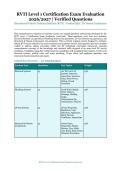
Content Area Overview — 100 Total Questions
Content Area Questions Key Topics Weight
Electrical Systems 25 12V DC/120V AC 25%
Systems, Batteries,
Converters, Inverters,
Solar, Shore Power,
Wiring, Circuit
Protection
Plumbing Systems 25 Fresh Water Supply, 25%
Water Heaters,
Drainage, Holding
Tanks,
Winterization/De-
winterization, Fixtures
LP-Gas Systems 25 LP-Gas Properties, 25%
Regulators, Leak
Detection, Appliances,
Safety Devices,
Ventilation, Inspections
Structural & Chassis 25 Frame Types, 25%
Components Suspension, Brakes,
Hitches, Tires, Slide-
outs, Roofs, Seals, Water
Intrusion Prevention
RVTI Level 1 Certification Exam Evaluation 2026/2027
,Domain: Electrical Systems (Questions 1–25)
1. What is the standard nominal voltage of an RV's DC (direct current) battery system?
A. 6 volts
B. 12 volts
C. 24 volts
D. 48 volts
Correct Answer: B
RV DC systems operate on a 12-volt nominal battery system. This standard voltage powers lights, water
pumps, fans, control boards, and other DC loads. Fully charged batteries read approximately 12.6-12.7
volts at rest.
2. Which type of RV battery uses absorbed glass mat (AGM) technology and requires NO
maintenance?
A. Flooded lead-acid battery
B. Sealed AGM (absorbed glass mat) battery
C. Nickel-cadmium battery
D. Wet cell marine battery
Correct Answer: B
AGM batteries use fiberglass mats saturated with electrolyte, making them spill-proof, maintenance-
free (no watering required), and resistant to vibration. They are increasingly popular in RV
applications due to their sealed construction and ability to mount in any orientation.
3. When testing a 12V flooded lead-acid battery with a hydrometer, a specific gravity
reading of 1.265 in all cells indicates the battery is:
A. Completely discharged
B. Approximately 50% charged
C. Fully charged
D. Sulfated and defective
Correct Answer: C
A specific gravity of 1.265 (at 80°F) in all cells indicates a fully charged 12V flooded lead-acid battery.
Readings should be consistent across all cells (within 0.030 points). A variation greater than 0.030
between cells indicates a weak or damaged cell. Battery voltage of 12.6-12.7V also indicates full charge.
4. What is the primary function of a converter/charger in an RV electrical system?
A. Convert 12V DC to 120V AC for household appliances
B. Convert 120V AC shore power or generator power to 12V DC for battery charging and DC loads
C. Store excess solar energy for nighttime use
D. Regulate LP-gas pressure to appliances
Correct Answer: B
The converter/charger converts 120V AC power (from shore power or generator) to 12V DC power to
run DC loads and charge the battery bank. Modern multi-stage converters use bulk, absorption, and
float charging stages to properly charge batteries without overcharging.
5. What is the purpose of an inverter in an RV electrical system?
A. Convert 120V AC to 12V DC
B. Convert 12V DC battery power to 120V AC power for running household appliances without shore
power
C. Charge the batteries from solar panels
D. Regulate generator voltage output
RVTI Level 1 Certification Exam Evaluation 2026/2027
, Correct Answer: B
An inverter converts 12V DC battery power to 120V AC power, allowing use of household appliances
(microwave, TV, etc.) when not connected to shore power or running the generator. Inverter size
(watts) must be matched to the intended load. Pure sine wave inverters are preferred for sensitive
electronics.
6. A 30-amp RV shore power service provides what maximum power capacity?
A. 1,200 watts
B. 1,800 watts
C. 3,600 watts
D. 12,000 watts
Correct Answer: C
A 30-amp, 120-volt service provides 3,600 watts maximum (30 amps × 120 volts = 3,600 watts). This is
the most common RV shore power connection. A 50-amp service provides 12,000 watts (50 amps × 240
volts). Understanding power capacity helps prevent circuit overloads.
7. What device automatically switches an RV's electrical system between shore power and
generator power?
A. Circuit breaker
B. Transfer switch
C. Inverter
D. Charge controller
Correct Answer: B
The transfer switch automatically or manually switches the RV's AC electrical system between shore
power and generator power, preventing both sources from being connected simultaneously (which
would cause a dangerous backfeed). It ensures only one AC source powers the RV at any time.
8. What is the function of a GFCI (ground fault circuit interrupter) outlet in an RV?
A. Increase voltage to connected appliances
B. Detect ground faults (current leakage) and interrupt power within milliseconds to prevent
electrocution
C. Convert AC to DC power
D. Charge 12V batteries from 120V outlets
Correct Answer: B
GFCI outlets detect imbalances between hot and neutral current (as little as 4-6 milliamps), indicating
current leaking to ground—potentially through a person. They interrupt power within milliseconds to
prevent electrocution. GFCI protection is required for all 120V outlets in wet locations (bathroom,
kitchen, exterior) per NFPA 1192.
9. When selecting wire gauge for a 20-amp DC circuit, which American Wire Gauge (AWG)
size is appropriate?
A. 18 AWG
B. 14 AWG
C. 12 AWG
D. 8 AWG
Correct Answer: C
12 AWG copper wire is rated for approximately 20 amps, making it appropriate for a 20-amp circuit. 14
AWG is rated for 15 amps, and 18 AWG for approximately 5-7 amps. Wire gauge must always be
selected based on the circuit's maximum amperage to prevent overheating and fire. Always follow the
NEC and RVIA standards.
10. When two 12V batteries are connected in parallel, the resulting system provides:
A. 24 volts at the same amp-hour capacity
B. 12 volts at double the amp-hour capacity
C. 6 volts at double the amp-hour capacity
RVTI Level 1 Certification Exam Evaluation 2026/2027
2026/2027 | Verified Questions
Recreational Vehicle Technical Institute (RVTI) | Verified Q&A | RV Service Technicians
This comprehensive evaluation set contains exactly 100 original questions meticulously developed for the
RVTI Level 1 Certification Exam Evaluation 2026/2027. These questions cover four core domains:
Electrical Systems (25 questions), Plumbing Systems (25 questions), LP-Gas Systems (25 questions), and
Structural & Chassis Components (25 questions). This is entirely original content designed to reinforce
official RVTI course objectives for exam readiness and academic success. Each question has been carefully
crafted to address unique sub-topics within the RV technology curriculum framework, ensuring
comprehensive coverage of the knowledge and technical skills required of an entry-level RV service
technician. Candidates using this Verified Answers compilation will strengthen their mastery of 12V/120V
electrical systems, potable water and waste plumbing, LP-gas safety and appliance operation, and
structural/chassis inspection and repair.
Content Area Overview — 100 Total Questions
Content Area Questions Key Topics Weight
Electrical Systems 25 12V DC/120V AC 25%
Systems, Batteries,
Converters, Inverters,
Solar, Shore Power,
Wiring, Circuit
Protection
Plumbing Systems 25 Fresh Water Supply, 25%
Water Heaters,
Drainage, Holding
Tanks,
Winterization/De-
winterization, Fixtures
LP-Gas Systems 25 LP-Gas Properties, 25%
Regulators, Leak
Detection, Appliances,
Safety Devices,
Ventilation, Inspections
Structural & Chassis 25 Frame Types, 25%
Components Suspension, Brakes,
Hitches, Tires, Slide-
outs, Roofs, Seals, Water
Intrusion Prevention
RVTI Level 1 Certification Exam Evaluation 2026/2027
,Domain: Electrical Systems (Questions 1–25)
1. What is the standard nominal voltage of an RV's DC (direct current) battery system?
A. 6 volts
B. 12 volts
C. 24 volts
D. 48 volts
Correct Answer: B
RV DC systems operate on a 12-volt nominal battery system. This standard voltage powers lights, water
pumps, fans, control boards, and other DC loads. Fully charged batteries read approximately 12.6-12.7
volts at rest.
2. Which type of RV battery uses absorbed glass mat (AGM) technology and requires NO
maintenance?
A. Flooded lead-acid battery
B. Sealed AGM (absorbed glass mat) battery
C. Nickel-cadmium battery
D. Wet cell marine battery
Correct Answer: B
AGM batteries use fiberglass mats saturated with electrolyte, making them spill-proof, maintenance-
free (no watering required), and resistant to vibration. They are increasingly popular in RV
applications due to their sealed construction and ability to mount in any orientation.
3. When testing a 12V flooded lead-acid battery with a hydrometer, a specific gravity
reading of 1.265 in all cells indicates the battery is:
A. Completely discharged
B. Approximately 50% charged
C. Fully charged
D. Sulfated and defective
Correct Answer: C
A specific gravity of 1.265 (at 80°F) in all cells indicates a fully charged 12V flooded lead-acid battery.
Readings should be consistent across all cells (within 0.030 points). A variation greater than 0.030
between cells indicates a weak or damaged cell. Battery voltage of 12.6-12.7V also indicates full charge.
4. What is the primary function of a converter/charger in an RV electrical system?
A. Convert 12V DC to 120V AC for household appliances
B. Convert 120V AC shore power or generator power to 12V DC for battery charging and DC loads
C. Store excess solar energy for nighttime use
D. Regulate LP-gas pressure to appliances
Correct Answer: B
The converter/charger converts 120V AC power (from shore power or generator) to 12V DC power to
run DC loads and charge the battery bank. Modern multi-stage converters use bulk, absorption, and
float charging stages to properly charge batteries without overcharging.
5. What is the purpose of an inverter in an RV electrical system?
A. Convert 120V AC to 12V DC
B. Convert 12V DC battery power to 120V AC power for running household appliances without shore
power
C. Charge the batteries from solar panels
D. Regulate generator voltage output
RVTI Level 1 Certification Exam Evaluation 2026/2027
, Correct Answer: B
An inverter converts 12V DC battery power to 120V AC power, allowing use of household appliances
(microwave, TV, etc.) when not connected to shore power or running the generator. Inverter size
(watts) must be matched to the intended load. Pure sine wave inverters are preferred for sensitive
electronics.
6. A 30-amp RV shore power service provides what maximum power capacity?
A. 1,200 watts
B. 1,800 watts
C. 3,600 watts
D. 12,000 watts
Correct Answer: C
A 30-amp, 120-volt service provides 3,600 watts maximum (30 amps × 120 volts = 3,600 watts). This is
the most common RV shore power connection. A 50-amp service provides 12,000 watts (50 amps × 240
volts). Understanding power capacity helps prevent circuit overloads.
7. What device automatically switches an RV's electrical system between shore power and
generator power?
A. Circuit breaker
B. Transfer switch
C. Inverter
D. Charge controller
Correct Answer: B
The transfer switch automatically or manually switches the RV's AC electrical system between shore
power and generator power, preventing both sources from being connected simultaneously (which
would cause a dangerous backfeed). It ensures only one AC source powers the RV at any time.
8. What is the function of a GFCI (ground fault circuit interrupter) outlet in an RV?
A. Increase voltage to connected appliances
B. Detect ground faults (current leakage) and interrupt power within milliseconds to prevent
electrocution
C. Convert AC to DC power
D. Charge 12V batteries from 120V outlets
Correct Answer: B
GFCI outlets detect imbalances between hot and neutral current (as little as 4-6 milliamps), indicating
current leaking to ground—potentially through a person. They interrupt power within milliseconds to
prevent electrocution. GFCI protection is required for all 120V outlets in wet locations (bathroom,
kitchen, exterior) per NFPA 1192.
9. When selecting wire gauge for a 20-amp DC circuit, which American Wire Gauge (AWG)
size is appropriate?
A. 18 AWG
B. 14 AWG
C. 12 AWG
D. 8 AWG
Correct Answer: C
12 AWG copper wire is rated for approximately 20 amps, making it appropriate for a 20-amp circuit. 14
AWG is rated for 15 amps, and 18 AWG for approximately 5-7 amps. Wire gauge must always be
selected based on the circuit's maximum amperage to prevent overheating and fire. Always follow the
NEC and RVIA standards.
10. When two 12V batteries are connected in parallel, the resulting system provides:
A. 24 volts at the same amp-hour capacity
B. 12 volts at double the amp-hour capacity
C. 6 volts at double the amp-hour capacity
RVTI Level 1 Certification Exam Evaluation 2026/2027

