

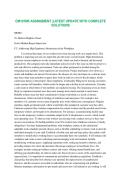
CM107M5 ASSINGMENT |LATEST UPDATE WITH COMPLETE
SOLUTIONS
MEMO
To: Melissa Hopkins Owner
From: Melinda Rogers Supervisor
CC: Addressing High Employee Absenteeism in the Workplace
I've noticed that many of our workers have been missing work on a regular basis. This
problem is impacting not just our output but also the team's overall morale. High absenteeism
can cause current employees to take on more work, which can lead to burnout and decreased
productivity. Our company must take immediate action to resolve this issue in order to preserve a
safe and effective working environment. Tasks are either postponed or divided among the
remaining team members when employees are not present. Project timeframes slow down as a
result, and deadlines are missed. For instance, the absence of a key developer in a software team
may force other team members to pause their work in order to cover for the developer, which
could cause delays in the project's final completion. Continually filling in for missing coworkers
strains current staff members, which results in fatigue and a decline in job satisfaction. Consider
a sales team in which three of ten members are regularly missing. The remaining seven are more
likely to experience burnout since they must manage more clients and put in more hours.
Reliable workers may feel their commitment is being overlooked as a result of chronic
absenteeism, which can lead to feelings of unfairness and annoyance. For example a few
members of a customer service team frequently miss work without any consequences. Regular
attendees might get demotivated, which would affect the standard of customer care they offer.
Unknown expenses like overtime compensation for current workers and the possible need to hire
temporary workers are brought on by absenteeism. For instance, a manufacturing facility may
have to hire temporary workers to maintain output levels if absenteeism is severe, which would
raise operating costs. To find out why workers are missing work, conduct surveys or have one-
on-one conversations. Do health problems recur? Do workers have childcare concerns or family
obligations? Are there fundamental problems with workplace culture or job satisfaction?
adaptable work schedules provide choices such as flexible scheduling or remote work to meet the
individual demands of your staff. Establish a flexible start and end time policy that enables staff
members to modify their working hours to accommodate their own schedules. It will enhance the
workplace and create a more welcoming and encouraging work environment. Include
modernizing working spaces, supplying ergonomic tools, setting up incentive schemes, and
providing chances for career advancement. Encourage employees to lead better lives. For
examples include setting up wellness courses and events, offering mental health days, and
offering gym memberships. In order to make sure that everyone is aware of the expectations and
repercussions, it is important to communicate and enforce attendance regulations. Establish a
clear policy that describes how absences are reported, the repercussions of unauthorized
absences, and the resources accessible to individuals who are experiencing real problems.
Monitor attendance information to spot trends and assess how well initiatives are working. It will
SOLUTIONS
MEMO
To: Melissa Hopkins Owner
From: Melinda Rogers Supervisor
CC: Addressing High Employee Absenteeism in the Workplace
I've noticed that many of our workers have been missing work on a regular basis. This
problem is impacting not just our output but also the team's overall morale. High absenteeism
can cause current employees to take on more work, which can lead to burnout and decreased
productivity. Our company must take immediate action to resolve this issue in order to preserve a
safe and effective working environment. Tasks are either postponed or divided among the
remaining team members when employees are not present. Project timeframes slow down as a
result, and deadlines are missed. For instance, the absence of a key developer in a software team
may force other team members to pause their work in order to cover for the developer, which
could cause delays in the project's final completion. Continually filling in for missing coworkers
strains current staff members, which results in fatigue and a decline in job satisfaction. Consider
a sales team in which three of ten members are regularly missing. The remaining seven are more
likely to experience burnout since they must manage more clients and put in more hours.
Reliable workers may feel their commitment is being overlooked as a result of chronic
absenteeism, which can lead to feelings of unfairness and annoyance. For example a few
members of a customer service team frequently miss work without any consequences. Regular
attendees might get demotivated, which would affect the standard of customer care they offer.
Unknown expenses like overtime compensation for current workers and the possible need to hire
temporary workers are brought on by absenteeism. For instance, a manufacturing facility may
have to hire temporary workers to maintain output levels if absenteeism is severe, which would
raise operating costs. To find out why workers are missing work, conduct surveys or have one-
on-one conversations. Do health problems recur? Do workers have childcare concerns or family
obligations? Are there fundamental problems with workplace culture or job satisfaction?
adaptable work schedules provide choices such as flexible scheduling or remote work to meet the
individual demands of your staff. Establish a flexible start and end time policy that enables staff
members to modify their working hours to accommodate their own schedules. It will enhance the
workplace and create a more welcoming and encouraging work environment. Include
modernizing working spaces, supplying ergonomic tools, setting up incentive schemes, and
providing chances for career advancement. Encourage employees to lead better lives. For
examples include setting up wellness courses and events, offering mental health days, and
offering gym memberships. In order to make sure that everyone is aware of the expectations and
repercussions, it is important to communicate and enforce attendance regulations. Establish a
clear policy that describes how absences are reported, the repercussions of unauthorized
absences, and the resources accessible to individuals who are experiencing real problems.
Monitor attendance information to spot trends and assess how well initiatives are working. It will

