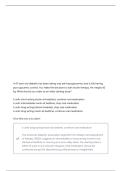
A 67-year-old diabetic has been taking oral anti-hypoglycemics and is still having
poor glycemic control. You make the decision to start insulin therapy. He weighs 60
kg. What should you order as an initial starting dose?
6 units short-acting insulin at breakfast, continue oral medication
6 units intermediate insulin at bedtime, stop oral medication
6 units long-acting before breakfast, stop oral medication
6 units long-acting insulin at bedtime, continue oral medication
Give this one a try later!
6 units long-acting insulin at bedtime, continue oral medication
The American Diabetic Association algorithm for initiation and adjustment
of therapy (2006) suggests an intermediate or long-acting insulin to be
started at bedtime or morning as a once daily dose. The starting dose is
either 10 units or 0.2 units per kilogram. Oral medication should be
continued except for discontinuing sulfonylureas or meglitinides.
,Which of the following is NOT a sign of depression in an older adult?
She neglects personal grooming.
She has difficulty concentrating.
She often becomes lost even in familiar places.
She worries about lapses in memory.
Give this one a try later!
She often becomes lost even in familiar places.
Older adults who are depressed may have trouble concentrating or may
have memory lapses. They often express concern about these lapses.
Depression may lead to neglect of personal grooming as well. Depression
does not lead to patients being disoriented or becoming easily lost. These
symptoms are more often associated with dementia.
You are counseling a 72-year-old woman about nutrition. In the course of counseling
you tell her that older adults are at increased risk of Vitamin D deficiency. Which of the
following is NOT a factor that contributes to a Vitamin D deficiency?
too much exposure to sunlight
decreased exercise
diminished renal function
decreased body mass
Give this one a try later!
too much exposure to sunlight
In actuality lack of sun exposure decreases synthesis of Vitamin D.
,At what age is a person initially considered an older adult?
70
65
60
75
Give this one a try later!
65
Nurses need to be familiar with the stages of life. Older adults at the age of
65 onward experience development changes. A decline in health and
mobility affects life and function.
What is the first-line drug intervention in an anaphylatic episode?
oral prednisone therapy
parental epinephrine
inhaled epinephrine
oral diphenhydramine
Give this one a try later!
parental epinephrine
Parental epinephrine and diphenhydramine are priority medication
interventions in anaphylaxis. Oral prednisone is often given once the
patient is stable to decrease the inflammatory response. Inhaled
epinephrine is not the standard of care. Oral diphenhydramine may be used
after stabilization for symptom relief purposes.
, When treating a patient with oral Vitamin B12, which drug interaction will result in
decreased absorption of vitamin B12?
aminoglycosides
colchicine
potassium supplements
all of the above
Give this one a try later!
all of the above
In addition to the drugs listed in the first three choices, ascorbic acid may
destroy the vitamin B12 supplement within one hour of ingestion. These
drugs should not be taken concomitantly with oral vitamin B12.
An elderly patient presents with fever, left lower quadrant abdominal pain and
diarrhea. Which of the following BEST describes the symptoms the patient is
experiencing?
Acute hepatitis.
Iron deficiency anemia.
Testicular cancer.
Diverticulitis.
Give this one a try later!
Diverticulitis.
Diverticulitis is when the colon secondary consists of pouchlike hernias.
These hernias are caused by the lack of dietary fiber.
poor glycemic control. You make the decision to start insulin therapy. He weighs 60
kg. What should you order as an initial starting dose?
6 units short-acting insulin at breakfast, continue oral medication
6 units intermediate insulin at bedtime, stop oral medication
6 units long-acting before breakfast, stop oral medication
6 units long-acting insulin at bedtime, continue oral medication
Give this one a try later!
6 units long-acting insulin at bedtime, continue oral medication
The American Diabetic Association algorithm for initiation and adjustment
of therapy (2006) suggests an intermediate or long-acting insulin to be
started at bedtime or morning as a once daily dose. The starting dose is
either 10 units or 0.2 units per kilogram. Oral medication should be
continued except for discontinuing sulfonylureas or meglitinides.
,Which of the following is NOT a sign of depression in an older adult?
She neglects personal grooming.
She has difficulty concentrating.
She often becomes lost even in familiar places.
She worries about lapses in memory.
Give this one a try later!
She often becomes lost even in familiar places.
Older adults who are depressed may have trouble concentrating or may
have memory lapses. They often express concern about these lapses.
Depression may lead to neglect of personal grooming as well. Depression
does not lead to patients being disoriented or becoming easily lost. These
symptoms are more often associated with dementia.
You are counseling a 72-year-old woman about nutrition. In the course of counseling
you tell her that older adults are at increased risk of Vitamin D deficiency. Which of the
following is NOT a factor that contributes to a Vitamin D deficiency?
too much exposure to sunlight
decreased exercise
diminished renal function
decreased body mass
Give this one a try later!
too much exposure to sunlight
In actuality lack of sun exposure decreases synthesis of Vitamin D.
,At what age is a person initially considered an older adult?
70
65
60
75
Give this one a try later!
65
Nurses need to be familiar with the stages of life. Older adults at the age of
65 onward experience development changes. A decline in health and
mobility affects life and function.
What is the first-line drug intervention in an anaphylatic episode?
oral prednisone therapy
parental epinephrine
inhaled epinephrine
oral diphenhydramine
Give this one a try later!
parental epinephrine
Parental epinephrine and diphenhydramine are priority medication
interventions in anaphylaxis. Oral prednisone is often given once the
patient is stable to decrease the inflammatory response. Inhaled
epinephrine is not the standard of care. Oral diphenhydramine may be used
after stabilization for symptom relief purposes.
, When treating a patient with oral Vitamin B12, which drug interaction will result in
decreased absorption of vitamin B12?
aminoglycosides
colchicine
potassium supplements
all of the above
Give this one a try later!
all of the above
In addition to the drugs listed in the first three choices, ascorbic acid may
destroy the vitamin B12 supplement within one hour of ingestion. These
drugs should not be taken concomitantly with oral vitamin B12.
An elderly patient presents with fever, left lower quadrant abdominal pain and
diarrhea. Which of the following BEST describes the symptoms the patient is
experiencing?
Acute hepatitis.
Iron deficiency anemia.
Testicular cancer.
Diverticulitis.
Give this one a try later!
Diverticulitis.
Diverticulitis is when the colon secondary consists of pouchlike hernias.
These hernias are caused by the lack of dietary fiber.