

TMN3701 Assignment 3 (COMPLETE ANSWERS) 2026 - DUE 9 July 2026
TMN3701 Assignment 3 (COMPLETE ANSWERS) 2026 - DUE 9 July 2026; 100% TRUSTED Complete, trusted solutions and explanations. For assistance, Whats-App 0.6.7-1.7.1-1.7.3.9. Ensure your success with us ..... QUESTION 1 (30) Do not use AI assistance when answering this question. Your response must be written independently. Read the following classroom scenario and answer the questions that follow. Ms Zungu is a Grade 6 EFAL teacher who has noticed that her learners are frequently using "SMS language" (e.g., "2N8", "LOL", "CU L8R"), or slang words (sometimes from their own language) in their formal creative writing assignments. The learners struggle to "code-switch" to the standard English required for school and professional contexts. Ms Zungu decides to design a writing lesson focused on sociolinguistic competence to help them understand when different registers are appropriate. 1.1 Define sociolinguistic competence and explain why it is essential for Teaching English First Additional Language (EFAL) learners to understand the boundaries between standard and non-standard English. (8) 1.2 Design a guided writing activity for Grade 6 learners to address this issue. Your activity must include: a) A list of at least four "SMS language" codes (e.g., "IDK", "2N8", "FYI", "TY") OR four slang words that learners must first rewrite into standard English. (8) b) A transactional writing task where learners demonstrate their sociolinguistic competence and use appropriate terms to write a formal letter to their schoolteacher or principal requesting permission for a very specific event at school. (8) 1.3 Justify when it is appropriate to use non-standard register versus a standard register in a real-world socio-cultural context. (6) QUESTION 2 (30) Do not use AI assistance when answering this question. Your response must be written independently. Inductive Language Teaching Scenario: You are a Grade 5 EFAL teacher. Instead of using a deductive approach you decide to use an inductive approach to teach your learners the spelling rule for plural nouns ending in -es (specifically for words ending in s, sh, ch, and x. Refer to CAPS IP EFAL page 18-21). TMN3701/2026 /ASSESSMENT 3 3 2.1 Create an original short text (about 100 to 150 words) suitable for a Grade 5 class. The text must include at least four different plural nouns that follow the "-es" rule (e.g., buses, brushes, churches, boxes). Underline the plural nouns in your short text. (8) 2.2 Outline the discovery phase of your lesson. Describe a specific activity that will allow learners to notice these specific grammatical markers within the text you created. (10) 2.3 Explain how you will guide the learners to formulate the spelling rule in their own words. State the final rule you expect the learners to learn by the end of the activity. (8) 2.4 Identify one receptive skill and one productive skill you will use to reinforce this rule in the same lesson cycle to ensure an integrated approach. (4) QUESTION 3 (20) Do not use AI assistance when answering this question. Your response must be written independently. Scenario: You are a Grade 6 EFAL teacher. You have noticed that when you give your learners a topic to write about, they immediately start writing a final version without planning, and their work contains many errors. You decide to implement the process approach to help them produce better-organised, edited writing. 3.1 List the five stages of the writing process in the correct order as described in the study material. (5) 3.2 Choose an appropriate topic for a Grade 6 class. Describe one specific pre-writing activity you would use to help learners build the necessary vocabulary before they begin drafting. (5) 3.3 During the Revision stage, learners are often reluctant to rewrite their work. Suggest two specific questions you would include on a "Peer Response Sheet" to help a learner give constructive feedback to a classmate without being overly critical. (8) 3.4 Identify the final stage of the writing process and provide one practical way a teacher can "present" or "publish" learners' work in the classroom to show that writing is a form of communication. (2)
Libro relacionado
- Desconocido
- 9780702188749
- Desconocido
Escuela, estudio y materia
- Institución
- University of South Africa (Unisa)
- Grado
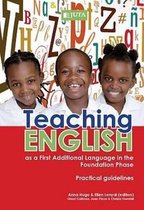
- Teaching English first additional language (TMN3701)
Información del documento
- Subido en
- 7 de julio de 2026
- Número de páginas
- 10
- Escrito en
- 2025/2026
- Tipo
- Examen
- Contiene
- Preguntas y respuestas
Temas
-
tmn3
-
tmn3701


