

Canada
1791 Constitution
Evacuation of loyalists from the American colonies led to
restructuring of the provinces closest to the American border into
Upper and Lower Canada
Upper Canada: largely British population
Lower Canada: combination of descendants of French settlers to
New France and the new loyalist influx
Upper Canada
Loyalist settlers continued to arrive from 1790s
Were seeking free land – loyalty to Britain in some cases was
questionable
Immigration continued to grow in 1820-30s
The Canada 1825: moved from system of free land grants to
Company settlers to one of sale and auction
Private land company, the Canada Company, given
a royal charter to aid the colonisation and
development of the province
Governance Lieutenant Governor
Governed by a lieutenant governor, appointed by
London
Reliant on tax-raising powers of a locally elected
legislative assembly
Ran the province with the aid of the council
Appointed Council
Exercised executive powers in addition to the
governor
Chosen and could be removed by the lieutenant
governor
Could remain on the council for life
A number of notable families (e.g. Family Compact)
maintained control of the council
Legislative Assembly
No fewer than 16 representatives elected
Elected by a fairly wide franchise of landowning
males
Legislative Council
Laws passed by the assembly had to be approved
by members of the council
Members of the council were often members of the
assembly
The Family Strong adherence to the Church of England
Compact Reluctant to agree to any amendments to the
constitution which might loosen their grip on power
, Land Based on British control over the land
Ownership Most was held by the Crown – granted to settlers
Recognised that the indigenous people had claim
to the land
Treaties were signed with native groups to
increase Crown land – provided indigenous people
with some compensation in exchange
1/7 of all lands designated as clergy reserves –
profits from their sale or rental went to supporting
the Anglican Church in the province
British convince that best way to maintain
Canadia loyalty was through the support and
establishment of the Anglican Church – Family
Compact were devout Anglicans
Tensions Reformer: member of the legislative assembly in
UC who wanted greater economic and political
control of the province
Had very small population from which to raise
revenues
Investment in infrastructure meant that the
government were cash-strapped
Government didn’t want to work with legislative
assembly and raise taxes – sidestepped assembly
Sold land to the Canada Company and was used
to pay the salary of officials
Frustrated Reformers as they were unable to
influence actions of governor through the
traditional means of refusing to vote money to
pay for salaries
Reformers wanted a ‘responsible government’
- Removal of Family Compact and their control of
the legislative and executive councils
Robert Baldwin – promoted this reform whereby
the executive was responsible to voters in Canada
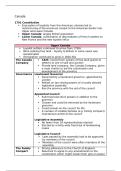
1791 Constitution
Evacuation of loyalists from the American colonies led to
restructuring of the provinces closest to the American border into
Upper and Lower Canada
Upper Canada: largely British population
Lower Canada: combination of descendants of French settlers to
New France and the new loyalist influx
Upper Canada
Loyalist settlers continued to arrive from 1790s
Were seeking free land – loyalty to Britain in some cases was
questionable
Immigration continued to grow in 1820-30s
The Canada 1825: moved from system of free land grants to
Company settlers to one of sale and auction
Private land company, the Canada Company, given
a royal charter to aid the colonisation and
development of the province
Governance Lieutenant Governor
Governed by a lieutenant governor, appointed by
London
Reliant on tax-raising powers of a locally elected
legislative assembly
Ran the province with the aid of the council
Appointed Council
Exercised executive powers in addition to the
governor
Chosen and could be removed by the lieutenant
governor
Could remain on the council for life
A number of notable families (e.g. Family Compact)
maintained control of the council
Legislative Assembly
No fewer than 16 representatives elected
Elected by a fairly wide franchise of landowning
males
Legislative Council
Laws passed by the assembly had to be approved
by members of the council
Members of the council were often members of the
assembly
The Family Strong adherence to the Church of England
Compact Reluctant to agree to any amendments to the
constitution which might loosen their grip on power
, Land Based on British control over the land
Ownership Most was held by the Crown – granted to settlers
Recognised that the indigenous people had claim
to the land
Treaties were signed with native groups to
increase Crown land – provided indigenous people
with some compensation in exchange
1/7 of all lands designated as clergy reserves –
profits from their sale or rental went to supporting
the Anglican Church in the province
British convince that best way to maintain
Canadia loyalty was through the support and
establishment of the Anglican Church – Family
Compact were devout Anglicans
Tensions Reformer: member of the legislative assembly in
UC who wanted greater economic and political
control of the province
Had very small population from which to raise
revenues
Investment in infrastructure meant that the
government were cash-strapped
Government didn’t want to work with legislative
assembly and raise taxes – sidestepped assembly
Sold land to the Canada Company and was used
to pay the salary of officials
Frustrated Reformers as they were unable to
influence actions of governor through the
traditional means of refusing to vote money to
pay for salaries
Reformers wanted a ‘responsible government’
- Removal of Family Compact and their control of
the legislative and executive councils
Robert Baldwin – promoted this reform whereby
the executive was responsible to voters in Canada


