Escrito por estudiantes que aprobaron Inmediatamente disponible después del pago Leer en línea o como PDF ¿Documento equivocado? Cámbialo gratis 4,6 TrustPilot
logo-home
Examen

NR-283 Pathophysiology Quiz Pack | Clinical Manifestations, Disease Progression, & Diagnostic Principles Revision Guide (2026)

Puntuación
-
Vendido
-
Páginas
5
Grado
A+
Subido en
03-07-2026
Escrito en
2025/2026

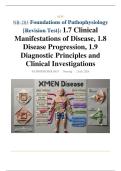
Master the critical clinical bridge between underlying physiological disruptions and real-world patient presentations with the NR-283 Foundations of Pathophysiology Revision Quiz Pack (2026). Designed specifically for nursing and clinical students, this high-yield exam preparation tool features a fully structured question and verified model answer bank mapping out the transition from subclinical cell damage to visible systemic failure. This study pack provides perfect tactical alignment with core clinical curricula, ensuring you can confidently differentiate, analyze, and interpret patient signs, symptoms, and laboratory data under exam pressure. Core Modules & Tested Objectives: Signs vs. Symptoms Decoding: Master the foundational clinical vocabulary. Clearly differentiate between Symptoms (the patient's subjective, unmeasurable experiences like pain, nausea, and fatigue) and Signs (the clinician's objective, verifiable findings such as fever, tachycardia, or abnormal lab parameters). Local vs. Systemic Scope of Illness: Analyze how pathological processes manifest throughout the body. Deconstruct Local Manifestations confined to a specific anatomical site (e.g., localized swelling in cellulitis or acute abdominal pain in appendicitis) versus Systemic Manifestations indicating multi-organ involvement (e.g., generalized fatigue, cachexia, or fever common in infectious, autoimmune, or malignant states). Temporal Manifestation Patterns (Acute vs. Chronic): Understand the clinical trajectories guiding patient management. Contrast the rapid onset, short duration, and potential reversibility of Acute Manifestations (such as myocardial infarction or an acute asthma flare) with the slow, progressive development and long-term organ damage of Chronic Manifestations (such as osteoarthritis or chronic kidney disease). The 7 Stages of Disease Progression: Trace the sequential timeline of disease from initial vulnerability to final resolution: Predisposition: Interaction of modifiable (lifestyle) and non-modifiable (genetics, age) risk factors. Subclinical Disease: Onset of internal pathological tissue shifts without overt symptoms. Clinical Disease: The definitive emergence of visible signs and symptoms necessitating intervention. Resolution/Recovery: Systemic healing based on timely clinical management and minimal tissue destruction. Chronic Progression: Stabilization of persistent disease, driving ongoing symptoms or functional limits. Complications: Secondary clinical sequelae arising directly from the primary pathology. Outcome: Final state ranging from full functional recovery to progressive deterioration or death. The Diagnostic Hierarchy & Lab Variability: Review the holistic process of creating a clinical diagnosis by synthesizing patient history, physical examination (inspection, palpation, percussion, and auscultation), laboratory investigations, imaging studies, and specialized procedures like biopsies. Learn exactly why identical diseases present with varying lab findings across different patients due to disease severity, progression stages, individual physiological differences (metabolism, age, sex, hydration), and concurrent medications. Bonus Clinical Disease Landmark — XMEN Disease Matrix: Features visual references mapping the primary clinical indicators of XMEN Disease (X-linked immunodeficiency with magnesium defect, Epstein-Barr virus infection, and neoplasia). Review its major diagnostic features including severe blood dyscrasias, high EBV proliferation/titers, bone marrow compartment defects, splenomegaly, dysglobulinemia, and chronic neutropenia.

Mostrar más Leer menos
Institución
NR-283
Grado
NR-283

Vista previa del contenido

QUIZ

NR-283 Foundations of Pathophysiology
[Revision Test]: 1.7
Clinical
Manifestations of Disease, 1.8
Disease Progression, 1.9
Diagnostic Principles and
Clinical Investigations
PATHOPHYSIOLOGY · Nursing · 2 July 2026

, MOCK EXAM PAPER
Easy Questions


Question 1
What are clinical manifestations in the context of disease?

Model Answer:
Clinical manifestations are the observable changes in the body that result from disease processes.
They serve as important clues for healthcare professionals to identify, diagnose, monitor, and
manage diseases. Clinical manifestations can be categorized into two types:

1. Symptoms: Subjective experiences reported by the patient, such as pain or fatigue.
2. Signs: Objective findings that can be observed and measured, like fever or elevated blood
pressure.

Understanding clinical manifestations is essential for moving beyond just memorizing symptoms and
recognizing the underlying physiological disturbances responsible for them.


Question 2
Define "symptoms" and "signs" in clinical terms.

Model Answer:
Symptoms and signs are distinct types of clinical manifestations:

● Symptoms are subjective experiences that the patient describes. They cannot be directly
measured and rely on the patient's report. Examples include pain, nausea, and fatigue.
● Signs, on the other hand, are objective findings that healthcare providers can observe,
measure, or verify during an examination or through diagnostic tests. Examples include fever,
elevated heart rate, or abnormal laboratory results.

This distinction is crucial for a comprehensive clinical assessment.


Medium Questions


Question 3
What are local and systemic manifestations, and how do they differ?

Model Answer:

Escuela, estudio y materia

Institución
NR-283
Grado
NR-283

Información del documento

Subido en
3 de julio de 2026
Número de páginas
5
Escrito en
2025/2026
Tipo
Examen
Contiene
Preguntas y respuestas

Temas

$10.09
Accede al documento completo:

¿Documento equivocado? Cámbialo gratis Dentro de los 14 días posteriores a la compra y antes de descargarlo, puedes elegir otro documento. Puedes gastar el importe de nuevo.
Escrito por estudiantes que aprobaron
Inmediatamente disponible después del pago
Leer en línea o como PDF

Conoce al vendedor
Seller avatar
furahahive

Documento también disponible en un lote

Thumbnail
Package deal
NR-283 Pathophysiology: Chapter 1 Foundations Complete Bundle | Ultimate All-in-One Study Pack: Lecture Summary Notes & 3 Verified Topic Quiz Banks
-
6 2026
$ 72.43 Más información

Conoce al vendedor

Seller avatar
furahahive Harvard University
Ver perfil
Seguir Necesitas iniciar sesión para seguir a otros usuarios o asignaturas
Vendido
-
Miembro desde
1 mes
Número de seguidores
1
Documentos
27
Última venta
-

Stop drowning in hundreds of textbook pages. Whether you are trying to catch up or aiming to secure that top A+, these study materials are engineered to deliver maximum results in minimum time. Crafted by an experienced educator, this comprehensive collection cuts through the noise to give you the exact tools you need to dominate your courses.

0.0

0 reseñas

5
0
4
0
3
0
2
0
1
0

Recientemente visto por ti

Por qué los estudiantes eligen Stuvia

Creado por compañeros estudiantes, verificado por reseñas

Calidad en la que puedes confiar: escrito por estudiantes que aprobaron y evaluado por otros que han usado estos resúmenes.

¿No estás satisfecho? Elige otro documento

¡No te preocupes! Puedes elegir directamente otro documento que se ajuste mejor a lo que buscas.

Paga como quieras, empieza a estudiar al instante

Sin suscripción, sin compromisos. Paga como estés acostumbrado con tarjeta de crédito y descarga tu documento PDF inmediatamente.

Student with book image

“Comprado, descargado y aprobado. Así de fácil puede ser.”

Alisha Student

Preguntas frecuentes