

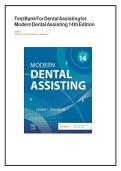
Test Bank For Dental Assisting for
L
T L
T L
T L
T L
T
Modern Dental Assisting 14th Edition
L
T L
T L
T L
T
Editors : L
T
Jeffrey R. Smith & Debbie S. Robinson
L
T L
T L
T L
T L
T L
T
,Chapter 1. Oral Embryology and Histology
T L T L T L T L T L
1. Which of the following is the process by which the cells of the fertilized egg divide and
L
T L
T L
T L
T L
T L
T L
T L
T L
T T L L
T T L L
T L
T L
T L
T
form a ball of cells during embryonic development?
TL T L T L L
T T L T L T L T L
A. Cleavage
B. Differentiation
C. Organogenesis
D. Implantation
Answer: A. Cleavage T L T L
Rationale: Cleavage is the series of rapid mitotic divisions that occur after fertilization,
L
T L
T L
T L
T L
T L
T L
T L
T L
T L
T L
T L
T
leading to the formation of a ball of cells known as the morula.
TL T L L
T T L L
T T L T L T L T L L
T T L T L T L
DIF: Easy L
T
TOP: Embryonic development L
T L
T
MSC: Multiple Choice
TL T L L
T
2. During the first week of embryonic development, the fertilized egg becomes a structure
L
T L
T L
T L
T L
T T L L
T L
T L
T L
T L
T L
T
called a:
TL T L
A. Zygote
B. Blastocyst
C. Morula
D. Embryo
Answer: B. Blastocyst T L T L
Rationale: After fertilization and cleavage, the ball of cells (morula) forms into a L
T L
T L
T L
T L
T L
T L
T L
T L
T L
T L
T L
T
blastocyst, which implants into the uterine wall.
TL L
T T L T L L
T T L T L
DIF: Easy L
T
TOP: Embryonic development L
T L
T
MSC: Multiple Choice
TL T L L
T
3. The oral cavity begins to develop during which of the following stages of embryonic
L
T L
T L
T L
T L
T L
T L
T L
T T L L
T L
T L
T L
T
development?
TL
A. Zygote
B. Fetal
C. Pre-implantation
D. Embryonic
Answer: D. Embryonic T L T L
Rationale: The development of the oral cavity starts during the embryonic stage, around
T L L
T T L L
T L
T T L L
T L
T T L L
T L
T L
T
the third week of pregnancy, as the facial structures begin to form.
TL L
T T L T L T L T L T L T L T L T L T L L
T
DIF: Moderate L
T
TOP: Oral cavity development L
T L
T L
T
MSC: Multiple Choice
TL T L L
T
4. The process by which the neural tube forms and begins to develop into the brain and
L
T L
T L
T L
T L
T T L L
T T L L
T L
T L
T L
T T L L
T L
T
spinal cord is known as:
TL T L L
T L
T T L
A. Gastrulation
B. Neurulation
C. Cleavage
D. Organogenesis
, Answer: B. Neurulation T L T L
Rationale: Neurulation is the process where the neural tube forms, which later gives rise to
T L T L L
T L
T L
T L
T L
T L
T L
T L
T L
T L
T L
T T L
the central nervous system (brain and spinal cord).
L
T L
T T L T L L
T T L T L T L
DIF: Moderate L
T
TOP: Neural development L
T L
T
MSC: Multiple Choice
L
T T L T L
5. Which of the following is the primary function of the mesoderm layer in embryonic
L
T L
T L
T L
T T L T L L
T L
T T L L
T L
T L
T T L
development?
L
T
A. Formation of the nervous system T L T L T L L
T
B. Development of the skin and hair L
T T L T L T L T L
C. Formation of muscles, bones, and circulatory systems T L L
T T L L
T T L L
T
D. Formation of the digestive system T L L
T L
T T L
Answer: C. Formation of muscles, bones, and circulatory systems
T L T L T L T L T L T L T L T L
Rationale: The mesoderm layer gives rise to structures such as muscles, bones, and the
L
T L
T L
T L
T L
T T L L
T T L L
T L
T L
T L
T L
T
circulatory system during embryonic development.
L
T T L T L T L T L
DIF: Moderate T L
TOP: Germ layers
L
T L
T L
T
MSC: Multiple Choice T L L
T
6. The term "histology" refers to the study of:
L
T T L T L T L T L L
T L
T
A. The structure and function of tissues L
T L
T L
T T L T L
B. The development of organs T L T L T L
C. The structure of cells T L L
T L
T
D. The development of embryos L
T T L L
T
Answer: A. The structure and function of tissues T L T L T L T L T L T L T L
Rationale: Histology is the study of tissues, including their structure and function, and
T L L
T T L L
T L
T L
T L
T L
T L
T L
T L
T L
T
their role in the body.
L
T T L T L T L T L
DIF: Easy T L
TTOP:
L
Histology
L
T
MSC: Multiple Choice T L L
T
7. The enamel of the tooth is derived from which embryonic tissue?
L
T T L L
T L
T L
T L
T L
T L
T L
T T L
A. Ectoderm
B. Mesoderm
C. Endoderm
D. Neural crest L
T
Answer: A. Ectoderm T L T L
Rationale: Enamel, the hard outer surface of the tooth, develops from the ectodermal layer
L
T T L L
T L
T L
T L
T L
T L
T L
T L
T L
T T L T L
of the embryo.
L
T T L L
T
DIF: Moderate L
T
TOP: Tooth development L
T L
T
MSC: Multiple Choice
L
T T L T L
8. The development of the face and oral cavity during embryonic development involves
L
T L
T T L L
T T L L
T T L L
T L
T L
T L
T
fusion of which structures?
L
T T L L
T T L
A. Palatal shelves T L
B. Maxillary and mandibular processes L
T T L T L
C. Frontal nasal process L
T L
T
D. Both B and C L
T L
T T L
, Answer: D. Both B and C T L T L T L T L T L
Rationale: The development of the face and oral cavity involves the fusion of the
T L T L L
T L
T T L L
T L
T L
T L
T L
T L
T L
T L
T
maxillary and mandibular processes, as well as the frontal nasal process.
L
T T L L
T T L T L L
T T L T L T L T L T L
DIF: Moderate T L
TOP: Facial development L
T T L
MSC: Multiple Choice
L
T T L L
T
9. Which structure is responsible for the formation of the teeth during embryonic
T L L
T T L L
T L
T L
T L
T L
T L
T L
T L
T
development?
L
T
A. Neural crest L
T
B. Ectoderm
C. Mesoderm
D. Endoderm
Answer: A. Neural crest T L T L T L
Rationale: The neural crest cells play a crucial role in the formation of the teeth during
T L T L L
T T L L
T L
T L
T T L L
T L
T L
T L
T L
T L
T L
T
embryonic development.
L
T L
T
DIF: Moderate T L
TOP: Tooth formation T L L
T
MSC: Multiple
L
T L
T
Choice
L
T
10. The first indication of tooth development occurs during which week of embryonic
L
T L
T L
T T L L
T L
T L
T L
T L
T L
T L
T
development?
L
T
A. 2nd week T L
B. 5th week L
T
C. 6th week L
T
D. 7th week L
T
Answer: C. 6th week T L T L T L
Rationale: The first indication of tooth development appears during the 6th week of
L
T T L L
T L
T L
T T L T L L
T L
T L
T L
T L
T
embryonic development, when the dental lamina forms.
L
T L
T L
T T L T L L
T T L
DIF: Moderate T L
TOP: Tooth development L
T L
T
MSC: Multiple Choice
L
T T L L
T
11. The process of ossification refers to:
T L T L L
T T L T L
A. The formation of blood cells L
T T L T L L
T
B. The formation of bone L
T T L T L
C. The development of the skin L
T T L L
T L
T
D. The development of the digestive system L
T T L L
T T L L
T
Answer: B. The formation of bone T L T L T L T L T L
Rationale: Ossification is the process by which bone tissue is formed from cartilage or
T L L
T L
T T L L
T L
T L
T L
T L
T L
T L
T L
T L
T
other connective tissue.
L
T L
T T L
DIF: Moderate T L
TOP: Bone development L
T L
T
MSC: Multiple Choice
L
T T L L
T
12. Which of the following is a key feature of the histological structure of enamel?
L
T L
T T L T L L
T T L L
T L
T T L T L L
T T L T L
A. It is composed of collagen fibers
L
T T L L
T T L L
T
B. It is avascular and has no living cells
L
T L
T T L T L T L L
T L
T
C. It contains many blood vessels
T L L
T L
T T L
D. It has a high content of water
L
T L
T L
T L
T T L T L
L
T L
T L
T L
T L
T
Modern Dental Assisting 14th Edition
L
T L
T L
T L
T
Editors : L
T
Jeffrey R. Smith & Debbie S. Robinson
L
T L
T L
T L
T L
T L
T
,Chapter 1. Oral Embryology and Histology
T L T L T L T L T L
1. Which of the following is the process by which the cells of the fertilized egg divide and
L
T L
T L
T L
T L
T L
T L
T L
T L
T T L L
T T L L
T L
T L
T L
T
form a ball of cells during embryonic development?
TL T L T L L
T T L T L T L T L
A. Cleavage
B. Differentiation
C. Organogenesis
D. Implantation
Answer: A. Cleavage T L T L
Rationale: Cleavage is the series of rapid mitotic divisions that occur after fertilization,
L
T L
T L
T L
T L
T L
T L
T L
T L
T L
T L
T L
T
leading to the formation of a ball of cells known as the morula.
TL T L L
T T L L
T T L T L T L T L L
T T L T L T L
DIF: Easy L
T
TOP: Embryonic development L
T L
T
MSC: Multiple Choice
TL T L L
T
2. During the first week of embryonic development, the fertilized egg becomes a structure
L
T L
T L
T L
T L
T T L L
T L
T L
T L
T L
T L
T
called a:
TL T L
A. Zygote
B. Blastocyst
C. Morula
D. Embryo
Answer: B. Blastocyst T L T L
Rationale: After fertilization and cleavage, the ball of cells (morula) forms into a L
T L
T L
T L
T L
T L
T L
T L
T L
T L
T L
T L
T
blastocyst, which implants into the uterine wall.
TL L
T T L T L L
T T L T L
DIF: Easy L
T
TOP: Embryonic development L
T L
T
MSC: Multiple Choice
TL T L L
T
3. The oral cavity begins to develop during which of the following stages of embryonic
L
T L
T L
T L
T L
T L
T L
T L
T T L L
T L
T L
T L
T
development?
TL
A. Zygote
B. Fetal
C. Pre-implantation
D. Embryonic
Answer: D. Embryonic T L T L
Rationale: The development of the oral cavity starts during the embryonic stage, around
T L L
T T L L
T L
T T L L
T L
T T L L
T L
T L
T
the third week of pregnancy, as the facial structures begin to form.
TL L
T T L T L T L T L T L T L T L T L T L L
T
DIF: Moderate L
T
TOP: Oral cavity development L
T L
T L
T
MSC: Multiple Choice
TL T L L
T
4. The process by which the neural tube forms and begins to develop into the brain and
L
T L
T L
T L
T L
T T L L
T T L L
T L
T L
T L
T T L L
T L
T
spinal cord is known as:
TL T L L
T L
T T L
A. Gastrulation
B. Neurulation
C. Cleavage
D. Organogenesis
, Answer: B. Neurulation T L T L
Rationale: Neurulation is the process where the neural tube forms, which later gives rise to
T L T L L
T L
T L
T L
T L
T L
T L
T L
T L
T L
T L
T T L
the central nervous system (brain and spinal cord).
L
T L
T T L T L L
T T L T L T L
DIF: Moderate L
T
TOP: Neural development L
T L
T
MSC: Multiple Choice
L
T T L T L
5. Which of the following is the primary function of the mesoderm layer in embryonic
L
T L
T L
T L
T T L T L L
T L
T T L L
T L
T L
T T L
development?
L
T
A. Formation of the nervous system T L T L T L L
T
B. Development of the skin and hair L
T T L T L T L T L
C. Formation of muscles, bones, and circulatory systems T L L
T T L L
T T L L
T
D. Formation of the digestive system T L L
T L
T T L
Answer: C. Formation of muscles, bones, and circulatory systems
T L T L T L T L T L T L T L T L
Rationale: The mesoderm layer gives rise to structures such as muscles, bones, and the
L
T L
T L
T L
T L
T T L L
T T L L
T L
T L
T L
T L
T
circulatory system during embryonic development.
L
T T L T L T L T L
DIF: Moderate T L
TOP: Germ layers
L
T L
T L
T
MSC: Multiple Choice T L L
T
6. The term "histology" refers to the study of:
L
T T L T L T L T L L
T L
T
A. The structure and function of tissues L
T L
T L
T T L T L
B. The development of organs T L T L T L
C. The structure of cells T L L
T L
T
D. The development of embryos L
T T L L
T
Answer: A. The structure and function of tissues T L T L T L T L T L T L T L
Rationale: Histology is the study of tissues, including their structure and function, and
T L L
T T L L
T L
T L
T L
T L
T L
T L
T L
T L
T
their role in the body.
L
T T L T L T L T L
DIF: Easy T L
TTOP:
L
Histology
L
T
MSC: Multiple Choice T L L
T
7. The enamel of the tooth is derived from which embryonic tissue?
L
T T L L
T L
T L
T L
T L
T L
T L
T T L
A. Ectoderm
B. Mesoderm
C. Endoderm
D. Neural crest L
T
Answer: A. Ectoderm T L T L
Rationale: Enamel, the hard outer surface of the tooth, develops from the ectodermal layer
L
T T L L
T L
T L
T L
T L
T L
T L
T L
T L
T T L T L
of the embryo.
L
T T L L
T
DIF: Moderate L
T
TOP: Tooth development L
T L
T
MSC: Multiple Choice
L
T T L T L
8. The development of the face and oral cavity during embryonic development involves
L
T L
T T L L
T T L L
T T L L
T L
T L
T L
T
fusion of which structures?
L
T T L L
T T L
A. Palatal shelves T L
B. Maxillary and mandibular processes L
T T L T L
C. Frontal nasal process L
T L
T
D. Both B and C L
T L
T T L
, Answer: D. Both B and C T L T L T L T L T L
Rationale: The development of the face and oral cavity involves the fusion of the
T L T L L
T L
T T L L
T L
T L
T L
T L
T L
T L
T L
T
maxillary and mandibular processes, as well as the frontal nasal process.
L
T T L L
T T L T L L
T T L T L T L T L T L
DIF: Moderate T L
TOP: Facial development L
T T L
MSC: Multiple Choice
L
T T L L
T
9. Which structure is responsible for the formation of the teeth during embryonic
T L L
T T L L
T L
T L
T L
T L
T L
T L
T L
T
development?
L
T
A. Neural crest L
T
B. Ectoderm
C. Mesoderm
D. Endoderm
Answer: A. Neural crest T L T L T L
Rationale: The neural crest cells play a crucial role in the formation of the teeth during
T L T L L
T T L L
T L
T L
T T L L
T L
T L
T L
T L
T L
T L
T
embryonic development.
L
T L
T
DIF: Moderate T L
TOP: Tooth formation T L L
T
MSC: Multiple
L
T L
T
Choice
L
T
10. The first indication of tooth development occurs during which week of embryonic
L
T L
T L
T T L L
T L
T L
T L
T L
T L
T L
T
development?
L
T
A. 2nd week T L
B. 5th week L
T
C. 6th week L
T
D. 7th week L
T
Answer: C. 6th week T L T L T L
Rationale: The first indication of tooth development appears during the 6th week of
L
T T L L
T L
T L
T T L T L L
T L
T L
T L
T L
T
embryonic development, when the dental lamina forms.
L
T L
T L
T T L T L L
T T L
DIF: Moderate T L
TOP: Tooth development L
T L
T
MSC: Multiple Choice
L
T T L L
T
11. The process of ossification refers to:
T L T L L
T T L T L
A. The formation of blood cells L
T T L T L L
T
B. The formation of bone L
T T L T L
C. The development of the skin L
T T L L
T L
T
D. The development of the digestive system L
T T L L
T T L L
T
Answer: B. The formation of bone T L T L T L T L T L
Rationale: Ossification is the process by which bone tissue is formed from cartilage or
T L L
T L
T T L L
T L
T L
T L
T L
T L
T L
T L
T L
T
other connective tissue.
L
T L
T T L
DIF: Moderate T L
TOP: Bone development L
T L
T
MSC: Multiple Choice
L
T T L L
T
12. Which of the following is a key feature of the histological structure of enamel?
L
T L
T T L T L L
T T L L
T L
T T L T L L
T T L T L
A. It is composed of collagen fibers
L
T T L L
T T L L
T
B. It is avascular and has no living cells
L
T L
T T L T L T L L
T L
T
C. It contains many blood vessels
T L L
T L
T T L
D. It has a high content of water
L
T L
T L
T L
T T L T L

