

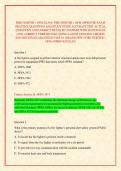
FIRE FIGHTER 1 OFM EXAM / FIRE FIGHTER 1 OFM APPROVED EXAM
PRACTICE QUESTIONS AND STUDY GUIDE ACCURATE TEST ACTUAL
QUESTIONS AND CORRECT DETAILED ANSWERS WITH RATIONALES
(100% CORRECT VERIFIED SOLUTIONS) LATEST UPDATED VERSION
2026 EDITION |GUARANTEED PASS A+ (BRAND NEW!) FIRE FIGHTER 1
OFM APPROVED EXAM
Question 1
A fire fighter assigned to perform interior structural attack must wear full personal
protective equipment (PPE) that meets which NFPA standard?
A. NFPA 1006
B. NFPA 1971
C. NFPA 1981
D. NFPA 472
Correct Answer: B. NFPA 1971
Rationale: NFPA 1971 establishes the minimum design, performance, and
certification requirements for structural fire fighting protective ensembles and
individual elements. NFPA 1006 is for rescue technician, NFPA 1981 for SCBA,
and NFPA 472 for hazardous materials.
Question 2
What is the primary purpose of a fire fighter’s personal alert safety system (PASS)
device?
A. To locate the fire fighter’s position inside a structure
B. To signal when the fire fighter is motionless for a set period
C. To provide two‑way communication with the incident commander
D. To monitor heart rate and body temperature
,Correct Answer: B. To signal when the fire fighter is motionless for a set period
Rationale: A PASS device automatically emits a loud, distinctive tone if the fire
fighter stops moving for approximately 30 seconds, alerting others to a potential
downed or trapped fire fighter. It does not provide two‑way communication or
biometric data.
Question 3
Which type of fire attack uses a straight or solid stream directed at the ceiling
above the fire to create water droplets that absorb heat?
A. Indirect attack
B. Direct attack
C. Combination attack
D. Defensive attack
Correct Answer: A. Indirect attack
Rationale: An indirect fire attack directs water at the ceiling or upper walls to
convert water to steam, absorbing heat from the hot gas layer. A direct attack
applies water directly onto burning materials, while a combination attack uses both
methods.
Question 4
The term “flashover” refers to:
A. Sudden ignition of unburned fire gases at the ceiling
B. Transition of a fire from growth stage to fully developed stage involving
simultaneous ignition of all exposed combustibles
C. Explosive release of flammable vapors from a liquid
D. Rapid combustion of pressurized fuel escaping a cylinder
,Correct Answer: B. Transition of a fire from growth stage to fully developed stage
involving simultaneous ignition of all exposed combustibles
Rationale: Flashover is the near‑simultaneous ignition of all exposed combustible
surfaces in a compartment, marking the transition to a fully developed fire. Option
A describes rollover (flameover), and C and D describe BLEVE or other events.
Question 5
When donning self‑contained breathing apparatus (SCBA), the facepiece seal
should be checked by:
A. Inhaling sharply and feeling for suction
B. Exhaling fully and listening for leaks
C. Covering the regulator inlet and inhaling to create a vacuum
D. Pressurizing the facepiece with a hand pump
Correct Answer: C. Covering the regulator inlet and inhaling to create a vacuum
Rationale: The correct seal check is to cover the regulator connection (or palm the
lens) and inhale gently; the facepiece should collapse slightly and hold vacuum
without leaks. Option A (inhaling sharply) does not test positive pressure, and
option B is not standard.
Question 6
What is the minimum rated service life for a fire department SCBA cylinder under
NFPA 1981?
A. 5 years
B. 10 years
C. 15 years
D. 20 years
, Correct Answer: C. 15 years
Rationale: NFPA 1981 requires that SCBA cylinders have a maximum service life
of 15 years from their manufacture date, after which they must be retired from fire
fighting use.
Question 7
Which tool is specifically designed to pry open doors, break glass, and force locks?
A. Pike pole
B. Halligan bar
C. K‑tool
D. Flathead axe
Correct Answer: B. Halligan bar
Rationale: The Halligan bar is a multipurpose forcible entry tool with a claw, adz,
and pick; it is used for prying, twisting, and striking. A K‑tool is for lock removal,
but the Halligan is more versatile for general forcible entry.
Question 8
What does the acronym “SLICE‑RS” represent in modern fire attack?
A. Size up, Locate, Isolate, Cool, Extinguish – Rescue, Salvage
B. Size up, Locate, Identify fire location, Cool, Extinguish – Rescue, Search
C. Size up, Locate, Identify flow path, Cool the space, Extinguish – Rescue,
Salvage
D. Scan, Look, Isolate, Cool, Evaluate – Remove, Secure
PRACTICE QUESTIONS AND STUDY GUIDE ACCURATE TEST ACTUAL
QUESTIONS AND CORRECT DETAILED ANSWERS WITH RATIONALES
(100% CORRECT VERIFIED SOLUTIONS) LATEST UPDATED VERSION
2026 EDITION |GUARANTEED PASS A+ (BRAND NEW!) FIRE FIGHTER 1
OFM APPROVED EXAM
Question 1
A fire fighter assigned to perform interior structural attack must wear full personal
protective equipment (PPE) that meets which NFPA standard?
A. NFPA 1006
B. NFPA 1971
C. NFPA 1981
D. NFPA 472
Correct Answer: B. NFPA 1971
Rationale: NFPA 1971 establishes the minimum design, performance, and
certification requirements for structural fire fighting protective ensembles and
individual elements. NFPA 1006 is for rescue technician, NFPA 1981 for SCBA,
and NFPA 472 for hazardous materials.
Question 2
What is the primary purpose of a fire fighter’s personal alert safety system (PASS)
device?
A. To locate the fire fighter’s position inside a structure
B. To signal when the fire fighter is motionless for a set period
C. To provide two‑way communication with the incident commander
D. To monitor heart rate and body temperature
,Correct Answer: B. To signal when the fire fighter is motionless for a set period
Rationale: A PASS device automatically emits a loud, distinctive tone if the fire
fighter stops moving for approximately 30 seconds, alerting others to a potential
downed or trapped fire fighter. It does not provide two‑way communication or
biometric data.
Question 3
Which type of fire attack uses a straight or solid stream directed at the ceiling
above the fire to create water droplets that absorb heat?
A. Indirect attack
B. Direct attack
C. Combination attack
D. Defensive attack
Correct Answer: A. Indirect attack
Rationale: An indirect fire attack directs water at the ceiling or upper walls to
convert water to steam, absorbing heat from the hot gas layer. A direct attack
applies water directly onto burning materials, while a combination attack uses both
methods.
Question 4
The term “flashover” refers to:
A. Sudden ignition of unburned fire gases at the ceiling
B. Transition of a fire from growth stage to fully developed stage involving
simultaneous ignition of all exposed combustibles
C. Explosive release of flammable vapors from a liquid
D. Rapid combustion of pressurized fuel escaping a cylinder
,Correct Answer: B. Transition of a fire from growth stage to fully developed stage
involving simultaneous ignition of all exposed combustibles
Rationale: Flashover is the near‑simultaneous ignition of all exposed combustible
surfaces in a compartment, marking the transition to a fully developed fire. Option
A describes rollover (flameover), and C and D describe BLEVE or other events.
Question 5
When donning self‑contained breathing apparatus (SCBA), the facepiece seal
should be checked by:
A. Inhaling sharply and feeling for suction
B. Exhaling fully and listening for leaks
C. Covering the regulator inlet and inhaling to create a vacuum
D. Pressurizing the facepiece with a hand pump
Correct Answer: C. Covering the regulator inlet and inhaling to create a vacuum
Rationale: The correct seal check is to cover the regulator connection (or palm the
lens) and inhale gently; the facepiece should collapse slightly and hold vacuum
without leaks. Option A (inhaling sharply) does not test positive pressure, and
option B is not standard.
Question 6
What is the minimum rated service life for a fire department SCBA cylinder under
NFPA 1981?
A. 5 years
B. 10 years
C. 15 years
D. 20 years
, Correct Answer: C. 15 years
Rationale: NFPA 1981 requires that SCBA cylinders have a maximum service life
of 15 years from their manufacture date, after which they must be retired from fire
fighting use.
Question 7
Which tool is specifically designed to pry open doors, break glass, and force locks?
A. Pike pole
B. Halligan bar
C. K‑tool
D. Flathead axe
Correct Answer: B. Halligan bar
Rationale: The Halligan bar is a multipurpose forcible entry tool with a claw, adz,
and pick; it is used for prying, twisting, and striking. A K‑tool is for lock removal,
but the Halligan is more versatile for general forcible entry.
Question 8
What does the acronym “SLICE‑RS” represent in modern fire attack?
A. Size up, Locate, Isolate, Cool, Extinguish – Rescue, Salvage
B. Size up, Locate, Identify fire location, Cool, Extinguish – Rescue, Search
C. Size up, Locate, Identify flow path, Cool the space, Extinguish – Rescue,
Salvage
D. Scan, Look, Isolate, Cool, Evaluate – Remove, Secure

