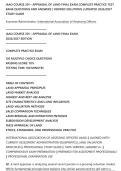
IAAO COURSE 402 – PROPERTY TAX POLICY FINAL EXAM COMPLETE PRACTICE TEST
BANK QUESTIONS AND ANSWERS | VERIFIED SOLUTIONS | UPDATED 2026/2027
STUDY GUIDE
Examiner/Administrator: International Association of Assessing Officers
━━━━━━━━━━━━━━━━━━━━━━━━━━━━
IAAO COURSE 402 – PROPERTY TAX POLICY FINAL EXAM
2026/2027 EDITION
━━━━━━━━━━━━━━━━━━━━━━━━━━━━
COMPLETE PRACTICE EXAM
120 MULTIPLE-CHOICE QUESTIONS
PASSING SCORE: 70%
TESTING TIME: 180 MINUTES
━━━━━━━━━━━━━━━━━━━━━━━━━━━━
TABLE OF CONTENTS
1. Foundations of Property Tax Policy
2. Principles of Tax Equity and Fairness
3. Property Tax Administration
4. Assessment Standards and Uniformity
5. Tax Incidence and Economic Effects
6. Revenue Policy and Fiscal Stability
7. Exemptions, Relief Programs, and Incentives
8. Legal and Constitutional Considerations
9. Public Policy Analysis and Reform
10. Strategic Property Tax Governance
INTERNATIONAL ASSOCIATION OF ASSESSING OFFICERS (IAAO) || ALIGNED WITH
CURRENT PROPERTY TAX POLICY BLUEPRINTS || PROPERTY TAX ADMINISTRATION &
GOVERNANCE || PROFESSIONAL STUDY GUIDE || 100% VERIFIED | GRADED A+ ||
COMPREHENSIVE EXAM PREPARATION || PREPARED FOR PROFESSIONAL ASSESSMENT
ADMINISTRATION || PROFESSIONAL EXAMINATION USE
━━━━━━━━━━━━━━━━━━━━━━━━━━━━
,Property Tax Policy Foundations (Q1–Q8)
Q1. A state legislature is reviewing its property tax system and seeks a tax source that
provides stable revenue during economic downturns. Which characteristic of the
property tax most strongly supports its use for local government finance?
A. Property values fluctuate more rapidly than sales taxes
B. Real property is immobile and forms a relatively stable tax base
C. Property taxes are easier to administer than all other taxes
D. Property taxes are unaffected by political decisions
Correct Answer: 🔴 B. Real property is immobile and forms a relatively stable tax
base
Explanation: 🔹 Property taxes are widely used because real property cannot
relocate, making the tax base relatively stable and predictable. Option A is incorrect
because property values generally fluctuate less dramatically than sales activity.
Option C overstates administrative simplicity. Option D is incorrect because
exemptions, rates, and policies are subject to legislative action.
Q2. Which policy objective is most directly associated with horizontal equity in
property taxation?
A. Taxpayers with greater wealth should pay more taxes
B. Commercial properties should subsidize residential properties
C. Similar properties should bear similar tax burdens
D. Tax rates should increase annually
Correct Answer: 🔴 C. Similar properties should bear similar tax burdens
Explanation: 🔹 Horizontal equity requires equal treatment of similarly situated
taxpayers. Option A reflects vertical equity. Option B is a policy choice rather than an
equity principle. Option D has no direct relationship to equity.
Q3. A county assessor values all residential properties at 80% of market value and all
commercial properties at 100% of market value. Which principle is most
compromised?
,A. Revenue adequacy
B. Administrative efficiency
C. Uniformity
D. Budget neutrality
Correct Answer: 🔴 C. Uniformity
Explanation: 🔹 Uniformity requires similar assessment treatment across property
classes unless lawfully classified otherwise. Assessing different property types at
differing percentages of market value undermines equal treatment. Revenue
adequacy and budget neutrality may still exist despite inequitable assessments.
Q4. Which statement best describes the primary purpose of a property tax policy
framework?
A. To maximize assessments regardless of market conditions
B. To establish principles guiding taxation, equity, administration, and revenue
generation
C. To eliminate taxpayer appeals
D. To replace local budgeting processes
Correct Answer: 🔴 B. To establish principles guiding taxation, equity,
administration, and revenue generation
Explanation: 🔹 Property tax policy provides the philosophical and operational
framework for tax administration. It balances fairness, efficiency, and revenue needs.
The other options either misstate or exaggerate policy objectives.
Q5. A policymaker argues that taxpayers should contribute according to their
economic capacity. This reflects which taxation principle?
A. Benefit principle
B. Neutrality principle
C. Ability-to-pay principle
D. Certainty principle
, Correct Answer: 🔴 C. Ability-to-pay principle
Explanation: 🔹 The ability-to-pay principle suggests tax burdens should correspond
to economic resources. The benefit principle links taxes to services received.
Neutrality seeks minimal economic distortion, while certainty emphasizes
predictable taxation.
Q6. Which outcome is most likely if assessment levels vary significantly among
neighborhoods?
A. Increased horizontal equity
B. Improved taxpayer confidence
C. Unequal tax burdens among similarly situated taxpayers
D. Automatic revenue neutrality
Correct Answer: 🔴 C. Unequal tax burdens among similarly situated taxpayers
Explanation: 🔹 Inconsistent assessments create inequitable tax burdens and
undermine public trust. Such disparities violate accepted standards of assessment
fairness and uniformity.
Q7. Why is transparency considered an essential component of property tax policy?
A. It guarantees lower tax rates
B. It reduces the need for assessments
C. It promotes taxpayer understanding and confidence in the system
D. It eliminates appeals
Correct Answer: 🔴 C. It promotes taxpayer understanding and confidence in the
system
Explanation: 🔹 Transparency allows taxpayers to understand valuation, taxation,
and appeal processes. This improves legitimacy and compliance. It does not
guarantee lower taxes or eliminate disputes.
BANK QUESTIONS AND ANSWERS | VERIFIED SOLUTIONS | UPDATED 2026/2027
STUDY GUIDE
Examiner/Administrator: International Association of Assessing Officers
━━━━━━━━━━━━━━━━━━━━━━━━━━━━
IAAO COURSE 402 – PROPERTY TAX POLICY FINAL EXAM
2026/2027 EDITION
━━━━━━━━━━━━━━━━━━━━━━━━━━━━
COMPLETE PRACTICE EXAM
120 MULTIPLE-CHOICE QUESTIONS
PASSING SCORE: 70%
TESTING TIME: 180 MINUTES
━━━━━━━━━━━━━━━━━━━━━━━━━━━━
TABLE OF CONTENTS
1. Foundations of Property Tax Policy
2. Principles of Tax Equity and Fairness
3. Property Tax Administration
4. Assessment Standards and Uniformity
5. Tax Incidence and Economic Effects
6. Revenue Policy and Fiscal Stability
7. Exemptions, Relief Programs, and Incentives
8. Legal and Constitutional Considerations
9. Public Policy Analysis and Reform
10. Strategic Property Tax Governance
INTERNATIONAL ASSOCIATION OF ASSESSING OFFICERS (IAAO) || ALIGNED WITH
CURRENT PROPERTY TAX POLICY BLUEPRINTS || PROPERTY TAX ADMINISTRATION &
GOVERNANCE || PROFESSIONAL STUDY GUIDE || 100% VERIFIED | GRADED A+ ||
COMPREHENSIVE EXAM PREPARATION || PREPARED FOR PROFESSIONAL ASSESSMENT
ADMINISTRATION || PROFESSIONAL EXAMINATION USE
━━━━━━━━━━━━━━━━━━━━━━━━━━━━
,Property Tax Policy Foundations (Q1–Q8)
Q1. A state legislature is reviewing its property tax system and seeks a tax source that
provides stable revenue during economic downturns. Which characteristic of the
property tax most strongly supports its use for local government finance?
A. Property values fluctuate more rapidly than sales taxes
B. Real property is immobile and forms a relatively stable tax base
C. Property taxes are easier to administer than all other taxes
D. Property taxes are unaffected by political decisions
Correct Answer: 🔴 B. Real property is immobile and forms a relatively stable tax
base
Explanation: 🔹 Property taxes are widely used because real property cannot
relocate, making the tax base relatively stable and predictable. Option A is incorrect
because property values generally fluctuate less dramatically than sales activity.
Option C overstates administrative simplicity. Option D is incorrect because
exemptions, rates, and policies are subject to legislative action.
Q2. Which policy objective is most directly associated with horizontal equity in
property taxation?
A. Taxpayers with greater wealth should pay more taxes
B. Commercial properties should subsidize residential properties
C. Similar properties should bear similar tax burdens
D. Tax rates should increase annually
Correct Answer: 🔴 C. Similar properties should bear similar tax burdens
Explanation: 🔹 Horizontal equity requires equal treatment of similarly situated
taxpayers. Option A reflects vertical equity. Option B is a policy choice rather than an
equity principle. Option D has no direct relationship to equity.
Q3. A county assessor values all residential properties at 80% of market value and all
commercial properties at 100% of market value. Which principle is most
compromised?
,A. Revenue adequacy
B. Administrative efficiency
C. Uniformity
D. Budget neutrality
Correct Answer: 🔴 C. Uniformity
Explanation: 🔹 Uniformity requires similar assessment treatment across property
classes unless lawfully classified otherwise. Assessing different property types at
differing percentages of market value undermines equal treatment. Revenue
adequacy and budget neutrality may still exist despite inequitable assessments.
Q4. Which statement best describes the primary purpose of a property tax policy
framework?
A. To maximize assessments regardless of market conditions
B. To establish principles guiding taxation, equity, administration, and revenue
generation
C. To eliminate taxpayer appeals
D. To replace local budgeting processes
Correct Answer: 🔴 B. To establish principles guiding taxation, equity,
administration, and revenue generation
Explanation: 🔹 Property tax policy provides the philosophical and operational
framework for tax administration. It balances fairness, efficiency, and revenue needs.
The other options either misstate or exaggerate policy objectives.
Q5. A policymaker argues that taxpayers should contribute according to their
economic capacity. This reflects which taxation principle?
A. Benefit principle
B. Neutrality principle
C. Ability-to-pay principle
D. Certainty principle
, Correct Answer: 🔴 C. Ability-to-pay principle
Explanation: 🔹 The ability-to-pay principle suggests tax burdens should correspond
to economic resources. The benefit principle links taxes to services received.
Neutrality seeks minimal economic distortion, while certainty emphasizes
predictable taxation.
Q6. Which outcome is most likely if assessment levels vary significantly among
neighborhoods?
A. Increased horizontal equity
B. Improved taxpayer confidence
C. Unequal tax burdens among similarly situated taxpayers
D. Automatic revenue neutrality
Correct Answer: 🔴 C. Unequal tax burdens among similarly situated taxpayers
Explanation: 🔹 Inconsistent assessments create inequitable tax burdens and
undermine public trust. Such disparities violate accepted standards of assessment
fairness and uniformity.
Q7. Why is transparency considered an essential component of property tax policy?
A. It guarantees lower tax rates
B. It reduces the need for assessments
C. It promotes taxpayer understanding and confidence in the system
D. It eliminates appeals
Correct Answer: 🔴 C. It promotes taxpayer understanding and confidence in the
system
Explanation: 🔹 Transparency allows taxpayers to understand valuation, taxation,
and appeal processes. This improves legitimacy and compliance. It does not
guarantee lower taxes or eliminate disputes.