

Escrito por estudiantes que aprobaron Inmediatamente disponible después del pago Leer en línea o como PDF ¿Documento equivocado? Cámbialo gratis 4,6 TrustPilot
logo-home
Document preview thumbnail
Vista previa 2 fuera de 10 páginas
Examen

TEXES PPR EC–12 (190) Practice Questions 2026 – 25+ Exam Questions on Classroom Management, ESL Strategies, Cooperative Learning, Reading Instruction & Special Education

Document preview thumbnail
Vista previa 2 fuera de 10 páginas

This comprehensive TEXES PPR EC–12 (190) Practice Questions 2026 study guide contains more than 25 carefully structured exam-style questions with verified answers and explanations designed to help future educators prepare for the Texas Examinations of Educator Standards (TExES) Pedagogy and Professional Responsibilities EC–12 certification exam. The material provides in-depth coverage of classroom management, literacy instruction, reading comprehension strategies, ESL instructional methods, cooperative learning, special education inclusion, cognitive development, differentiated instruction, instructional planning, assessment validity, educational technology integration, and culturally responsive teaching practices aligned with Texas educator certification standards. The question-and-answer format strengthens pedagogical decision-making, instructional reasoning, classroom leadership skills, and educational theory application commonly assessed on the TEXES PPR certification examination. The document extensively reviews key educational concepts including whole language instruction, semantic mapping, vocabulary development, pre-reading strategies, comprehension modeling, cooperative learning structures, assertive discipline classroom management, classroom procedures for kindergarten through second grade students, differentiated reading instruction, deductive teaching methods, culturally and linguistically diverse learners, ESL instructional goals, schema development, inclusive education models under IDEA, IEP implementation responsibilities, test bias awareness, educational technology productivity tools, instructional games, computer-assisted instruction, reflective teaching practice, collaborative curriculum planning, and student-centered instructional strategies. Additional topics include classroom motivation techniques, developmentally appropriate practice, peer-assisted learning, communication theory, problem-solving instruction, literacy promotion at home, and strategies for strengthening reading achievement and student engagement. This study guide is especially valuable for teacher certification candidates, education majors, alternative certification candidates, elementary education students, secondary education students, ESL educators, special education teachers, literacy interventionists, instructional aides, and pre-service teachers preparing for the TEXES PPR EC–12 (190) examination and other pedagogy-based teacher licensure assessments. The content aligns closely with Texas educator competencies, TEKS instructional expectations, IDEA inclusion requirements, ESL instructional frameworks, cooperative learning models, and evidence-based teaching methodologies commonly used in K–12 classrooms and educator preparation programs throughout the United States. The material also reinforces practical teaching skills including lesson planning, student motivation, classroom organization, literacy instruction, culturally responsive teaching, collaboration between general and special education teachers, differentiated assessment strategies, and effective classroom communication. References throughout the study guide align with educational theories and frameworks developed by Lev Vygotsky, Jean Piaget, Benjamin Bloom, Jerome Bruner, and current research-based instructional practices commonly taught in teacher education and educational psychology programs. Keywords TEXES PPR EC-12, PPR 190 exam, teacher certification exam, pedagogy and professional responsibilities, classroom management, cooperative learning, ESL strategies, literacy instruction, reading comprehension, semantic mapping, vocabulary development, pre reading strategies, whole language instruction, differentiated instruction, instructional planning, classroom procedures, assertive discipline, culturally responsive teaching, inclusive education, IDEA inclusion model, IEP implementation, special education instruction, ESL teaching methods, schema development, cognitive development, educational psychology, instructional technology, computer assisted instruction, instructional games, test bias, assessment validity, reflective teaching practice, peer assisted learning, classroom motivation, literacy intervention, culturally and linguistically diverse learners, classroom communication, problem solving instruction, educational assessment, TEKS standards, educator preparation, teacher licensure exam, elementary education, secondary education, teacher study guide, reading instruction strategies, educational technology tools, student centered learning, classroom leadership, effective teaching practices, teacher exam prep

Vista previa del contenido

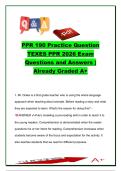
PPR 190 Practice Question
TEXES PPR 2026 Exam
Questions and Answers |
Already Graded A+


1. Mr. Drake is a first grade teacher who is using the whole language

approach when teaching about animals. Before reading a story and what

they are expected to learn. What's the reason for doing this? -

ANSWER ✔✔He's modeling a pre-reading skill in order to teach it to

the young readers. Comprehension is demonstrated when the reader

questions his or her intent for reading. Comprehension increases when

students become aware of the focus and expectation for the activity. It

also teaches students that we read for different purposes.

, 2. Mr. Drake's class has an extensive discussion on the needs of house

pets. In response to a student who says that her family abandoned their

cat in a field because it ate to much. Mr. Drake asks, "What is one way

to save pets that are no longer wanted?' This exercise involves what

level of questioning? - ANSWER ✔✔Evaluation. A question testing

whether or not student can synthesize information will require students

to generalize from given facts, draw conclusions, and use old ideas to

create new ones. Students will use the information discussed in class to

generate suggestions to save unwanted pets.

3. Mr. Drake has students who read at different levels. He has the

students in groups of two, (one skilled and one remedial reader) reading

selected stories to one another. The students read the story and

question each other until they feel that they both understand the story.

By planning the lesson this way, Mr. Drake has - ANSWER

✔✔utilized the students strengths and weaknesses to maximize time,

materials, and overall quality of the learning environment. The remedial

reader receives instruction and the skilled reader receives

reinforcement. The peer support system one of the main principles for

cooperative learning. It uses alternate teaching resources, the student

themselves enhance the learning environment.

Información del documento

Subido en
22 de mayo de 2026
Número de páginas
10
Escrito en
2025/2026
Tipo
Examen
Contiene
Preguntas y respuestas
$18.99

¿Documento equivocado? Cámbialo gratis Dentro de los 14 días posteriores a la compra y antes de descargarlo, puedes elegir otro documento. Puedes gastar el importe de nuevo.
Escrito por estudiantes que aprobaron
Inmediatamente disponible después del pago
Leer en línea o como PDF

Seller avatar
Los indicadores de reputación están sujetos a la cantidad de artículos vendidos por una tarifa y las reseñas que ha recibido por esos documentos. Hay tres niveles: Bronce, Plata y Oro. Cuanto mayor reputación, más podrás confiar en la calidad del trabajo del vendedor.
JOSHCLAY
3.5
(82)
Vendido
379
Seguidores
16
Artículos
20253
Última venta
17 horas hace


Por qué los estudiantes eligen Stuvia

Creado por compañeros estudiantes, verificado por reseñas

Calidad en la que puedes confiar: escrito por estudiantes que aprobaron y evaluado por otros que han usado estos resúmenes.

¿No estás satisfecho? Elige otro documento

¡No te preocupes! Puedes elegir directamente otro documento que se ajuste mejor a lo que buscas.

Paga como quieras, empieza a estudiar al instante

Sin suscripción, sin compromisos. Paga como estés acostumbrado con tarjeta de crédito y descarga tu documento PDF inmediatamente.

Student with book image

“Comprado, descargado y aprobado. Así de fácil puede ser.”

Alisha Student

Preguntas frecuentes
