CIVIL LITIGATION
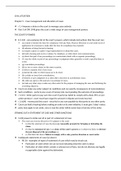
Chapter 9 – Case management and allocation of cases
r 1.4 imposes a duty on the court to manage cases actively.
Part 3 of CPR 1998 gives the court a wide range of case management powers.
THE COURT’S POWERS
R 3.1(2) - non-exclusive list of the court’s powers, which include instructions that the court can:
(a) extend or shorten the time for compliance with any Rule, Practice Direction or court order (even if
application for extension is made after the time for compliance has expired);
(b) adjourn or bring forward a hearing;
(c) require a party or a party’s legal representative to attend the court;
(d) hold a hearing and receive evidence by telephone, or other direct oral communication;
(e) direct that part of any proceedings (ie counterclaim) dealt with as separate proceedings;
(f ) stay the whole or part of any proceedings or judgment either generally or until a specified date or
event;
(g) consolidate proceedings;
(h) try two or more claims on the same occasion;
(i) direct a separate trial of any issue;
(j) decide the order in which issues are to be tried;
(k) exclude an issue from consideration;
(l) dismiss or give judgment on a claim after a decision on a preliminary issue;
(ll) order any party to file and serve an estimate of costs;
(m) take any other step or make any other order for the purpose of managing the case and furthering the
overriding objective.
Court can make any order subject to conditions and can specify consequence of noncompliance.
Such conditions - party to pay a sum of money into court pending the outcome of proceedings.
r 3.1(5) - Order party to pay sum into court if party has failed to comply with a Rule, PD’s or pre-
action protocol - court must have regard to amount in dispute and costs incurred.
r 3.1(6A) - money paid into court - security for any sum payable by that party to any other party.
Court can hold a hearing before making an order on its own initiative, it must give 3 days’ notice.
party may apply to set aside, vary or stay the order within seven days of service of the order.
STRIKING OUT A STATEMENT OF CASE AND OTHER SANCTIONS
3.4(2) power to strike out all or part of a statement of case.
The court can exercise this power if it appears to the court:
(a) that the statement of case discloses no reasonable grounds for bringing or defending the
claim;
(b) that the statement of case is an abuse of the court’s process or is otherwise likely to obstruct
the just disposal of the proceedings; or
(c) that there has been a failure to comply with a rule, practice direction or court order.
Inadequate statements of case ((a) above)
PD 3A - examples of types of statement of case which may be struck out.
Particulars of claim which set out no facts indicating what the claim is about
Particulars of claim which contain a coherent set of facts, but do not disclose any legally
recognisable claim against the defendant.
, defence of bare denial, no coherent statement of facts, of if coherent facts, do not
amount in law to a defence to the claim - claimant may make an application to the court.
If defendant did not comply with order, claimant would able to obtain judgment - defendant
can apply (r 3.6) for judgment to be set aside within 14 days after judgment has been served.
Non-compliance with a Rule, Practice Direction or court order ((b) above)
Striking out is only one of a number of sanctions that the court can apply.
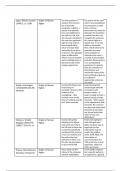
The starting point for decisions on sanctions for default is Biguzzi v Rank Leisure plc [1999].
less drastic but equally effective ways of dealing with default.
overriding objective -deal with cases justly and duty to ensure fairness, central consideration
in exercise of court’s discretion (Necati v Commissioner of Police for the Metropolis [2001].
Arrow Nominees Inc v Blackledge [2000] - striking out a case purely on the basis of a breach
of the rules or an order of the court may infringe Article 6(1) of the ECHR unless the breach
itself meant that it may no longer be possible to have a fair trial.
Where delay or non-compliance means no longer possible to have fair trial (Habib Bank Ltd v
Abbeypearl Ltd and Others [2001]), or where default so bad that amounts to abuse of court
(UCB Corporate Services Ltd v Halifax Ltd [1999]) strike out may be appropriate response.
Sanctions may also be imposed by the court for non-payment of any court fees.
If the claimant does not pay the fee, or make an application for exemption from or remission
of the fee within the specified time period, the claim will be struck out with costs.
Sanctions other than striking out
Costs
Common sanction - party in default to pay the other party’s costs occasioned by the
delay on an indemnity basis.
The court will make a summary assessment of those costs at the time of the hearing.
If fault lies with legal representative, court may make a wasted costs order - improper,
unreasonable or negligent act or omission by legal representative (SCA 1981, s 51).
court must allow legal representative reasonable opportunity to attend hearing and give
reasons why the order should not be granted.
Interest
If party at fault claimant, court may reduce amount of interest payable on his damages.
If party in default defendant, interest payable on claimant’s damages at end increased.
Limiting the issues
The appropriate sanction may be to limit the issues that are allowed to proceed to trial -
AXA Insurance Co Ltd v Swire Fraser (2000).
The unless order
If party not taken step in proceedings according to court order, other party will serve the
overriding objective first to chase up the defaulting party promptly in correspondence.
If that does not work, an application should be made to the court for an ‘unless order’.
This is reflected in fast track and multi-track proceedings.
PD 28 and 29 both provide in these circumstances that:
Where a party has failed to comply with a direction given by the court any other party may apply
for an order to enforce compliance or for a sanction to be imposed or both of these.
Party entitled to apply for an order must do without delay, but should first warn other party.
It is a suspended sanction.
If Party subject to unless order cannot make deadline should apply to court before to extend
Chapter 9 – Case management and allocation of cases
r 1.4 imposes a duty on the court to manage cases actively.
Part 3 of CPR 1998 gives the court a wide range of case management powers.
THE COURT’S POWERS
R 3.1(2) - non-exclusive list of the court’s powers, which include instructions that the court can:
(a) extend or shorten the time for compliance with any Rule, Practice Direction or court order (even if
application for extension is made after the time for compliance has expired);
(b) adjourn or bring forward a hearing;
(c) require a party or a party’s legal representative to attend the court;
(d) hold a hearing and receive evidence by telephone, or other direct oral communication;
(e) direct that part of any proceedings (ie counterclaim) dealt with as separate proceedings;
(f ) stay the whole or part of any proceedings or judgment either generally or until a specified date or
event;
(g) consolidate proceedings;
(h) try two or more claims on the same occasion;
(i) direct a separate trial of any issue;
(j) decide the order in which issues are to be tried;
(k) exclude an issue from consideration;
(l) dismiss or give judgment on a claim after a decision on a preliminary issue;
(ll) order any party to file and serve an estimate of costs;
(m) take any other step or make any other order for the purpose of managing the case and furthering the
overriding objective.
Court can make any order subject to conditions and can specify consequence of noncompliance.
Such conditions - party to pay a sum of money into court pending the outcome of proceedings.
r 3.1(5) - Order party to pay sum into court if party has failed to comply with a Rule, PD’s or pre-
action protocol - court must have regard to amount in dispute and costs incurred.
r 3.1(6A) - money paid into court - security for any sum payable by that party to any other party.
Court can hold a hearing before making an order on its own initiative, it must give 3 days’ notice.
party may apply to set aside, vary or stay the order within seven days of service of the order.
STRIKING OUT A STATEMENT OF CASE AND OTHER SANCTIONS
3.4(2) power to strike out all or part of a statement of case.
The court can exercise this power if it appears to the court:
(a) that the statement of case discloses no reasonable grounds for bringing or defending the
claim;
(b) that the statement of case is an abuse of the court’s process or is otherwise likely to obstruct
the just disposal of the proceedings; or
(c) that there has been a failure to comply with a rule, practice direction or court order.
Inadequate statements of case ((a) above)
PD 3A - examples of types of statement of case which may be struck out.
Particulars of claim which set out no facts indicating what the claim is about
Particulars of claim which contain a coherent set of facts, but do not disclose any legally
recognisable claim against the defendant.
, defence of bare denial, no coherent statement of facts, of if coherent facts, do not
amount in law to a defence to the claim - claimant may make an application to the court.
If defendant did not comply with order, claimant would able to obtain judgment - defendant
can apply (r 3.6) for judgment to be set aside within 14 days after judgment has been served.
Non-compliance with a Rule, Practice Direction or court order ((b) above)
Striking out is only one of a number of sanctions that the court can apply.
The starting point for decisions on sanctions for default is Biguzzi v Rank Leisure plc [1999].
less drastic but equally effective ways of dealing with default.
overriding objective -deal with cases justly and duty to ensure fairness, central consideration
in exercise of court’s discretion (Necati v Commissioner of Police for the Metropolis [2001].
Arrow Nominees Inc v Blackledge [2000] - striking out a case purely on the basis of a breach
of the rules or an order of the court may infringe Article 6(1) of the ECHR unless the breach
itself meant that it may no longer be possible to have a fair trial.
Where delay or non-compliance means no longer possible to have fair trial (Habib Bank Ltd v
Abbeypearl Ltd and Others [2001]), or where default so bad that amounts to abuse of court
(UCB Corporate Services Ltd v Halifax Ltd [1999]) strike out may be appropriate response.
Sanctions may also be imposed by the court for non-payment of any court fees.
If the claimant does not pay the fee, or make an application for exemption from or remission
of the fee within the specified time period, the claim will be struck out with costs.
Sanctions other than striking out
Costs
Common sanction - party in default to pay the other party’s costs occasioned by the
delay on an indemnity basis.
The court will make a summary assessment of those costs at the time of the hearing.
If fault lies with legal representative, court may make a wasted costs order - improper,
unreasonable or negligent act or omission by legal representative (SCA 1981, s 51).
court must allow legal representative reasonable opportunity to attend hearing and give
reasons why the order should not be granted.
Interest
If party at fault claimant, court may reduce amount of interest payable on his damages.
If party in default defendant, interest payable on claimant’s damages at end increased.
Limiting the issues
The appropriate sanction may be to limit the issues that are allowed to proceed to trial -
AXA Insurance Co Ltd v Swire Fraser (2000).
The unless order
If party not taken step in proceedings according to court order, other party will serve the
overriding objective first to chase up the defaulting party promptly in correspondence.
If that does not work, an application should be made to the court for an ‘unless order’.
This is reflected in fast track and multi-track proceedings.
PD 28 and 29 both provide in these circumstances that:
Where a party has failed to comply with a direction given by the court any other party may apply
for an order to enforce compliance or for a sanction to be imposed or both of these.
Party entitled to apply for an order must do without delay, but should first warn other party.
It is a suspended sanction.
If Party subject to unless order cannot make deadline should apply to court before to extend