

JMU COB 487 CK Lee Exam 4 Guide 2026 Test
Practice
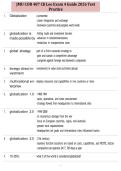
1. Globalization A process:
-closer integration and exchange
-between countries and peoples world wide
2. globalization is -falling trade and investment barriers
made possible by -advances in telecommunications
-reductions in transportation costs
3. global strategy part of a firm's corporate strategy to
-gain and sustain a competitive advantage
-compete against foreign and domestic companies
4. foreign direct in- investments in value chain activities abroad
vestment
5. multinational en- deploys resources and capabilities in two countries or more
terprise
6. globalization 1.0 -1900-1941
-sales, operations, and some procurement
-strategy flowed from headquarters to international sites
7. globalization 2.0 -1945-2000
-to reconstruct damage from the war
-focus on European countries, Japan, and Australia
-greater local responsiveness
-headquarters set goals and international sites influenced tactics
8. globalization 3.0 -21st century
-business function locations are based on costs, capabilities, and PESTEL factors
-companies can operate 24/7, 365 days a year
9. 10-25% what % of the world is considered globalized?
1/9
, JMU COB 487 CK Lee Exam 4 Guide 2026 Test
Practice
10. advantages of in- -access new markets
ternational ex- -access lower-cost inputs
pansion -develop new competencies
11. disadvantages of -liability of foreignness
international -loss of reputation
exapnsion -loss of intellectual property
12. the CAGE Dis- A decision framework based on the relative distance between home and a foreign
tance framework target country along four dimensions
13. cultural, adminis- what are the four types of distance in the CAGE distance framework?
trative and polit-
ical, geographic,
economic
14. cultural distance disparity between a firm's home and host country, in social norms and morals,
beliefs, and values
15. administrative Captured in factors such as:
and political -Shared monetary or political associations
distance -Political hostilities
-Weak or strong legal and financial institutions
includes:
-Taritts
-Trade quotas
-FDI restrictions
16. geographic dis- more than just physical distance, also includes
tance -physical size
-topography
-time zones
2/9
Practice
1. Globalization A process:
-closer integration and exchange
-between countries and peoples world wide
2. globalization is -falling trade and investment barriers
made possible by -advances in telecommunications
-reductions in transportation costs
3. global strategy part of a firm's corporate strategy to
-gain and sustain a competitive advantage
-compete against foreign and domestic companies
4. foreign direct in- investments in value chain activities abroad
vestment
5. multinational en- deploys resources and capabilities in two countries or more
terprise
6. globalization 1.0 -1900-1941
-sales, operations, and some procurement
-strategy flowed from headquarters to international sites
7. globalization 2.0 -1945-2000
-to reconstruct damage from the war
-focus on European countries, Japan, and Australia
-greater local responsiveness
-headquarters set goals and international sites influenced tactics
8. globalization 3.0 -21st century
-business function locations are based on costs, capabilities, and PESTEL factors
-companies can operate 24/7, 365 days a year
9. 10-25% what % of the world is considered globalized?
1/9
, JMU COB 487 CK Lee Exam 4 Guide 2026 Test
Practice
10. advantages of in- -access new markets
ternational ex- -access lower-cost inputs
pansion -develop new competencies
11. disadvantages of -liability of foreignness
international -loss of reputation
exapnsion -loss of intellectual property
12. the CAGE Dis- A decision framework based on the relative distance between home and a foreign
tance framework target country along four dimensions
13. cultural, adminis- what are the four types of distance in the CAGE distance framework?
trative and polit-
ical, geographic,
economic
14. cultural distance disparity between a firm's home and host country, in social norms and morals,
beliefs, and values
15. administrative Captured in factors such as:
and political -Shared monetary or political associations
distance -Political hostilities
-Weak or strong legal and financial institutions
includes:
-Taritts
-Trade quotas
-FDI restrictions
16. geographic dis- more than just physical distance, also includes
tance -physical size
-topography
-time zones
2/9

