

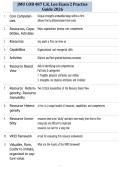
JMU COB 487 C.K. Lee Exam 2 Practice
Guide 2026
1. Core Competen- Unique strengths embedded deep within a firm
cies Allows firm to ditterentiate from rivals
2. Resources, Capa- Helps organizations develop core competencies
bilities, Activities
3. Resources Any assets a firm can draw on
4. Capabilities Organizational and managerial skills
5. Activities Distinct and fine-grained business processes
6. Resource Based Aids in identifying core competencies
View Fall into 2 categories
1. Tangible (physical attributes and visible)
2. Intangible (no physical attributes and invisible)
7. Resource Hetero- Two Critical Assumptions of the Resource Based View
geneity; Resource
Immobility
8. Resource Hetero- a firm is a unique bundle of resources, capabilities, and competencies
geneity
9. Resource Immo- resources tend to be "sticky" and don't move easily from firm to firm
bility resources are diflcult to replicate
resources can last for a long time
10. VRIO framework A tool for evaluating firm resource endowments
11. Valuable, Rare, What are the 4 parts of the VRIO framework?
Costly to imitate,
organized to cap-
ture value
1/7
, JMU COB 487 C.K. Lee Exam 2 Practice
Guide 2026
12. Isolating Mecha- barriers to imitation to help sustain a competitive advantage
nisms
13. Path dependence past decisions limit current options
14. Casual ambiguity cause and ettect are vague
15. Social complexity social and business systems interact
16. Core rigidity a former core competency turned into a liability
17. Dynamic Capabili- a model that emphasizes a firm's ability ability to
ties Perspective -modify and leverage its resource base
-gain and sustain a competitive advantage
-respond to a constantly changing environment
18. Dynamic markets due to technological changes, deregulation, globalization, demographic shifts
19. SWOT analysis a planning tool used to analyze an organization's strengths, weaknesses, oppor-
tunities, and threats
20. TOWS analysis comes up with strategic options based on the SWOT anaylsis
-combine an external and internal analysis
21. Value Chain Analy- internal activities a firm engages in when transforming inputs into outputs
sis each activity adds incremental value and costs
22. Strategic Activity a network of interconnected activities
Systems -can be the foundation of competitive advantage
-socially complex and casually ambiguous
-enhanced likelihood of sustained competitive advantage
23.
2/7
Guide 2026
1. Core Competen- Unique strengths embedded deep within a firm
cies Allows firm to ditterentiate from rivals
2. Resources, Capa- Helps organizations develop core competencies
bilities, Activities
3. Resources Any assets a firm can draw on
4. Capabilities Organizational and managerial skills
5. Activities Distinct and fine-grained business processes
6. Resource Based Aids in identifying core competencies
View Fall into 2 categories
1. Tangible (physical attributes and visible)
2. Intangible (no physical attributes and invisible)
7. Resource Hetero- Two Critical Assumptions of the Resource Based View
geneity; Resource
Immobility
8. Resource Hetero- a firm is a unique bundle of resources, capabilities, and competencies
geneity
9. Resource Immo- resources tend to be "sticky" and don't move easily from firm to firm
bility resources are diflcult to replicate
resources can last for a long time
10. VRIO framework A tool for evaluating firm resource endowments
11. Valuable, Rare, What are the 4 parts of the VRIO framework?
Costly to imitate,
organized to cap-
ture value
1/7
, JMU COB 487 C.K. Lee Exam 2 Practice
Guide 2026
12. Isolating Mecha- barriers to imitation to help sustain a competitive advantage
nisms
13. Path dependence past decisions limit current options
14. Casual ambiguity cause and ettect are vague
15. Social complexity social and business systems interact
16. Core rigidity a former core competency turned into a liability
17. Dynamic Capabili- a model that emphasizes a firm's ability ability to
ties Perspective -modify and leverage its resource base
-gain and sustain a competitive advantage
-respond to a constantly changing environment
18. Dynamic markets due to technological changes, deregulation, globalization, demographic shifts
19. SWOT analysis a planning tool used to analyze an organization's strengths, weaknesses, oppor-
tunities, and threats
20. TOWS analysis comes up with strategic options based on the SWOT anaylsis
-combine an external and internal analysis
21. Value Chain Analy- internal activities a firm engages in when transforming inputs into outputs
sis each activity adds incremental value and costs
22. Strategic Activity a network of interconnected activities
Systems -can be the foundation of competitive advantage
-socially complex and casually ambiguous
-enhanced likelihood of sustained competitive advantage
23.
2/7

