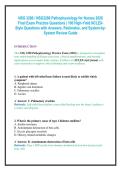
NSG 3280 / NSG3280 Pathophysiology for Nurses 2026
Final Exam Practice Questions | 100 High-Yield NCLEX-
Style Questions with Answers, Rationales, and System-by-
System Review Guide
INTRODUCTION
This NSG 3280 Pathophysiology Practice Exam (2026) is designed to strengthen
your understanding of disease processes, clinical manifestations, and nursing
implications across major body systems. It follows an NCLEX-style format with
clear rationales to support critical thinking and exam readiness.
1. A patient with left-sided heart failure is most likely to exhibit which
symptom?
A. Peripheral edema
B. Jugular vein distention
C. Pulmonary crackles
D. Ascites
✔️ Answer: C. Pulmonary crackles
Rationale: Left-sided heart failure causes fluid backup into the lungs, leading to
crackles and dyspnea.
2. What is the primary cause of type 1 diabetes mellitus?
A. Insulin resistance
B. Autoimmune destruction of beta cells
C. Excess glucagon secretion
D. Obesity-related metabolic changes
✔️ Answer: B. Autoimmune destruction of beta cells
Rationale: Type 1 DM results from immune-mediated destruction of pancreatic
beta cells.
,3. Which lab finding is expected in acute kidney injury?
A. Decreased BUN
B. Increased creatinine
C. Decreased potassium
D. Increased glucose
✔️ Answer: B. Increased creatinine
Rationale: Kidney dysfunction leads to elevated creatinine due to impaired
filtration.
4. A patient with COPD will most likely develop which acid-base imbalance?
A. Metabolic alkalosis
B. Respiratory acidosis
C. Respiratory alkalosis
D. Metabolic acidosis
✔️ Answer: B. Respiratory acidosis
Rationale: CO₂ retention from impaired ventilation causes respiratory acidosis.
5. Which condition is characterized by demyelination of nerve fibers?
A. Parkinson’s disease
B. Multiple sclerosis
C. Myasthenia gravis
D. ALS
✔️ Answer: B. Multiple sclerosis
Rationale: MS involves immune-mediated destruction of myelin in the CNS.
6. A patient with pneumonia is expected to have which finding?
A. Decreased WBC
B. Productive cough
C. Bradycardia
D. Dry skin
, ✔️ Answer: B. Productive cough
Rationale: Infection leads to mucus production and cough.
7. Which electrolyte imbalance is most dangerous in cardiac patients?
A. Hypokalemia
B. Hyperkalemia
C. Hypernatremia
D. Hypocalcemia
✔️ Answer: B. Hyperkalemia
Rationale: High potassium can cause fatal dysrhythmias.
8. What is a classic sign of appendicitis?
A. Left upper quadrant pain
B. Right lower quadrant rebound tenderness
C. Epigastric burning
D. Flank pain
✔️ Answer: B. Right lower quadrant rebound tenderness
Rationale: McBurney’s point tenderness is characteristic.
9. Which hormone is elevated in Cushing’s syndrome?
A. Insulin
B. Cortisol
C. Thyroxine
D. Aldosterone
✔️ Answer: B. Cortisol
Rationale: Cushing’s syndrome is caused by excess cortisol.
10. A patient with hyperthyroidism is likely to experience:
A. Weight gain
B. Heat intolerance
Final Exam Practice Questions | 100 High-Yield NCLEX-
Style Questions with Answers, Rationales, and System-by-
System Review Guide
INTRODUCTION
This NSG 3280 Pathophysiology Practice Exam (2026) is designed to strengthen
your understanding of disease processes, clinical manifestations, and nursing
implications across major body systems. It follows an NCLEX-style format with
clear rationales to support critical thinking and exam readiness.
1. A patient with left-sided heart failure is most likely to exhibit which
symptom?
A. Peripheral edema
B. Jugular vein distention
C. Pulmonary crackles
D. Ascites
✔️ Answer: C. Pulmonary crackles
Rationale: Left-sided heart failure causes fluid backup into the lungs, leading to
crackles and dyspnea.
2. What is the primary cause of type 1 diabetes mellitus?
A. Insulin resistance
B. Autoimmune destruction of beta cells
C. Excess glucagon secretion
D. Obesity-related metabolic changes
✔️ Answer: B. Autoimmune destruction of beta cells
Rationale: Type 1 DM results from immune-mediated destruction of pancreatic
beta cells.
,3. Which lab finding is expected in acute kidney injury?
A. Decreased BUN
B. Increased creatinine
C. Decreased potassium
D. Increased glucose
✔️ Answer: B. Increased creatinine
Rationale: Kidney dysfunction leads to elevated creatinine due to impaired
filtration.
4. A patient with COPD will most likely develop which acid-base imbalance?
A. Metabolic alkalosis
B. Respiratory acidosis
C. Respiratory alkalosis
D. Metabolic acidosis
✔️ Answer: B. Respiratory acidosis
Rationale: CO₂ retention from impaired ventilation causes respiratory acidosis.
5. Which condition is characterized by demyelination of nerve fibers?
A. Parkinson’s disease
B. Multiple sclerosis
C. Myasthenia gravis
D. ALS
✔️ Answer: B. Multiple sclerosis
Rationale: MS involves immune-mediated destruction of myelin in the CNS.
6. A patient with pneumonia is expected to have which finding?
A. Decreased WBC
B. Productive cough
C. Bradycardia
D. Dry skin
, ✔️ Answer: B. Productive cough
Rationale: Infection leads to mucus production and cough.
7. Which electrolyte imbalance is most dangerous in cardiac patients?
A. Hypokalemia
B. Hyperkalemia
C. Hypernatremia
D. Hypocalcemia
✔️ Answer: B. Hyperkalemia
Rationale: High potassium can cause fatal dysrhythmias.
8. What is a classic sign of appendicitis?
A. Left upper quadrant pain
B. Right lower quadrant rebound tenderness
C. Epigastric burning
D. Flank pain
✔️ Answer: B. Right lower quadrant rebound tenderness
Rationale: McBurney’s point tenderness is characteristic.
9. Which hormone is elevated in Cushing’s syndrome?
A. Insulin
B. Cortisol
C. Thyroxine
D. Aldosterone
✔️ Answer: B. Cortisol
Rationale: Cushing’s syndrome is caused by excess cortisol.
10. A patient with hyperthyroidism is likely to experience:
A. Weight gain
B. Heat intolerance