

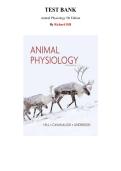
TEST BANK
Animal Physiology 5th Edition
By Richard Hill
LU
XE
LI
BR
AR
Y
, TABLE OF CONTENT
Part I Fundamentals of Physiology
1 Animals and Environments:
2 Molecules and Cells in Animal Physiology
3 Genomics, Proteomics, and Related Approaches to Physiology
4 Physiological Development and Epigenetics
5 Transport of Solutes and Water
Part II Food, Energy, and Temperature
6 Nutrition, Feeding, and Digestion
7 Energy Metabolism
8 Aerobic and Anaerobic Forms of Metabolism
9 The Energetics of Aerobic Activity
LU
10 Thermal Relations
11 The Lives of Mammals in Frigid Places
Part III Integrating Systems
12 Neurons
13 Synapses
XE
14 Sensory Processes
15 Nervous System Organization and Biological Clocks
16 Endocrine and Neuroendocrine Physiology
17 Reproduction
18 Animal Navigation
Part IV Movement and Muscle
LI
19 Control of Movement
20 Muscle
21 Plasticity in Response to Use and Disuse
Part V Oxygen, Carbon Dioxide, and Internal Transport
BR
22 Introduction to Oxygen and Carbon Dioxide Physiology
23 External Respiration
24 Transport of Oxygen and Carbon Dioxide in Body Fluids
25 Circulation
26 Diving by Marine Mammals
Part VI Water, Salts, and Excretion
AR
27 Water and Salt Physiology
28 Water and Salt Physiology of Animals in Their Environments
29 Kidneys and Excretion
30 Mammals of Deserts and Dry Savannas
Y
, KJHGFDSA
Test Bank
to accompany
Animal Physiology, Fifth Edition Hill
• Wyse • Anderson
Chapter 1: Animals and Environments: Function on the Ecological Stage
TEST BANK QUESTIONS
LU
Multiple Choice
1. Which statement about the discipline of physiology is false?
a. It is a key discipline for understanding how animals change over Earth’s history.
b. It is a key discipline for understanding the fundamental biology of all animals.
c. It is a key discipline for understanding human health and disease.
XE
d. It is a key discipline for understanding the health and disease of nonhuman animals.
Answer: a
Textbook Reference: The Importance of Physiology
Bloom’s Category: 5. Evaluating
2. To understand how a fish propels itself by applying forces to the water, physiologists
LI
would study its
a. biomechanics.
b. evolution.
c. ecology.
BR
d. cell physiology.
Answer: a
Textbook Reference: The Highly Integrative Nature of Physiology
Bloom’s Category: 2. Understanding
3. The data in the graph below would be relevant to which subdiscipline of physiology?
AR
Y
KJHGFDSWA
, KJHGFDSA
a. Evolution
b. Cell physiology
c. Morphology
d. Ecology
Answer: d
Textbook Reference: The Highly Integrative Nature of Physiology
Bloom’s Category: 2. Understanding
4. In the study of physiology, the term “ ” refers to the components of living
LU
animals and the interactions among those components that enable animals to perform as
they do.
a. feedback
b. regulation
c. natural selection
d. mechanism
XE
Answer: d
Textbook Reference: Mechanism and Origin: Physiology’s Two Central Questions
Bloom’s Category: 1. Remembering
5. How is the light reaction in the firefly inhibited?
a. Mitochondria prevent oxygen from reacting with luciferyl-AMP.
LI
b. Nitric oxide combines with oxygen to prevent reaction with luciferyl-AMP.
c. ATP is prevented from combining with luciferin.
d. Luciferase is prevented from catalyzing the reaction.
Answer: a
BR
Textbook Reference: Mechanism and Origin: Physiology’s Two Central Questions
Bloom’s Category: 2. Understanding
6. Which of the following is not needed in the mechanism of light production in the
firefly?
a. Oxygen
AR
b. ATP
c. Light
d. Luciferin
Answer: c
Textbook Reference: Mechanism and Origin: Physiology’s Two Central Questions
Bloom’s Category: 2. Understanding
Y
7. In the firefly, light is emitted when
a. ATP combines with luciferin, forming luciferyl-AMP.
b. released nitric oxide blocks the mitochondria’s use of oxygen.
c. the electron-excited product of O2 and luciferyl-AMP returns to its ground state.
d. luciferase is activated by oxygen.
Answer: c
Textbook Reference: Mechanism and Origin: Physiology’s Two Central Questions
KJHGFDSWA
Animal Physiology 5th Edition
By Richard Hill
LU
XE
LI
BR
AR
Y
, TABLE OF CONTENT
Part I Fundamentals of Physiology
1 Animals and Environments:
2 Molecules and Cells in Animal Physiology
3 Genomics, Proteomics, and Related Approaches to Physiology
4 Physiological Development and Epigenetics
5 Transport of Solutes and Water
Part II Food, Energy, and Temperature
6 Nutrition, Feeding, and Digestion
7 Energy Metabolism
8 Aerobic and Anaerobic Forms of Metabolism
9 The Energetics of Aerobic Activity
LU
10 Thermal Relations
11 The Lives of Mammals in Frigid Places
Part III Integrating Systems
12 Neurons
13 Synapses
XE
14 Sensory Processes
15 Nervous System Organization and Biological Clocks
16 Endocrine and Neuroendocrine Physiology
17 Reproduction
18 Animal Navigation
Part IV Movement and Muscle
LI
19 Control of Movement
20 Muscle
21 Plasticity in Response to Use and Disuse
Part V Oxygen, Carbon Dioxide, and Internal Transport
BR
22 Introduction to Oxygen and Carbon Dioxide Physiology
23 External Respiration
24 Transport of Oxygen and Carbon Dioxide in Body Fluids
25 Circulation
26 Diving by Marine Mammals
Part VI Water, Salts, and Excretion
AR
27 Water and Salt Physiology
28 Water and Salt Physiology of Animals in Their Environments
29 Kidneys and Excretion
30 Mammals of Deserts and Dry Savannas
Y
, KJHGFDSA
Test Bank
to accompany
Animal Physiology, Fifth Edition Hill
• Wyse • Anderson
Chapter 1: Animals and Environments: Function on the Ecological Stage
TEST BANK QUESTIONS
LU
Multiple Choice
1. Which statement about the discipline of physiology is false?
a. It is a key discipline for understanding how animals change over Earth’s history.
b. It is a key discipline for understanding the fundamental biology of all animals.
c. It is a key discipline for understanding human health and disease.
XE
d. It is a key discipline for understanding the health and disease of nonhuman animals.
Answer: a
Textbook Reference: The Importance of Physiology
Bloom’s Category: 5. Evaluating
2. To understand how a fish propels itself by applying forces to the water, physiologists
LI
would study its
a. biomechanics.
b. evolution.
c. ecology.
BR
d. cell physiology.
Answer: a
Textbook Reference: The Highly Integrative Nature of Physiology
Bloom’s Category: 2. Understanding
3. The data in the graph below would be relevant to which subdiscipline of physiology?
AR
Y
KJHGFDSWA
, KJHGFDSA
a. Evolution
b. Cell physiology
c. Morphology
d. Ecology
Answer: d
Textbook Reference: The Highly Integrative Nature of Physiology
Bloom’s Category: 2. Understanding
4. In the study of physiology, the term “ ” refers to the components of living
LU
animals and the interactions among those components that enable animals to perform as
they do.
a. feedback
b. regulation
c. natural selection
d. mechanism
XE
Answer: d
Textbook Reference: Mechanism and Origin: Physiology’s Two Central Questions
Bloom’s Category: 1. Remembering
5. How is the light reaction in the firefly inhibited?
a. Mitochondria prevent oxygen from reacting with luciferyl-AMP.
LI
b. Nitric oxide combines with oxygen to prevent reaction with luciferyl-AMP.
c. ATP is prevented from combining with luciferin.
d. Luciferase is prevented from catalyzing the reaction.
Answer: a
BR
Textbook Reference: Mechanism and Origin: Physiology’s Two Central Questions
Bloom’s Category: 2. Understanding
6. Which of the following is not needed in the mechanism of light production in the
firefly?
a. Oxygen
AR
b. ATP
c. Light
d. Luciferin
Answer: c
Textbook Reference: Mechanism and Origin: Physiology’s Two Central Questions
Bloom’s Category: 2. Understanding
Y
7. In the firefly, light is emitted when
a. ATP combines with luciferin, forming luciferyl-AMP.
b. released nitric oxide blocks the mitochondria’s use of oxygen.
c. the electron-excited product of O2 and luciferyl-AMP returns to its ground state.
d. luciferase is activated by oxygen.
Answer: c
Textbook Reference: Mechanism and Origin: Physiology’s Two Central Questions
KJHGFDSWA

