

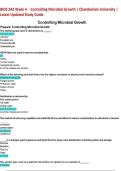
CONTROLLING MICROBIAL GROWTH
Controlling Microbial Growth is a vital resource designed to provide a clear and practical understanding of the methods and principles used to manage and inhibit the growth of microorganisms. Ideal for students, healthcare professionals, laboratory personnel, and anyone involved in infection prevention and control, this guide offers essential knowledge for maintaining safety and hygiene in clinical, industrial, and everyday environments. The resource begins by introducing the fundamental concepts of microbial growth and the importance of controlling microorganisms. It explains how bacteria, viruses, fungi, and other microbes multiply and spread, emphasizing the risks they pose to human health, food safety, and environmental stability. By understanding how microbes thrive, readers can better appreciate the need for effective control measures. A central focus of Controlling Microbial Growth is the wide range of physical and chemical methods used to limit or eliminate microbial activity. Physical methods such as heat treatment, filtration, radiation, and low-temperature storage are discussed in detail, explaining how each technique works to reduce or destroy microorganisms. Chemical methods, including disinfectants, antiseptics, and sterilizing agents, are also explored, with clear explanations of their mechanisms and applications. The guide highlights the difference between sterilization, disinfection, and sanitation, helping readers understand when and how each method should be applied. It also covers factors that influence the effectiveness of microbial control, such as concentration, exposure time, and the type of microorganism involved. This practical approach ensures that learners can apply the knowledge in real-life settings. In addition to basic techniques, Controlling Microbial Growth addresses modern challenges such as antimicrobial resistance and the need for responsible use of antibiotics and disinfectants. It emphasizes the importance of infection control practices in healthcare settings, including hand hygiene, use of personal protective equipment, and proper waste disposal. These topics are especially relevant in preventing the spread of infectious diseases. The resource also explores applications in various fields, including food preservation, water treatment, pharmaceuticals, and laboratory research. By demonstrating how microbial control is applied across industries, it provides a broader perspective on its significance in maintaining public health and safety. The content is organized in a clear, logical, and easy-to-follow manner, making it suitable for learners at different levels. Whether used as a textbook, study guide, or professional reference, it supports effective learning through simplified explanations and practical examples. Ideal for students in microbiology, nursing, public health, and laboratory sciences, Controlling Microbial Growth equips readers with the knowledge and skills needed to prevent contamination and reduce the spread of harmful microorganisms. It is an essential tool for anyone committed to promoting hygiene, safety, and health in both professional and everyday settings.
Información del documento
- Subido en
- 14 de abril de 2026
- Número de páginas
- 15
- Escrito en
- 2025/2026
- Tipo
- Examen
- Contiene
- Preguntas y respuestas

