Escrito por estudiantes que aprobaron Inmediatamente disponible después del pago Leer en línea o como PDF ¿Documento equivocado? Cámbialo gratis 4,6 TrustPilot
logo-home
Examen

NR-283 Pathophysiology Week 2 Quiz 2026/2027 | Verified Q&A with Rationales | Chamberlain | Pass Guaranteed - A+ Graded

Puntuación
-
Vendido
1
Páginas
9
Grado
A+
Subido en
10-04-2026
Escrito en
2025/2026

Pass your NR-283 Pathophysiology Week 2 Quiz at Chamberlain University with this comprehensive resource featuring verified questions, answers, and detailed rationales – all 100% correct and A+ graded for the 2026/2027 curriculum. This A+ Graded resource for the NR-283 Pathophysiology Week 2 Quiz (2026/2027 | Chamberlain University) contains verified questions, answers, and rationales covering every essential topic required for success on the second weekly quiz. Comprehensive Content Coverage Includes: Fluid and Electrolyte Imbalances: Body fluid compartments – intracellular fluid (ICF, 2/3 of body water), extracellular fluid (ECF – interstitial and intravascular, 1/3). Measurement units – osmolality, tonicity, mEq/L. Water balance – thirst mechanism, ADH, aldosterone, natriuretic peptides. Sodium imbalances: Hyponatremia (serum Na 135 mEq/L) – causes (SIADH, heart failure, vomiting, diuretics, water intoxication), manifestations (nausea, confusion, seizures, coma). Hypernatremia (serum Na 145 mEq/L) – causes (diabetes insipidus, dehydration, excessive sodium intake), manifestations (thirst, dry mucous membranes, agitation, hyperreflexia). Potassium imbalances: Hypokalemia (serum K 3.5 mEq/L) – causes (diuretics, vomiting, diarrhea, alkalosis), manifestations (muscle weakness, ileus, U waves, arrhythmias). Hyperkalemia (serum K 5.0 mEq/L) – causes (renal failure, ACE inhibitors, potassium-sparing diuretics, acidosis), manifestations (muscle cramps, paresthesias, peaked T waves, cardiac arrest). Calcium imbalances: Hypocalcemia (serum Ca 8.5 mg/dL) – causes (hypoparathyroidism, vitamin D deficiency, pancreatitis, renal failure), manifestations (tetany, Chvostek's sign, Trousseau's sign, prolonged QT). Hypercalcemia (serum Ca 10.2 mg/dL) – causes (hyperparathyroidism, malignancy, immobilization, thiazides), manifestations (bone pain, kidney stones, constipation, shortened QT, lethargy). Magnesium and phosphate imbalances: Hypomagnesemia (alcoholism, diuretics, diarrhea – neuromuscular irritability), hypermagnesemia (renal failure, laxative abuse – hyporeflexia, hypotension). Hypophosphatemia (refeeding syndrome, alcohol withdrawal – muscle weakness, respiratory failure), hyperphosphatemia (renal failure, tumor lysis – metastatic calcification). Acid-Base Imbalances: Normal pH 7.35-7.45, PaCO2 35-45 mmHg (respiratory component), HCO3 22-26 mEq/L (metabolic component). Henderson-Hasselbalch equation. Primary disorders and compensation: Respiratory acidosis: PaCO2 45, pH 7.35 – causes (COPD, hypoventilation, opioid overdose, pneumonia). Compensation: metabolic alkalosis (increased HCO3, renal retention). Respiratory alkalosis: PaCO2 35, pH 7.45 – causes (hyperventilation, anxiety, pulmonary embolism, high altitude). Compensation: metabolic acidosis (decreased HCO3, renal excretion). Metabolic acidosis: HCO3 22, pH 7.35 – causes (DKA, lactic acidosis, renal failure, diarrhea, methanol/ethylene glycol). Anion gap calculation (Na – Cl – HCO3, normal 8-12). Compensation: respiratory alkalosis (Kussmaul breathing, decreased PaCO2). Metabolic alkalosis: HCO3 26, pH 7.45 – causes (vomiting, NG suction, diuretics, mineralocorticoid excess). Compensation: respiratory acidosis (hypoventilation, increased PaCO2). Mixed disorders and ABG interpretation (e.g., respiratory acidosis with metabolic alkalosis in COPD patient on diuretics). Genetics and Genetic Disorders: DNA structure (double helix, nucleotides – A, T, G, C), genes, chromosomes (23 pairs, autosomes and sex chromosomes), mutations (point mutations, frameshift, trinucleotide repeats). Modes of inheritance: Autosomal dominant (Huntington's disease, Marfan syndrome, familial hypercholesterolemia – one affected allele, variable penetrance), autosomal recessive (cystic fibrosis, sickle cell disease, phenylketonuria – two affected alleles, carrier state), X-linked recessive (hemophilia A and B, Duchenne muscular dystrophy – males affected, females carriers), X-linked dominant (Rett syndrome, fragile X syndrome), mitochondrial inheritance (Leber's hereditary optic neuropathy). Chromosomal abnormalities: Aneuploidy (Down syndrome – trisomy 21, Edwards syndrome – trisomy 18, Patau syndrome – trisomy 13, Turner syndrome – 45,XO, Klinefelter syndrome – 47,XXY). Structural abnormalities (deletions – Cri-du-chat syndrome; translocations – Robertsonian; inversions, duplications, ring chromosomes). Mosaicism. Epigenetics and multifactorial inheritance: Epigenetic modifications (DNA methylation, histone acetylation, imprinting – Prader-Willi, Angelman syndromes). Multifactorial disorders (cleft lip/palate, congenital heart defects, neural tube defects, diabetes, hypertension – gene-environment interactions). Pharmacogenetics (CYP450 variants affecting drug metabolism – codeine, warfarin, clopidogrel). Each question includes a detailed rationale explaining the pathophysiologic mechanism, clinical correlation, and correct answer reasoning – ensuring you understand the "why" behind every correct choice. With fully verified Q&A plus rationales and our Pass Guarantee, this is the definitive tool to ace your Week 2 Quiz on the first attempt. Get instant access now and start studying today.

Mostrar más Leer menos
Institución
NR-283 Pathophysiology
Grado
NR-283 Pathophysiology

Vista previa del contenido

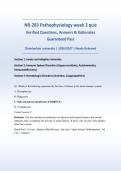
NR-283 Pathophysiology week 2 quiz
Verified Questions, Answers & Rationales
Guaranteed Pass

Chamberlain university | 2026/2027 | Newly Released


Section 1: Innate and Adaptive Immunity
Section 2: Immune System Disorders (Hypersensitivity, Autoimmunity,
Immunodeficiency)
Section 3: Hematologic Disorders (Anemias, Coagulopathies)


Q1: Which of the following represents the first line of defense in the innate immune system?

A. B lymphocytes

B. Phagocytes

C. Skin and mucous membranes [CORRECT]

D. T lymphocytes

Correct Answer: C

Rationale: The skin and mucous membranes are physical and chemical barriers that prevent
pathogen entry, constituting the first line of innate defense. B and T cells are part of the adaptive
(third line) system.

Board Pearl: 1st Line = Barriers (Skin/Mucosa); 2nd Line = Innate Internal (Inflammation); 3rd
Line = Adaptive.

, Q2: A child falls and scrapes their knee. Within hours, the area becomes red, warm, and swollen.
Which innate immune cells are the first to arrive at the site of injury to phagocytose pathogens?

A. Eosinophils

B. Neutrophils [CORRECT]

C. Basophils

D. B cells

Correct Answer: B

Rationale: Neutrophils are the primary phagocytes that arrive first at the site of acute
inflammation to ingest and destroy pathogens.

Board Pearl: "First responders" of inflammation = Neutrophils.


Q3: Which immunoglobulin class is primarily found in mucosal secretions such as saliva, tears,
and breast milk?

A. IgG

B. IgM

C. IgA [CORRECT]

D. IgE

Correct Answer: C

Rationale: IgA is the main antibody class found in mucosal secretions, providing localized
immunity by preventing pathogens from entering the body through epithelial surfaces.

Board Pearl: Mucosal guard = IgA.


Q4: During a primary immune response, which antibody is produced first and indicates a recent
infection?

A. IgG

B. IgM [CORRECT]

C. IgA

D. IgE

Correct Answer: B
.

Escuela, estudio y materia

Institución
NR-283 Pathophysiology
Grado
NR-283 Pathophysiology

Información del documento

Subido en
10 de abril de 2026
Número de páginas
9
Escrito en
2025/2026
Tipo
Examen
Contiene
Preguntas y respuestas

Temas

$12.00
Accede al documento completo:

¿Documento equivocado? Cámbialo gratis Dentro de los 14 días posteriores a la compra y antes de descargarlo, puedes elegir otro documento. Puedes gastar el importe de nuevo.
Escrito por estudiantes que aprobaron
Inmediatamente disponible después del pago
Leer en línea o como PDF


Documento también disponible en un lote

Thumbnail
Package deal
NR-283 Pathophysiology Week 1 & Week 2 Quizzes BUNDLE 2026/2027 | Verified Q&A with Rationales | Chamberlain | Pass Guaranteed - A+ Graded
-
2 2026
$ 16.00 Más información

Conoce al vendedor

Seller avatar
Los indicadores de reputación están sujetos a la cantidad de artículos vendidos por una tarifa y las reseñas que ha recibido por esos documentos. Hay tres niveles: Bronce, Plata y Oro. Cuanto mayor reputación, más podrás confiar en la calidad del trabajo del vendedor.
TutorRicks Chamberlain College Of Nursing
Ver perfil
Seguir Necesitas iniciar sesión para seguir a otros usuarios o asignaturas
Vendido
322
Miembro desde
2 año
Número de seguidores
50
Documentos
2827
Última venta
1 día hace

3.7

43 reseñas

5
22
4
4
3
8
2
1
1
8

Recientemente visto por ti

Por qué los estudiantes eligen Stuvia

Creado por compañeros estudiantes, verificado por reseñas

Calidad en la que puedes confiar: escrito por estudiantes que aprobaron y evaluado por otros que han usado estos resúmenes.

¿No estás satisfecho? Elige otro documento

¡No te preocupes! Puedes elegir directamente otro documento que se ajuste mejor a lo que buscas.

Paga como quieras, empieza a estudiar al instante

Sin suscripción, sin compromisos. Paga como estés acostumbrado con tarjeta de crédito y descarga tu documento PDF inmediatamente.

Student with book image

“Comprado, descargado y aprobado. Así de fácil puede ser.”

Alisha Student

Preguntas frecuentes