

CPCT/A PRACTICE TEST 2.0 B 2026/2027 | NHA Blueprint 2.0
Aligned | Clinical Skills Focus | Patient Care Technician
Certification Prep | Pass Guaranteed - A+ Graded
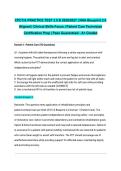
Domain 1: Patient Care (50 Questions)
Q1: A patient with left-sided hemiparesis following a stroke requires assistance with
morning hygiene. The patient has a weak left arm and leg but is alert and oriented.
Which action by the PCT demonstrates the correct application of safety and
independence principles?
A. Perform all hygiene tasks for the patient to prevent fatigue and ensure thoroughness
B. Place the call light within reach and instruct the patient to call for help with all tasks
C. Encourage the patient to use the unaffected right side for self-care while providing
assistance with the left side as needed. [CORRECT]
D. Use a mechanical lift for all transfers to prevent any risk of patient injury
Correct Answer: C
Rationale: This question tests application of rehabilitation principles and
patient-centered care per NHA CPCT/A Blueprint 2.0 Domain 1 (Patient Care). The
correct answer promotes patient independence while ensuring safety—core principles
of restorative care. Option A promotes dependency and contradicts rehabilitation goals.
Option B limits functional improvement and may lead to learned helplessness. Option D
is excessive for a patient with partial mobility; mechanical lifts are reserved for patients
who cannot bear weight or assist with transfers. The PCT should encourage use of
unaffected extremities while providing support for affected areas, maintaining dignity
and promoting recovery.
,Q2: When measuring oral temperature on an adult patient who has just consumed hot
coffee, the PCT should:
A. Wait 15-30 minutes before taking the temperature. [CORRECT]
B. Take the temperature immediately using the same oral thermometer
C. Switch to a rectal thermometer for accuracy
D. Document that temperature measurement is contraindicated
Correct Answer: A
Rationale: Per NHA CPCT/A 2.0 standards for vital signs measurement, hot or cold
beverages can alter oral temperature readings by 0.5-1.0°F (0.3-0.6°C). The PCT must
wait 15-30 minutes after hot beverages (or 15 minutes after cold beverages) to ensure
accuracy. Option B provides a falsely elevated reading. Option C is inappropriate—rectal
temperature is not indicated merely because of recent beverage consumption and
requires a physician order or specific protocol. Option D neglects the PCT's
responsibility to obtain accurate vital signs using proper technique.
Q3: A patient is ordered to have intake and output (I&O) measured. Which statement by
the PCT indicates correct understanding of I&O measurement?
A. "I only need to measure urine output; other fluids are too difficult to track accurately"
B. "I will record all fluids the patient consumes and all fluids excreted, including urine,
emesis, diarrhea, and wound drainage". [CORRECT]
C. "Ice chips don't count as intake because they are solid"
D. "I can estimate amounts if the patient forgets to save urine in the hat"
Correct Answer: B
Rationale: NHA CPCT/A Blueprint 2.0 requires comprehensive I&O monitoring for
accurate fluid balance assessment. All intake (oral, IV, enteral, ice chips) and all output
(urine, emesis, diarrhea, drainage, perspiration in some cases) must be measured and
,recorded. Option A is incomplete and dangerous for patients requiring strict monitoring
(e.g., heart failure, renal disease). Option C is incorrect—ice chips are recorded at half
their volume (e.g., 4 oz ice = 2 oz water). Option D compromises data accuracy; exact
measurements are essential for clinical decision-making.
Q4: When applying anti-embolism stockings (TED hose) to a patient, the PCT should:
A. Apply them after the patient has been ambulating for several hours
B. Ensure wrinkles are present to allow for joint movement
C. Apply in the morning before the patient gets out of bed, ensuring smooth, wrinkle-free
fit. [CORRECT]
D. Roll the stockings down to the ankles when the patient complains of tightness
Correct Answer: C
Rationale: Anti-embolism stockings must be applied when leg veins are least
dilated—typically before rising in the morning—to ensure proper fit and effectiveness.
Wrinkles can cause pressure injuries and impede circulation. Option A results in
application when legs are swollen, making proper fit impossible. Option B creates
pressure points risking skin breakdown. Option D compromises the therapeutic purpose
and may cause tourniquet-like constriction. Per NHA CPCT/A 2.0 safety standards,
stockings should be removed and reapplied per protocol, not merely rolled down.
Q5: A patient with a BMI of 18.5 is receiving nutritional support. Which observation by
the PCT requires immediate reporting to the nurse?
A. The patient ate 75% of breakfast
B. The patient complains of chest pain and difficulty swallowing during meal
consumption. [CORRECT]
C. The patient requests a different juice flavor
D. The patient takes 30 minutes to complete a meal
, Correct Answer: B
Rationale: Chest pain and dysphagia during meals may indicate aspiration, esophageal
obstruction, cardiac issues, or other serious conditions requiring immediate nursing
assessment. Per NHA CPCT/A 2.0 emergency recognition standards, this constitutes a
priority finding. Option A represents adequate intake for many patients. Option C is a
preference, not a clinical concern. Option D may indicate fatigue or need for adaptive
equipment but does not require immediate intervention unless accompanied by other
symptoms.
Q6: When performing a bed bath for an incontinent patient with perineal excoriation, the
PCT should:
A. Use hot water and vigorous scrubbing to ensure cleanliness
B. Clean from the anal area toward the urinary meatus to remove all bacteria
C. Use warm water, mild soap, and gentle patting motions, cleaning from front to back.
[CORRECT]
D. Apply the soap directly to the excoriated area for maximum antimicrobial effect
Correct Answer: C
Rationale: Proper perineal care requires warm (not hot) water to prevent burns and
further skin damage, mild pH-balanced soap to avoid irritation, and gentle patting (not
rubbing) to prevent mechanical trauma. The front-to-back motion prevents fecal
contamination of the urinary tract. Option A causes thermal injury and mechanical
damage. Option B spreads bacteria toward the urinary meatus, increasing UTI risk.
Option D causes chemical irritation to compromised skin. Per NHA CPCT/A 2.0
infection control and skin integrity standards, this technique protects vulnerable tissue.
Aligned | Clinical Skills Focus | Patient Care Technician
Certification Prep | Pass Guaranteed - A+ Graded
Domain 1: Patient Care (50 Questions)
Q1: A patient with left-sided hemiparesis following a stroke requires assistance with
morning hygiene. The patient has a weak left arm and leg but is alert and oriented.
Which action by the PCT demonstrates the correct application of safety and
independence principles?
A. Perform all hygiene tasks for the patient to prevent fatigue and ensure thoroughness
B. Place the call light within reach and instruct the patient to call for help with all tasks
C. Encourage the patient to use the unaffected right side for self-care while providing
assistance with the left side as needed. [CORRECT]
D. Use a mechanical lift for all transfers to prevent any risk of patient injury
Correct Answer: C
Rationale: This question tests application of rehabilitation principles and
patient-centered care per NHA CPCT/A Blueprint 2.0 Domain 1 (Patient Care). The
correct answer promotes patient independence while ensuring safety—core principles
of restorative care. Option A promotes dependency and contradicts rehabilitation goals.
Option B limits functional improvement and may lead to learned helplessness. Option D
is excessive for a patient with partial mobility; mechanical lifts are reserved for patients
who cannot bear weight or assist with transfers. The PCT should encourage use of
unaffected extremities while providing support for affected areas, maintaining dignity
and promoting recovery.
,Q2: When measuring oral temperature on an adult patient who has just consumed hot
coffee, the PCT should:
A. Wait 15-30 minutes before taking the temperature. [CORRECT]
B. Take the temperature immediately using the same oral thermometer
C. Switch to a rectal thermometer for accuracy
D. Document that temperature measurement is contraindicated
Correct Answer: A
Rationale: Per NHA CPCT/A 2.0 standards for vital signs measurement, hot or cold
beverages can alter oral temperature readings by 0.5-1.0°F (0.3-0.6°C). The PCT must
wait 15-30 minutes after hot beverages (or 15 minutes after cold beverages) to ensure
accuracy. Option B provides a falsely elevated reading. Option C is inappropriate—rectal
temperature is not indicated merely because of recent beverage consumption and
requires a physician order or specific protocol. Option D neglects the PCT's
responsibility to obtain accurate vital signs using proper technique.
Q3: A patient is ordered to have intake and output (I&O) measured. Which statement by
the PCT indicates correct understanding of I&O measurement?
A. "I only need to measure urine output; other fluids are too difficult to track accurately"
B. "I will record all fluids the patient consumes and all fluids excreted, including urine,
emesis, diarrhea, and wound drainage". [CORRECT]
C. "Ice chips don't count as intake because they are solid"
D. "I can estimate amounts if the patient forgets to save urine in the hat"
Correct Answer: B
Rationale: NHA CPCT/A Blueprint 2.0 requires comprehensive I&O monitoring for
accurate fluid balance assessment. All intake (oral, IV, enteral, ice chips) and all output
(urine, emesis, diarrhea, drainage, perspiration in some cases) must be measured and
,recorded. Option A is incomplete and dangerous for patients requiring strict monitoring
(e.g., heart failure, renal disease). Option C is incorrect—ice chips are recorded at half
their volume (e.g., 4 oz ice = 2 oz water). Option D compromises data accuracy; exact
measurements are essential for clinical decision-making.
Q4: When applying anti-embolism stockings (TED hose) to a patient, the PCT should:
A. Apply them after the patient has been ambulating for several hours
B. Ensure wrinkles are present to allow for joint movement
C. Apply in the morning before the patient gets out of bed, ensuring smooth, wrinkle-free
fit. [CORRECT]
D. Roll the stockings down to the ankles when the patient complains of tightness
Correct Answer: C
Rationale: Anti-embolism stockings must be applied when leg veins are least
dilated—typically before rising in the morning—to ensure proper fit and effectiveness.
Wrinkles can cause pressure injuries and impede circulation. Option A results in
application when legs are swollen, making proper fit impossible. Option B creates
pressure points risking skin breakdown. Option D compromises the therapeutic purpose
and may cause tourniquet-like constriction. Per NHA CPCT/A 2.0 safety standards,
stockings should be removed and reapplied per protocol, not merely rolled down.
Q5: A patient with a BMI of 18.5 is receiving nutritional support. Which observation by
the PCT requires immediate reporting to the nurse?
A. The patient ate 75% of breakfast
B. The patient complains of chest pain and difficulty swallowing during meal
consumption. [CORRECT]
C. The patient requests a different juice flavor
D. The patient takes 30 minutes to complete a meal
, Correct Answer: B
Rationale: Chest pain and dysphagia during meals may indicate aspiration, esophageal
obstruction, cardiac issues, or other serious conditions requiring immediate nursing
assessment. Per NHA CPCT/A 2.0 emergency recognition standards, this constitutes a
priority finding. Option A represents adequate intake for many patients. Option C is a
preference, not a clinical concern. Option D may indicate fatigue or need for adaptive
equipment but does not require immediate intervention unless accompanied by other
symptoms.
Q6: When performing a bed bath for an incontinent patient with perineal excoriation, the
PCT should:
A. Use hot water and vigorous scrubbing to ensure cleanliness
B. Clean from the anal area toward the urinary meatus to remove all bacteria
C. Use warm water, mild soap, and gentle patting motions, cleaning from front to back.
[CORRECT]
D. Apply the soap directly to the excoriated area for maximum antimicrobial effect
Correct Answer: C
Rationale: Proper perineal care requires warm (not hot) water to prevent burns and
further skin damage, mild pH-balanced soap to avoid irritation, and gentle patting (not
rubbing) to prevent mechanical trauma. The front-to-back motion prevents fecal
contamination of the urinary tract. Option A causes thermal injury and mechanical
damage. Option B spreads bacteria toward the urinary meatus, increasing UTI risk.
Option D causes chemical irritation to compromised skin. Per NHA CPCT/A 2.0
infection control and skin integrity standards, this technique protects vulnerable tissue.

