

Lecture 1
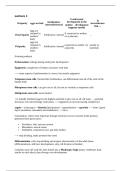
X embryonic
in
fertilization: development in the
Oviparity eggs are laid invertebrates.
internal/external mother;development
fish …
happens outside
eggs are
retained in X connected to mother
Ovoviviparity fertilization: internal …
mothers’ via a placenta
body
eggs are
retained in connected to mother via usually in
Viviparity fertilization: internal
mothers’ a placenta mammals
body
|Forming embryo|
Preformation: enlarge during embryonic development
Epigenesis: complexity of embryo increases with time
—> some aspects of preformation is correct, but mostly epigenesis
Totipotent stem cells: formed after fertilization, can differentiate into all of the cells of the
human body
Pluripotent stem cells: can give rise to all, but not as versatile as totipotent cells
Multipotent stem cells: more limited
=⇒ initially fertilized egg has the highest potential to give rise to all cell types … potential
decreases over time (lineage restriction) —> epigenesis occurs (increasing complexity)
zygote —(cleavage)—>blastula [pluripotent] —(gastrulation)—>gastrula —> form 3 germ
layers (ectoderm, mesoderm and endoderm) —> larva
Gastrulation: where most important lineage restriction occurs, become multi-potency;
generates three germ layers
Ectoderm: skin, nervous system
Mesoderm: muscle tissue
Endoderm: respiratory tract, gut tube, kidney
—> stop dividing, make proteins they need
Differentiation: cells stop dividing and acquire characteristics of the adult tissue
(differentiation), still have development, only cell division is finished
evolution starts off with life, then funnel into a Phylotypic Stage (many vertebrates look
similar to each other), then diverge over development
X embryonic
in
fertilization: development in the
Oviparity eggs are laid invertebrates.
internal/external mother;development
fish …
happens outside
eggs are
retained in X connected to mother
Ovoviviparity fertilization: internal …
mothers’ via a placenta
body
eggs are
retained in connected to mother via usually in
Viviparity fertilization: internal
mothers’ a placenta mammals
body
|Forming embryo|
Preformation: enlarge during embryonic development
Epigenesis: complexity of embryo increases with time
—> some aspects of preformation is correct, but mostly epigenesis
Totipotent stem cells: formed after fertilization, can differentiate into all of the cells of the
human body
Pluripotent stem cells: can give rise to all, but not as versatile as totipotent cells
Multipotent stem cells: more limited
=⇒ initially fertilized egg has the highest potential to give rise to all cell types … potential
decreases over time (lineage restriction) —> epigenesis occurs (increasing complexity)
zygote —(cleavage)—>blastula [pluripotent] —(gastrulation)—>gastrula —> form 3 germ
layers (ectoderm, mesoderm and endoderm) —> larva
Gastrulation: where most important lineage restriction occurs, become multi-potency;
generates three germ layers
Ectoderm: skin, nervous system
Mesoderm: muscle tissue
Endoderm: respiratory tract, gut tube, kidney
—> stop dividing, make proteins they need
Differentiation: cells stop dividing and acquire characteristics of the adult tissue
(differentiation), still have development, only cell division is finished
evolution starts off with life, then funnel into a Phylotypic Stage (many vertebrates look
similar to each other), then diverge over development


