

Escrito por estudiantes que aprobaron Inmediatamente disponible después del pago Leer en línea o como PDF ¿Documento equivocado? Cámbialo gratis 4,6 TrustPilot
logo-home
Document preview thumbnail
Vista previa 3 fuera de 19 páginas
Examen

NUR 327 Chamberlain Advanced Study Guide Exam 3 2026

Document preview thumbnail
Vista previa 3 fuera de 19 páginas

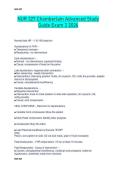
NUR 327 Chamberlain Advanced Study Guide Exam 3 2026 Normal fetal HR - -110-160 beat/min Accelerations in FHR - - ■ Temporary increase - ■ Reassuring - no interventions Early decelerations - - ■ Normal - no interventions, expected finding ■ Cause: compression of head on the pelvis Late deceleration: response after contraction - - ■Non-reassuring - needs intervention ■ Interventions: side-lying position, fluids, d/c oxytocin, O2, notify the provider, palpate uterus for tachysystole ■ Cause: uteroplacental insufficiency Variable decelerations - - ■ Requires intervention ■ Intervention: knee to chest position or side-side reposition, d/c oxytocin, O2, notify provider ■ Cause: cord compression VEAL CHOP MINE - -Menomic for decelerations ■ Variable Cord compression Move the patient ■ Early Head compression Identify labor progress ■ Accelearate Okay No action ■ Late Placental insufficiency Execute "STOP" (stop Pitocin, turn patient on side, O2 via face mask, plain IV fluid increased) Fetal bradycardia - -FHR drops below 110 for at least 10 minutes Fetal Bradycardia - Cause & Intervention - - ■ Causes: uteroplacental insufficiency, umbilical cord prolapses, maternal hypotension, anesthetic meds mom received NUR 327 NUR 327 ■ Interventions: stop oxytocin, left side position, O2, notify provider Fetal tachycardia - -FHR increases above 160 for over 10 minutes Fetal tachycardia - Cause & Intervention - -■ Causes: infection, cocaine use, dehydration ■ Interventions: antipyretics, oxygen, IV fluid bolus (B)UBBLE - -Breasts (size, contour, asymmetry, engorgement, redness, nipples: cracking, inverted, bleeding) B(U)BBLE - -Uterus (Fundal Height, Uterine Placement, and Consistency) ■ 2 hrs after birth- Fundus is between the umbilicus and the symphysis pubis ■ 6-12 hrs after birth the fundus usually is at the level of the umbilicus ■ The fundus progresses downward at a rate of 1 fingerbreadth (or 1 cm) per day after childbirth ■ If the fundus is not firm gently message the uterus using a circular motion until it becomes firm BUB(B)LE - -Bladder ■ Assess the bladder for distention and adequate emptying after efforts to void ■ Note the location and condition of the fundus , a full bladder tends to displace the uterus up and to the right ■ Be alert for signs of infection, including infrequent or insufficient voiding (less than 200 ml) BU(B)BLE - -Bowels and GI function ■ Spontaneous bowel movements may NOT occur for 2-3 days after giving birth b/c of a decrease in muscle tone in the intestines during labor ■ Normal patterns of bowel elimination usually return within 8-14 days after birth ■ Inspect the woman's abdomen for distention, auscultate for bowel sounds in all 4 quadrants, & palpate for tenderness ■ Ask the woman if she has had a bowel movement or has passed gas since giving birth Lochia rubra - -Rubra- red 1-3 days Reddish or red-brown vaginal discharge that occurs immediately after childbirth; composed mostly of blood. NUR 327 (COAT) Lochia serosa - -Serosa- pink 3-10 days Lochia alba - -Alba- white 10-14 days Lochia Scant - -The amount of lochia on the perineal pad is described as follows: Scant: 1-2-inch lochia stain or approx. a 10 mL loss Lochia light - -The amount of lochia on perineal pad is described as follows: Light or small: an approx. 4-inch stain or a 10-25 mL loss Lochia moderate - -The amount of lochia on the perineal pad is described as follows: Moderate: a 4-6-inch stain w/ an estimated loss of 25-50 mL Lochia large or heavy - -The amount of lochia on the perineal pad is described as follows: Large or heavy: a pad is saturated within 1 hour after changing it BUBB(L)E - -Lochia ■ the postpartum vaginal discharge that typically continues for 4-6 weeks after childbirth ■Report any abnormal findings, such as heavy, bright-red lochia w/ large tissue fragments or a foul odor to the physician ■ Teach patient about frequent changing of perineal pads, continuous use of the peribottle, and proper handwashing before & after changing the pad BUBBL(E) - -Episiotomy/Perineum: ■ Inspect the episiotomy for irritation, ecchymosis, tenderness, hematomas ■ Assess for hemorrhoids ■ Redness, swelling , increased discomfort, or purulent drainage may indicate infection ■ Ice can be applied to decrease comfort and reduce edema; sitz baths can also promote comfort and perineal healing NUR 327 NUR 327 (H)ER - -Homan's sign ■ Assess legs for DVT, unilateral swelling, erythema, & warmth ■ Encourage ambulation Cardiovascular changes after delivery - -Blood loss: ■ Vaginal - 500 mL ■ C-section - 1,000 mL ■ Coagulation factors increased for 2-3 weeks after birth, which increases risk for blood cloth ■ Elevated WBC for the first week ■ Check if calves & legs are soft & NOT painful - has she been up since delivery H(E)R - -Emotion: emotional status ■ Be alert of mood swings, irritability, or crying episodes, which could show postpartum depression or psychosis ■ Remember cultural considerations ■ Edenberg's PPD screening HE(R) - -Rhogam ■ Administered 72 hours after birth to Rh negative moms who gave birth to Rh positive babies to prevent the formation of antibodies to protect future babies ■ Also, given at 28 weeks Postpartum Assessment - Lochia - -Lochia: ■ Red/rubra - 1-3 days ■ Pink/serosa - 3-10 days ■ White/alba - 10-14 days Postpartum Assessment - Timing's - -Assessments: ■ Every 15 min. during the 1 st hour ■ Every 30 min. during the 2 nd hour ■ Every 4 hours during the first 24 hours ■ Every 8 hours after the first 24 hours Postpartum Assessment Vitals - Temp - -Temp.: NUR 327 NUR 327 NUR 327 ■ May rise up to 38 °C (100.4 °F) - during the first 24 hours in some women due to dehydration ■ If temp. is above 38 °C (100.4 °F) at any time or an abnormal temp. after the first 24 hours may indicate infection & MUST be reported Postpartum Assessment Vitals - Pulse Rate - -Pulse rate: ■ Bradycardia may be noted due to changes in blood volume & cardiac output after delivery ■ Pulse usually stabilizes to pre-pregnancy levels within 10 days ■ Tachycardia in the postpartum woman can suggest anxiety, excitement, fatigue, pain, excessive blood loss, infection, or underlying cardiac problems Postpartum Assessment Vitals - BP - -Blood pressure: ■ Compare BP w/ client's usual range ■ Elevations in BP from baseline may suggest pregnancy-induced hypertension; decreases may suggest dehydration or excessive blood loss ■ Be alert for orthostatic hypotension Postpartum Assessment Vitals - Pain - -Pain ■ Assess patient's pain on a scale of 0-10 ■ The goal of pain management: have the client's pain on a scale of 0-2 at all times ■ If the client complains of severe perineal pain - inspect & palpate for hematoma Psychological adaptations: Taking-in - -Taking in: ■ Occurs immediately after birth when the mother needs sleep, depends on others to meet her needs, & relieve the event surrounding the birth process ■ Occurs during the first 24-48 hours after birth, mother assumes a passive role in meeting her own basic needs for food, fluid, & rest (dependent on nurse to make decisions for them) NUR 327 NUR 327 ■ Spend time telling others about labor experience ■ Touches & explores infants Psychological adaptations: Taking-hold - -Taking hold: ■ The second phase is characterized by dependent & independent maternal behavior ■ Starts 2-3 day postpartum, & may last several weeks ■ Mother starts to regain control over body functions & thought of the present (concerned about her health, infant condition, & ability to care for infant) ■ Demonstrate increased autonomy & independence by expressing strong interest Psychological adaptations: Letting-go - -Letting go: ■ The third phase occurs when the woman reestablishes relationships w/ other people ■ Begins to adapt to parenthood through her new roles ■ Becomes focused on moving forward by assuming the parental role by separating herself from the symbolic relationship she & her newborn had during pregnancy ■ Establishes a lifestyle that includes the infant Psychological adaptations: Role-attainment - -■ a process when mother forms an emotional relationship w/ infant over time ■ Commitment, mother attachment to unborn baby, & preparation for delivery & motherhood during pregnancy ■ Acquaintance/attachment to the infant, learning to care for the infant, & physical restoration during first 2-6 weeks following birth ■ Moving toward a new normal ■ Achievement of maternal identity through redefining self to incorporate motherhood (around 4 months). During this time mother feels self-confident & competent in her mothering roles & expresses love for & NUR 327 pleasure interacting w/ her infant Baby blues (1-10 days) - -characterized by mild depressive symptoms - mood swings, anger, anxiety, irritability, tearfulness (often for no reason) ■ the "blues" typically peak on postpartum 4 th & 5 th day, may last hours to days ■ usually resolves by day 10 w/o therapy - nursing management: ■ encourage the mother to express her feelings to ease ■ be patient & understanding to her & family ■ suggest getting outside help w/ housework & infant care ■ provide telephone numbers that she can call when she's down ■ reassure patient that feelings are normal &; temporal postpartum depression - -usually occurs if symptoms of "baby blues" last longer than 6 weeks & seems to get worse ■ s/s: more severe than "baby blues", requires treatment ■ feeling restless, worthless, guilty, hopeless, moody, sad, & overwhelmed ■ also, at risk of hurting self or infant - treatment: ■ antidepressant, antianxiety, & psychotherapy ■ marriage counseling may be required if marital problems are contributing to symptoms postpartum psychosis - -severe depressive disorder ■ Severe depressive disorder ■ Evident within the first three months postpartum ■ Symptoms include agitation, hyperactivity, insomnia, confusion, NUR 327 NUR 327 NUR 327 difficulty remembering or concentrating, delusion, hallucinations, irrationality, anger toward self and infant ■ Nurse Management: Assist patient with measures on self-control, encourage to verbalize feelings, encourage and assist in getting help Bonding - -develops during the first 30-60 minutes after birth, but begins during pregnancy ■ Involves mothers visually & physically "explore" infant (fingertips on face & extremities, massaging, palm contact on trunk, infant held close) Newborn response to attachment - -by cooing, grasping, smiling, & crying Positive attachment behaviors r/t parent - -direct eye contact, pointing out common features, speak positively Positive attachment behaviors r/t infant - -alert, strong grasp reflex, sucks well, enjoy being held close, follows parent's face Negative attachment behaviors r/t infant - -feed poorly cries for long periods, flat affect, stiffens body when held, doesn't pay attention to parent's faces Negative attachment behaviors r/t parent - -disappointment in infant, fails to "explore" infant, avoids caring for infant, negative self-concept, appears uninterested, call baby negative names (frog, monkey) Father bonding - -similar, but pace may differ ■ Attachment for fathers increased if they viewed caregiver role as important ■ Fathers also begin attachment behaviors during pregnancy ■ Becoming a father requires a man to build on experiences throughout childhood & adolescences Another family member - Bonding - -May view them as competition or fear that they will be replaced ■ Reassurance & attention from parents will help them feel loved & important ■ Expect regression (sucking thumb, bedwetting) NUR 327 NUR 327 ■ Encourage discussion about the infant ■ Arrange for child to see infant in the hospital ■ Show photos of baby growing in mommy's belly ■ Encourage others to pay attention to the older child when visiting Postpartum uterus - -The uterus returns to its normal size through a gradual process, which involves retrogressive changes that return it to its regular size Postpartum cervix - -Cervix returns to normal size 6 weeks after birth Postpartum endocrine changes - -Levels of circulating estrogen & progesterone drop rapidly when the placenta is delivered ■For non-lactating women, estrogen levels begin to increase 2 weeks after birth ■ For breastfeeding women, levels remain low until breastfeeding frequency decreases postpartum cardiovascular changes - -■ Cardiac output remains high for the 1 st few days after birth & gradually declines ■ Blood volume also drops after birth & gradually returns to pre-pregnancy levels Postpartum integumentary changes - -■ Decreased levels of estrogen & progesterone cause linea nigra, nipples, & melisma to fade ■ Some women experience hair loss during the postpartum period ■ Frequent profuse sweating is common during the early postpartum period ■ It's a mechanism to reduce the amount of fluids retained during pregnancy Postpartum Immune system - -■ WBC's increase during labor &remain elevated for 4-6 days after birth (25,000-30,000) ■ WBC's fall back to the normal range after this early postpartum period NUR 327 NUR 327 Rubella vaccination - -provide vaccine if the mother is NOT serologically immune (titer less than 1:8) Engorgement - -Swelling of the breasts resulting from increased blood flow, edema, and the presence of milk can be alleviated by frequent feedings, at least every 2 to 3 hours. Instruct mother can be alleviated by frequent feedings, at least every 2 to 3 hours. Wear supportive bra 24 hours a day Non-breastfeeding mothers - -In the non-breastfeeding woman let her know that engorgement is self-limiting and lactation will begin to disappear as estrogen levels increase and suppress milk formation. Wearing a snug bra and ice packs and help with the symptoms ■ Engorgement resolves in 24 to 36 hours after milk comes in ■ Estrogen levels begin to increase 2 weeks after delivery Breastfeeding contraindications - -■ HIV ■ Street Drugs ■ Chemotherapy Drugs ■ Herpes Simplex ■ Untreated TB ■ Galactosemia T or F - Breastfeeding makes the breasts sag - -False Pregnancy, heredity, & aging cause the breasts to sag, NOT breastfeeding T or F - A mother needs to clean her nipples before breastfeeding - -False ■ The nipple area has natural protective oils to keep it germ free ■ Soap & alcohol irritate the nipples & should be avoided ■ Mothers only need to rinse the breasts w/ water once a day T or F - Breastfeeding can help a mother shed baby weight & allows your body to recover from pregnancy & childbirth more quickly - -True ■ Moms who breastfeed burn about 300-500 extra calories a day ■ Breastfeeding also releases hormones that trigger your uterus to return to NUR 327 NUR 327 its pre-baby size & weight faster T or F - Women who smoke should NOT breastfeed - -False ■ All women are encouraged to stop smoking or at least cut down ■ It is better for the baby if the mother smokes & breastfeeds than it is if the mother smokes & does not breastfeed ■ Second-hand smoke is considered worse for the baby T or F - Breastfeeding can be painful to mothers - -False ■Breastfeeding should not hurt ■ Soreness happens when the baby is incorrectly positioned or latching on T or F - Breast fed babies do NOT require extra water to support the baby - -True ■ Human milk is about 87% water, just what a body needs ■ Even in the desert, breastfed babies do NOT need additional water T or F - Breastfeeding makes the baby too dependent on the mother - -False ■ Loving, holding, & meeting baby's needs makes the baby feel secure & help to become independent ■ All babies need to develop a strong attachment to 1 person first before they expand their circle of attachments Advantages of Breastfeeding - -■ Less likely to result to overfeeding leading to obesity ■ Immunological properties help fight infection in infant ■ Provide protection against food allergies ■ Promote optimal mother-infant bonding ■ Less expensive than formula ■ Promote postpartum weight loss ■ Lowers the risk of breast cancer Disadvantages of breastfeeding - -■ Breastfed babies need to be fed more often ■ Some medications are passed through breast milk ■ You need to eat a balanced diet ■ You do NOT know how much milk they're getting ■ Breast soreness Breastfeeding Nutirtion - -■ 4 servings of Fruits and Vegetables NUR 327 ■ 4-5 servings of milk ■ 12 or more servings Bread, Pasta, Cereal ■ 7 servings Meat, Poultry, Fish, Eggs ■ 5 servings Fats, Oils, and Sweets ■ Lower intake of saturated fats, trans fat, & cholesterol newborn hypothermia - -■ Normal temp. range for infant: 97.7 °F-99.7 °F s/s: ■ temp. less than 97.7 °F (36.5 °C) ■ cyanosis ■ increased RR ■Assess temperature q30 min for the first 2 hours then q8 hours until discharge Predispositions to heat loss - -■ Thin skin ■ Lack of shivering ability ■ Lack of subcutaneous fat ■ Little ability to conserve heat ■ Inability to communicate hot or cold Hypothermia nursing interventions - -■ Monitor for cyanotic trunk, depressed respirations ■ Warm infant slowly over a period of 2-4 hours in a radiant warmer - Preferred method: skin-to-skin ■ Check temp. every hour until stable ■ All exams & assessment should be performed under radiant warmer or during skin-to-skin - -■ Performed within the first 48 hours following birth ■ Take measurements &use the Ballard Scale o Ballard Gestational Age Tool ■ Provides estimation of gestational age ■ Baseline for growth & development ■ Neuromuscular Maturity ■ 6 ranges ■ assigned # value from -1 to 5 Appropriate for Gestational Age (AGA) - -Weight, length, and head circumference are between the 10th and 90th percentiles for gestational age. NUR 327 NUR 327 Small for Gestational Age (SGA) - -weight is less than the 10 th percentile Large for Gestational Age (LGA) - -weight is greater than the 90th percentile Low Birth Weight (LBW) - -a birth weight of less than 5.5 pounds Term - -37-42 weeks of gestation Preterm or premature - -birth prior to 37 weeks Posterm (postdate) - -birth after 42 weeks Postmature - -born after the completion of 42 weeks w/ evidence of placental insufficiency Newborn assessment - -Immediate assessment: initial ■ drying - prevention of heat loss is essential to help support thermoregulation ■ temp. regulation - assess body temp. q 30 mins for the first 2 hours, then q 8 hours until discharge ■ palate - check for intact & hard palates ■ length - 17-22 inches ■ weight - 5 lbs. 8 oz. to 8 lbs. 14 oz. ■ eye care - erythromycin 0.5% or tetracycline 1% ointment given in single application in 1-2 hours after birth ■APGAR Average newborn length - -17-22 inches Average newborn weight - -5.5 to 8.8 APGAR - -Apgar score: assessed at 1 & 5 minutes ■ A = appearance (color) ■ P = pulse (heart rate) ■ G = grimace (reflex/irritability) ■ A = activity (muscle tone) ■ R = respiratory effort APGAR: HR - -0 = absent 1 = 100 bpm 2 = 100 bpm - count HR for 1 min: place fingers at junction of umbilical cord and skin (if cord still pulsates) or place fingers or stethoscope over 5th intercostal space NUR 327 NUR 327 APGAR: Respiration - -0=absent 1=slow/irregular weak cry 2=Good/Crying APGAR: muscle tone - --0=flaccid -1=some flexion -2=well-flexed, active movement of extremeties APGAR: Reflex irritability - -0= none 2= grimace, weak cry 3= Good cry APGAR: Appearance - -0 = blue/pale all over 1 = pink w/ blue extremities 2 = All pink Newborn Blood Pressure - -50-75 systolic, 30-35 diastolic (Taken if low APGAR Score) Newborn HR - -120-160 bpm can increase to 180 if crying newborn reflexes - -Rooting, sucking, grasping, moro reflex (startle), Babinski, PKU test - -Test that is mandatory for all babies Assess if infant has the necessary enzyme needed to breakdown and phenylalanine, a necessary amino acid to help w/ the infant's growth and development congenital hypothyroidism (cretinism) - -■Screened b/c the thyroid is necessary for brain growth calorie metabolism and development ■Expected findings - pot belly pale puffy face protruding umbilicus/tongue poor brain dev Galactosemia Screening Tests - -■ When there is a lack of the enzyme needed to turn the sugar from milk into glucose NUR 327 NUR 327 NUR 327 ■ Complications: poor weight gain, N/V, seizures, loss of eyesight, galactose buildup causing damage to brain, eyes, & liver Sickle cell anemia screening - -■ Recessively inherited gene in the structure of hemoglobin causing the RBC ■ Risks: increased infections, growth restriction, vasocclusive crisis (VERY PAINFUL) Behavioral responses - Orientation - -newborn responding to stimuli, moving head & eyes Behavioral responses - Habituation - -newborn's ability to process & respond to environment Behavioral responses - Motor maturity - -evaluation of posture, tone, coordination, movements Behavioral responses - Self-quieting ability - -newborns' ability to quiet & console themselves Behavioral responses - Social behaviors - -the degree to which newborn nestles into arms First period of reactivity - -■ Begins at birth & lasts from 30 minutes up to 2 hours ■ The newborn is alert, moving, may appear hungry ■ Period of alertness allows parents to interact w/ their newborn & to enjoy close contact w/ their baby ■ The appearance of sucking & rooting from a newborn provides good opportunity for initiating breastfeeding Period of decreased responsiveness - -30-120 minutes of age, the newborn enters the 2nd stage known as the sleep period or decrease inactivity ■ heart &respiratory rates decline along w/ muscles relaxed & responsiveness to outside stimuli diminishes ■it's difficult to interact w/ a newborn during this phase ■ this can be a quiet time for both mother & baby to rest afterbirthing experience NUR 327 signs of respiratory distress in newborn - -Cyanosis, tachypnea, expiratory grunting, sternal retractions, nasal flaring Newborn Hemoglobin - -17-23 g/dL Newborn Hematocrit - -46-68% Newborn Platelets - -150,000-350,000/ uL Newborn RBC - -4.5-7.0 (1,000,000/ uL) Newborn WBC - -10-30,000/mm Newborn Glucose - -40-60 mg/dL -first day then 50-90 mg/dL Newborn Hepatic System - -■ At birth, the liver assumes the functions that the placenta handled during fetal life ■ Blood coagulation ■ Iron storage ■ Carbohydrate metabolism -the main source of energy for 1st several hours ■ Conjugation of bilirubin - when unconjugated bilirubin pigment is deposited in skin, jaundice occurs first stool of the newborn - -meconium - greenish/black tarry consistency Milk stool - -BF- yellow gold, loose, sour smelling Formula- vary based on type, yellow-green, loose, unpleasant odor Newborn Jaundice - -RBC die off in large numbers after birth phorphyrin rings (bilirubin) will overwhelm the immature liver causing it to process slowly Build up of bilirubin/biliberin in tissues treatment = UV light (phototherphy) Vitamin K - -■ Fat soluble vitamin that promotes blood clotting by increasing synthesis of prothrombin by the liver NUR 327 NUR 327 ■ Deficiency of this vitamin K delays clotting time therefore leading to hemorrhage ■ Takes about a week for the newborn to produce enough vitamin K to prevent bleeding ■ Administer 0.5-1 mg IM into the vastus lateralis 1 hour after birth ■ DO NOT administer in the same leg as hep B Umbilical Cord Care - -■ Begins within hours of birth and is shriveled and blackened by the 2nd or 3rd day ■ Sloughs off between 7-10 days ■ Do not submerge baby in water until the umbilical cord falls off (Sponge baths) ■ Fold diapers below the level of the cord ■ Frequent assessments to detect signs of bleeding and drainage Cord infection manifestations - -■ Moist ■ Red ■ Foul odor ■ Purulent drainage ■ Notify DR. Immediately Circumcision Care - -■ NOT done immediately after birth due to low vitamin K levels ■ Heals in 7-10 days ■ If bleeding occurs, then apply pressure ■ Use petroleum jelly w/ gauze to cover the incision ■ Change diapers frequently ■ Yellow exudate forms in 2-3 days Circumcision contraindications - -■ Hypospadias (abnormal positioning of urethra) ■ Epispadias (urethra on top of head of penis) ■ Family history of bleeding disorders ■ Parents decline vitamin K for infant NUR 327 NUR 327 NUR 327 Bowel elimination (mother) - -■ Proper bowel function - IMPORTANT after delivery ■Use the following to assist w/ proper GI motility & prevent constipation ■ Progressive exercise - walking ■ Dietary fiber - found in whole grain breads/cereals & unpeeled fruits & vegetables ■ Extra water & fluid - 6-8 glasses per day Colostrum - -■ thin, milky fluid secreted by the breast during pregnancy and during the first days after birth before lactation begins ■ delivers essential nutrients and antibodies in a form that the newborn can digest Newborn safety - discharge - -■ Make sure ID bands match ■ Properly installed car seat ■ Babies should sleep on their backs ■ Protect from excessive sunlight ■ Provide a smoke-free environment ■ Learn CPR Signs of infection in infant - -■ green, watery stools ■ fever ■ vomiting ■ loss of appetite ■ very lethargic ■ labored breathing ■ drainage from umbilical cord site & eyes Newborn Meconium Aspiration - -Occurs when a newborn breathes a mixture of meconium & amniotic fluid into the lungs around the time of delivery Newborn Meconium Aspiration Symptoms - -■ Bluish skin color in the infant ■ Breathing problems ■ Dark, greenish staining or streaking of the amniotic fluid or the obvious presence of meconium in the amniotic fluid ■ Limpness in infant at birth Newborn Meconium Treatment Symptoms - -■ Suction mouth immediately following birth ■ Antibiotics NUR 327 ■ Breathing machine to keep lungs inflated ■ Baby warmer for temp. regulation ■ Chest tapping to loosen secretions Hyperbilirubinemia - -excessive level of bilirubin (bile pigment) in the blood Hyperbilirubinemia symptoms - - ■ Jaundice appearance ■ Poor feeding ■ Lack of energy Hyperbilirubinemia treatment - -Phototherapy - used to lower increased levels of bilirubin (used if increased hydration does NOT work) ■ Exposing the newborn to UV light converts unconjugated bilirubin into products that can be excreted through feces and urine ■ Most common treatment for hyperalbuminemia Heel Stick Procedure - -■ Newborns need to ingest enough breastmilk to elevate phenylalanine levels to identify PKU accurately ■ Requires a few drops of blood taken from the newborn's heel ■ Blood is then replaced on the blood specimen card for screening ■ Performed before discharge NUR 327

Vista previa del contenido

NUR 327


NUR 327 Chamberlain Advanced Study
Guide Exam 3 2026

Normal fetal HR - -110-160 beat/min

Accelerations in FHR - -
■ Temporary increase -
■ Reassuring - no interventions

Early decelerations - -
■ Normal - no interventions, expected finding
■ Cause: compression of head on the pelvis

Late deceleration: response after contraction - -
■Non-reassuring - needs intervention
■ Interventions: side-lying position, fluids, d/c oxytocin, O2, notify the provider, palpate
uterus for tachysystole
■ Cause: uteroplacental insufficiency

Variable decelerations - -
■ Requires intervention
■ Intervention: knee to chest position or side-side reposition, d/c oxytocin, O2,
notify provider
■ Cause: cord compression

VEAL CHOP MINE - -Menomic for decelerations

■ Variable Cord compression Move the patient

■ Early Head compression Identify labor progress

■ Accelearate Okay No action

■ Late Placental insufficiency Execute "STOP"
(stop
Pitocin, turn patient on side, O2 via face mask, plain IV fluid increased)

Fetal bradycardia - -FHR drops below 110 for at least 10 minutes

Fetal Bradycardia - Cause & Intervention - -
■ Causes: uteroplacental insufficiency, umbilical cord prolapses, maternal
hypotension, anesthetic meds mom received
NUR 327

,NUR 327


■ Interventions: stop oxytocin, left side position, O2, notify provider

Fetal tachycardia - -FHR increases above 160 for over 10 minutes

Fetal tachycardia - Cause & Intervention - -■ Causes: infection, cocaine use,
dehydration
■ Interventions: antipyretics, oxygen, IV fluid bolus

(B)UBBLE - -Breasts
(size, contour, asymmetry, engorgement, redness, nipples: cracking, inverted,
bleeding)

B(U)BBLE - -Uterus
(Fundal Height, Uterine Placement, and Consistency)


■ 2 hrs after birth- Fundus is between the umbilicus and the symphysis pubis
■ 6-12 hrs after birth the fundus usually is at the level of the umbilicus
■ The fundus progresses downward at a rate of 1 fingerbreadth (or 1 cm) per day
after childbirth
■ If the fundus is not firm gently message the uterus using a circular motion until it
becomes firm

BUB(B)LE - -Bladder

■ Assess the bladder for distention and adequate emptying after efforts to void
■ Note the location and condition of the fundus , a full bladder tends to displace
the uterus up and to the right
■ Be alert for signs of infection, including infrequent or insufficient voiding (less
than 200 ml)

BU(B)BLE - -Bowels and GI function

■ Spontaneous bowel movements may NOT occur for 2-3 days after giving birth b/c
of a decrease in muscle tone in the intestines during labor
■ Normal patterns of bowel elimination usually return within 8-14 days after birth
■ Inspect the woman's abdomen for distention, auscultate for bowel sounds in all 4
quadrants, & palpate for tenderness
■ Ask the woman if she has had a bowel movement or has passed gas since giving
birth

Lochia rubra - -Rubra- red 1-3 days

Reddish or red-brown vaginal discharge that occurs immediately after childbirth;
composed mostly of blood.

NUR 327

, NUR 327


(COAT)

Lochia serosa - -Serosa- pink 3-10 days

Lochia alba - -Alba- white 10-14 days

Lochia Scant - -The amount of lochia on the perineal pad is described as follows:

Scant: 1-2-inch lochia stain or approx. a 10 mL loss

Lochia light - -The amount of lochia on perineal pad is described as follows:

Light or small: an approx. 4-inch stain or a 10-25 mL loss

Lochia moderate - -The amount of lochia on the perineal pad is described as follows:

Moderate: a 4-6-inch stain w/ an estimated loss of 25-50 mL

Lochia large or heavy - -The amount of lochia on the perineal pad is described as
follows:

Large or heavy: a pad is saturated within 1 hour after changing it

BUBB(L)E - -Lochia

■ the postpartum vaginal discharge that typically continues for 4-6 weeks after childbirth

■Report any abnormal findings, such as heavy, bright-red lochia w/ large tissue
fragments or a foul odor to the physician

■ Teach patient about frequent changing of perineal pads, continuous use of the
peribottle, and proper handwashing before & after changing the pad

BUBBL(E) - -Episiotomy/Perineum:

■ Inspect the episiotomy for irritation, ecchymosis, tenderness, hematomas

■ Assess for hemorrhoids

■ Redness, swelling , increased discomfort, or purulent drainage may indicate
infection

■ Ice can be applied to decrease comfort and reduce edema; sitz baths can also
promote comfort and perineal healing


NUR 327

Información del documento

Subido en
20 de marzo de 2026
Número de páginas
19
Escrito en
2025/2026
Tipo
Examen
Contiene
Preguntas y respuestas
$15.59

¿Documento equivocado? Cámbialo gratis Dentro de los 14 días posteriores a la compra y antes de descargarlo, puedes elegir otro documento. Puedes gastar el importe de nuevo.
Escrito por estudiantes que aprobaron
Inmediatamente disponible después del pago
Leer en línea o como PDF

Seller avatar
Los indicadores de reputación están sujetos a la cantidad de artículos vendidos por una tarifa y las reseñas que ha recibido por esos documentos. Hay tres niveles: Bronce, Plata y Oro. Cuanto mayor reputación, más podrás confiar en la calidad del trabajo del vendedor.
AlexScorer
2.5
(2)
Vendido
11
Seguidores
0
Artículos
1800
Última venta
2 semanas hace


Por qué los estudiantes eligen Stuvia

Creado por compañeros estudiantes, verificado por reseñas

Calidad en la que puedes confiar: escrito por estudiantes que aprobaron y evaluado por otros que han usado estos resúmenes.

¿No estás satisfecho? Elige otro documento

¡No te preocupes! Puedes elegir directamente otro documento que se ajuste mejor a lo que buscas.

Paga como quieras, empieza a estudiar al instante

Sin suscripción, sin compromisos. Paga como estés acostumbrado con tarjeta de crédito y descarga tu documento PDF inmediatamente.

Student with book image

“Comprado, descargado y aprobado. Así de fácil puede ser.”

Alisha Student

Preguntas frecuentes