
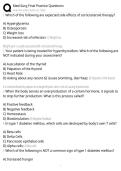
Med-Surg Final Practice Questions
Study online at https://quizlet.com/_18wath
1. Which of the following are expected side effects of corticosteroid therapy?
A) Hyperglycemia
B) Osteoporosis
C) Weight loss
D) Increased risk of infection: C) Weight loss
Weight gain is usually associated with corticosteroid therapy.
2. Your patient is being treated for hyperthyroidism. Which of the following are
NOT indicated during your assessment?
A) Auscultation of the thyroid
B) Palpation of the thyroid
C) Heart Rate
D) Asking about any recent GI issues (vomiting, diarrhea): B) Palpation of the thyroid
It is contraindicated to palpate an enlarged thyroid, due to risk of causing thyroid storm.
3. When the body senses an overproduction of a certain hormone, it signals to
to stop further production. What is this process called?
A) Positive feedback
B) Negative feedback
C) Homeostasis
D) Biostimulation: B) Negative feedback
4. In type 1 diabetes mellitus, which cells are destroyed by body's own T cells?
A) Beta cells
B) Delta Cells
C) Pancreatic epithelial cells
D) Alpha cells: A) Beta cells
5. Which of the following is NOT a common sign of type 1 diabetes mellitus?
A) Increased hunger
, Med-Surg Final Practice Questions
Study online at https://quizlet.com/_18wath
B) Weight gain
C) Excessive thirst
D) Frequent urination: B) Weight gain
6. Which of the following is the most significant risk factor for developing type
2 diabetes mellitus?
A)Family history
B) Old age
C) Overweight/Obesity
D) Ethnicity: C) Overweight/Obesity
7. Which of the following hemoglobin A1c values indicate adequate glucose
control in the recent months?
A) 8.2%
B) 10.1%
C) 7.1%
D) 5.8%: D) 6.4%
8. A fasting plasma glucose level of 115 mg/dL is indicative of what?
A) Type 1 DM
B) Type 2 DM
C) Pre-diabetic
D) Normal: C) Prediabetic
(101-125mg/dL= prediabetes)
9. Your patient received their last insulin injection in their right upper quadrant
of their abdomen. Where should you inject their current insulin dose?
A) Left Arm
B) Right Arm
C) Right upper quadrant
D) Left upper quadrant: D) Left upper quadrant
Study online at https://quizlet.com/_18wath
1. Which of the following are expected side effects of corticosteroid therapy?
A) Hyperglycemia
B) Osteoporosis
C) Weight loss
D) Increased risk of infection: C) Weight loss
Weight gain is usually associated with corticosteroid therapy.
2. Your patient is being treated for hyperthyroidism. Which of the following are
NOT indicated during your assessment?
A) Auscultation of the thyroid
B) Palpation of the thyroid
C) Heart Rate
D) Asking about any recent GI issues (vomiting, diarrhea): B) Palpation of the thyroid
It is contraindicated to palpate an enlarged thyroid, due to risk of causing thyroid storm.
3. When the body senses an overproduction of a certain hormone, it signals to
to stop further production. What is this process called?
A) Positive feedback
B) Negative feedback
C) Homeostasis
D) Biostimulation: B) Negative feedback
4. In type 1 diabetes mellitus, which cells are destroyed by body's own T cells?
A) Beta cells
B) Delta Cells
C) Pancreatic epithelial cells
D) Alpha cells: A) Beta cells
5. Which of the following is NOT a common sign of type 1 diabetes mellitus?
A) Increased hunger
, Med-Surg Final Practice Questions
Study online at https://quizlet.com/_18wath
B) Weight gain
C) Excessive thirst
D) Frequent urination: B) Weight gain
6. Which of the following is the most significant risk factor for developing type
2 diabetes mellitus?
A)Family history
B) Old age
C) Overweight/Obesity
D) Ethnicity: C) Overweight/Obesity
7. Which of the following hemoglobin A1c values indicate adequate glucose
control in the recent months?
A) 8.2%
B) 10.1%
C) 7.1%
D) 5.8%: D) 6.4%
8. A fasting plasma glucose level of 115 mg/dL is indicative of what?
A) Type 1 DM
B) Type 2 DM
C) Pre-diabetic
D) Normal: C) Prediabetic
(101-125mg/dL= prediabetes)
9. Your patient received their last insulin injection in their right upper quadrant
of their abdomen. Where should you inject their current insulin dose?
A) Left Arm
B) Right Arm
C) Right upper quadrant
D) Left upper quadrant: D) Left upper quadrant

