
@Mercy Expert
Test Bank
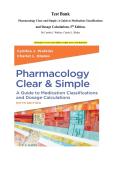
Pharmacology Clear and Simple: A Guide to Medication Classifications
and Dosage Calculations, 5th Edition.
By Cynthia J. Watkins, Charlet L. Blades
(All Chapters Covered, Latest Edition, Verified Answers with Rationales)
@Mercy Expert
,@Mercy Expert
Table of Contents
Chapter 1. History of Pharmacology 1
Chapter 2. Basics of Pharmacology 10
Chapter 3. Patient Safety in Medication Administration 19
Chapter 4. Regulations 30
Chapter 5. Prescriptions and Labels 42
Chapter 6. Review of Mathematics 49
Chapter 7. Measurement Systems 63
Chapter 8. Dosage Calculations 72
Chapter 9. Enteral Medications and Administration 80
Chapter 10. Parental Medications and Administration 87
Chapter 11. Integumentary System Medications 100
Chapter 12. Musculoskeletal System Medications 109
Chapter 13. Nervous System Medications 117
Chapter 14. Eye and Ear Medications 127
Chapter 15. Endocrine System Medications 133
Chapter 16. Cardiovascular System Medications 144
Chapter 17. Immunologic System Medications 156
Chapter 18. Pulmonary System Medications 167
Chapter 19. Gastrointestinal System Medications 175
Chapter 20. Reproductive and Urinary System Medications 184
Chapter 21. Vitamins, Minerals, Herbs, and Complementary and Alternative Medicine
194
@Mercy Expert
,@Mercy Expert
Chapter 1. History of Pharmacology
MULTIPLE CHOICE
1. The Greek word pharmakon means which of the following?
a. Medicine
b. Poison
c. Remedy
d. Medicine, poison, and remedy
Answers D
Rationale: The word pharmakon refers to the curing of illness, thus meaning medicine and
remedy, as well as poison because early medicines were toxic enough to kill a patient or enemy.
PTS: 1 DIF: Easy TOP: Unit 1: Introduction to Pharmacology KEY: History
2. The Dutch word droog means which of the following?
a. Drop
b. Drug
c. Dry
d. Dirge
Answers C
Rationale: Droog, which means “dry,” is the origin of the word drug, such as in the use of dry
herbs as medications.
PTS: 1 DIF: Intermediate TOP: Unit 1: Introduction to Pharmacology KEY: History
3. Most ancient societies treated illness based on which of the following?
a. Visions received by medicine men
b. Trial and error
@Mercy Expert
, @Mercy Expert
c. Religion
d. Animal sacrifice
Answers B
Rationale: Ancient societies had little knowledge of how the human body worked; therefore,
treating illness was often based on trial and error.
PTS: 1 DIF: Intermediate TOP: Unit 1: Introduction to Pharmacology KEY: History
4. Early records show that pharmacological treatments consisted of which of the following?
a. Plants
b. Minerals
c. Animal products
d. Plants, minerals, and animal products
Answers D
Rationale: Early records show that plants, minerals, and animal products were the only sources
available; therefore, they were the only things used.
PTS: 1 DIF: Easy TOP: Unit 1: Introduction to Pharmacology KEY: History
5. What did the Chinese document The Yellow Emperor's Inner Classic discuss for the first
time?
a. Yin and yang
b. Acupuncture
c. Meditation
d. Yin and yang and acupuncture
Answers D
Rationale: This was a very early document discussing yin and yang and acupuncture.
@Mercy Expert
Test Bank
Pharmacology Clear and Simple: A Guide to Medication Classifications
and Dosage Calculations, 5th Edition.
By Cynthia J. Watkins, Charlet L. Blades
(All Chapters Covered, Latest Edition, Verified Answers with Rationales)
@Mercy Expert
,@Mercy Expert
Table of Contents
Chapter 1. History of Pharmacology 1
Chapter 2. Basics of Pharmacology 10
Chapter 3. Patient Safety in Medication Administration 19
Chapter 4. Regulations 30
Chapter 5. Prescriptions and Labels 42
Chapter 6. Review of Mathematics 49
Chapter 7. Measurement Systems 63
Chapter 8. Dosage Calculations 72
Chapter 9. Enteral Medications and Administration 80
Chapter 10. Parental Medications and Administration 87
Chapter 11. Integumentary System Medications 100
Chapter 12. Musculoskeletal System Medications 109
Chapter 13. Nervous System Medications 117
Chapter 14. Eye and Ear Medications 127
Chapter 15. Endocrine System Medications 133
Chapter 16. Cardiovascular System Medications 144
Chapter 17. Immunologic System Medications 156
Chapter 18. Pulmonary System Medications 167
Chapter 19. Gastrointestinal System Medications 175
Chapter 20. Reproductive and Urinary System Medications 184
Chapter 21. Vitamins, Minerals, Herbs, and Complementary and Alternative Medicine
194
@Mercy Expert
,@Mercy Expert
Chapter 1. History of Pharmacology
MULTIPLE CHOICE
1. The Greek word pharmakon means which of the following?
a. Medicine
b. Poison
c. Remedy
d. Medicine, poison, and remedy
Answers D
Rationale: The word pharmakon refers to the curing of illness, thus meaning medicine and
remedy, as well as poison because early medicines were toxic enough to kill a patient or enemy.
PTS: 1 DIF: Easy TOP: Unit 1: Introduction to Pharmacology KEY: History
2. The Dutch word droog means which of the following?
a. Drop
b. Drug
c. Dry
d. Dirge
Answers C
Rationale: Droog, which means “dry,” is the origin of the word drug, such as in the use of dry
herbs as medications.
PTS: 1 DIF: Intermediate TOP: Unit 1: Introduction to Pharmacology KEY: History
3. Most ancient societies treated illness based on which of the following?
a. Visions received by medicine men
b. Trial and error
@Mercy Expert
, @Mercy Expert
c. Religion
d. Animal sacrifice
Answers B
Rationale: Ancient societies had little knowledge of how the human body worked; therefore,
treating illness was often based on trial and error.
PTS: 1 DIF: Intermediate TOP: Unit 1: Introduction to Pharmacology KEY: History
4. Early records show that pharmacological treatments consisted of which of the following?
a. Plants
b. Minerals
c. Animal products
d. Plants, minerals, and animal products
Answers D
Rationale: Early records show that plants, minerals, and animal products were the only sources
available; therefore, they were the only things used.
PTS: 1 DIF: Easy TOP: Unit 1: Introduction to Pharmacology KEY: History
5. What did the Chinese document The Yellow Emperor's Inner Classic discuss for the first
time?
a. Yin and yang
b. Acupuncture
c. Meditation
d. Yin and yang and acupuncture
Answers D
Rationale: This was a very early document discussing yin and yang and acupuncture.
@Mercy Expert

