

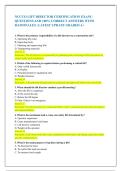
NCCCO LIFT DIRECTOR CERTIFICATION EXAM |
QUESTIONS AND 100% CORRECT ANSWERS WITH
RATIONALES | LATEST UPDATE GRADED A+
1. What is the primary responsibility of a lift director on a construction site?
A. Operating the crane
B. Inspecting tools
C. Planning and supervising lifts
D. Transporting materials
Answer: C
Rationale: The lift director is responsible for planning and overseeing all lift operations to
ensure safety and compliance.
2. Which of the following is required before performing a critical lift?
A. Only verbal instructions
B. A lift plan
C. Personal protective equipment only
D. Weather forecast
Answer: B
Rationale: A documented lift plan must be prepared and approved before any critical lift.
3. When should the lift director conduct a pre-lift meeting?
A. After the lift is completed
B. At the end of the day
C. Before the lift begins
D. Only if there’s an emergency
Answer: C
Rationale: Pre-lift meetings are conducted before a lift to communicate hazards, procedures,
and responsibilities.
4. What is the maximum load a crane can safely lift determined by?
A. Operator experience
B. Crane manufacturer load charts
C. Lift director estimation
D. Weight of the operator
Answer: B
Rationale: Load charts from the crane manufacturer determine safe lifting capacities under
specific configurations.
5. What is the main purpose of tag lines during a lift?
A. To decorate the load
B. To control the load movement
C. To measure load weight
,D. To signal the operator
Answer: B
Rationale: Tag lines are used to guide and control loads, preventing uncontrolled movement.
6. Which signal is universally used to stop crane operations immediately?
A. One long blast of the whistle
B. Waving arms slowly
C. Verbal “stop”
D. Two short horn blasts
Answer: A
Rationale: One long audible signal is a standard emergency stop signal for crane operations.
7. Who has the authority to override a lift director’s instructions during a lift?
A. The crane operator
B. No one
C. The rigging crew
D. The site supervisor
Answer: B
Rationale: The lift director has full authority over lift operations; no one should override
their instructions.
8. What is the minimum distance to maintain from power lines for most lifts?
A. 5 feet
B. 10 feet
C. 20 feet
D. 50 feet
Answer: C
Rationale: OSHA and NCCCO standards require at least 20 feet clearance from energized
lines unless additional precautions are taken.
9. What is the purpose of a load chart?
A. To track operator hours
B. To determine lifting capacity and boom configuration
C. To schedule shifts
D. To log weather conditions
Answer: B
Rationale: Load charts provide the safe lifting capacities and configurations of a crane.
10. Which factor is critical in determining the center of gravity of a load?
A. Operator skill
B. Load weight distribution
C. Wind speed
D. Crane type
Answer: B
Rationale: Understanding the load’s center of gravity is essential for stable and safe lifting.
,11. What is a “critical lift”?
A. Any lift under 500 pounds
B. A lift with special hazards or high risk
C. A lift done indoors
D. A lift with experienced operators only
Answer: B
Rationale: Critical lifts involve high-risk operations due to load, height, or complexity and
require detailed planning.
12. Which personal protective equipment is required for lift directors on site?
A. Helmet, safety vest, and steel-toed boots
B. Gloves only
C. Sunglasses
D. Hearing protection only
Answer: A
Rationale: PPE ensures the lift director’s safety in the hazardous work environment.
13. When is it acceptable to lift a load over personnel?
A. Only if it’s light
B. Never
C. If the operator is skilled
D. With tag lines
Answer: B
Rationale: Lifting over personnel is strictly prohibited due to the risk of injury.
14. What is the key responsibility of a lift director regarding rigging?
A. Inspecting and approving rigging before use
B. Cleaning rigging
C. Storing rigging
D. Purchasing rigging
Answer: A
Rationale: The lift director ensures that rigging is safe, certified, and properly configured
before lifting.
15. What should be done if a crane shows signs of mechanical failure?
A. Continue operating slowly
B. Notify the lift director and stop operations
C. Reduce load weight
D. Call the manufacturer after the shift
Answer: B
Rationale: Any mechanical issue must be reported immediately, and operations stopped until
resolved.
16. What is the first step in developing a lift plan?
A. Select crane type
B. Identify hazards and assess risks
, C. Schedule personnel
D. Check weather forecast
Answer: B
Rationale: Hazard identification and risk assessment form the basis for a safe lift plan.
17. What is the purpose of a crane outrigger?
A. To lift heavier loads without stabilizing
B. To stabilize the crane during lifts
C. To measure load weight
D. To signal the operator
Answer: B
Rationale: Outriggers increase the stability of cranes during lifting operations.
18. Which is a key indicator that a lift is unsafe?
A. Calm weather
B. Load swinging uncontrollably
C. Operator experience
D. Proper rigging
Answer: B
Rationale: Uncontrolled load movement indicates instability and a hazardous lift.
19. How often should lift equipment be inspected?
A. Weekly
B. Monthly
C. Before each lift
D. Only when it breaks
Answer: C
Rationale: Pre-lift inspections are mandatory to ensure equipment safety.
20. Who must approve the lift plan for a critical lift?
A. Crane operator
B. Lift director
C. Site engineer or competent person
D. Crew foreman
Answer: C
Rationale: Approval by a competent person ensures compliance with safety regulations.
21. How is load weight verified before lifting?
A. Estimation by the operator
B. Using load charts and scales
C. By visual inspection
D. Asking the rigging crew
Answer: B
Rationale: Accurate weight verification prevents exceeding crane capacity.
QUESTIONS AND 100% CORRECT ANSWERS WITH
RATIONALES | LATEST UPDATE GRADED A+
1. What is the primary responsibility of a lift director on a construction site?
A. Operating the crane
B. Inspecting tools
C. Planning and supervising lifts
D. Transporting materials
Answer: C
Rationale: The lift director is responsible for planning and overseeing all lift operations to
ensure safety and compliance.
2. Which of the following is required before performing a critical lift?
A. Only verbal instructions
B. A lift plan
C. Personal protective equipment only
D. Weather forecast
Answer: B
Rationale: A documented lift plan must be prepared and approved before any critical lift.
3. When should the lift director conduct a pre-lift meeting?
A. After the lift is completed
B. At the end of the day
C. Before the lift begins
D. Only if there’s an emergency
Answer: C
Rationale: Pre-lift meetings are conducted before a lift to communicate hazards, procedures,
and responsibilities.
4. What is the maximum load a crane can safely lift determined by?
A. Operator experience
B. Crane manufacturer load charts
C. Lift director estimation
D. Weight of the operator
Answer: B
Rationale: Load charts from the crane manufacturer determine safe lifting capacities under
specific configurations.
5. What is the main purpose of tag lines during a lift?
A. To decorate the load
B. To control the load movement
C. To measure load weight
,D. To signal the operator
Answer: B
Rationale: Tag lines are used to guide and control loads, preventing uncontrolled movement.
6. Which signal is universally used to stop crane operations immediately?
A. One long blast of the whistle
B. Waving arms slowly
C. Verbal “stop”
D. Two short horn blasts
Answer: A
Rationale: One long audible signal is a standard emergency stop signal for crane operations.
7. Who has the authority to override a lift director’s instructions during a lift?
A. The crane operator
B. No one
C. The rigging crew
D. The site supervisor
Answer: B
Rationale: The lift director has full authority over lift operations; no one should override
their instructions.
8. What is the minimum distance to maintain from power lines for most lifts?
A. 5 feet
B. 10 feet
C. 20 feet
D. 50 feet
Answer: C
Rationale: OSHA and NCCCO standards require at least 20 feet clearance from energized
lines unless additional precautions are taken.
9. What is the purpose of a load chart?
A. To track operator hours
B. To determine lifting capacity and boom configuration
C. To schedule shifts
D. To log weather conditions
Answer: B
Rationale: Load charts provide the safe lifting capacities and configurations of a crane.
10. Which factor is critical in determining the center of gravity of a load?
A. Operator skill
B. Load weight distribution
C. Wind speed
D. Crane type
Answer: B
Rationale: Understanding the load’s center of gravity is essential for stable and safe lifting.
,11. What is a “critical lift”?
A. Any lift under 500 pounds
B. A lift with special hazards or high risk
C. A lift done indoors
D. A lift with experienced operators only
Answer: B
Rationale: Critical lifts involve high-risk operations due to load, height, or complexity and
require detailed planning.
12. Which personal protective equipment is required for lift directors on site?
A. Helmet, safety vest, and steel-toed boots
B. Gloves only
C. Sunglasses
D. Hearing protection only
Answer: A
Rationale: PPE ensures the lift director’s safety in the hazardous work environment.
13. When is it acceptable to lift a load over personnel?
A. Only if it’s light
B. Never
C. If the operator is skilled
D. With tag lines
Answer: B
Rationale: Lifting over personnel is strictly prohibited due to the risk of injury.
14. What is the key responsibility of a lift director regarding rigging?
A. Inspecting and approving rigging before use
B. Cleaning rigging
C. Storing rigging
D. Purchasing rigging
Answer: A
Rationale: The lift director ensures that rigging is safe, certified, and properly configured
before lifting.
15. What should be done if a crane shows signs of mechanical failure?
A. Continue operating slowly
B. Notify the lift director and stop operations
C. Reduce load weight
D. Call the manufacturer after the shift
Answer: B
Rationale: Any mechanical issue must be reported immediately, and operations stopped until
resolved.
16. What is the first step in developing a lift plan?
A. Select crane type
B. Identify hazards and assess risks
, C. Schedule personnel
D. Check weather forecast
Answer: B
Rationale: Hazard identification and risk assessment form the basis for a safe lift plan.
17. What is the purpose of a crane outrigger?
A. To lift heavier loads without stabilizing
B. To stabilize the crane during lifts
C. To measure load weight
D. To signal the operator
Answer: B
Rationale: Outriggers increase the stability of cranes during lifting operations.
18. Which is a key indicator that a lift is unsafe?
A. Calm weather
B. Load swinging uncontrollably
C. Operator experience
D. Proper rigging
Answer: B
Rationale: Uncontrolled load movement indicates instability and a hazardous lift.
19. How often should lift equipment be inspected?
A. Weekly
B. Monthly
C. Before each lift
D. Only when it breaks
Answer: C
Rationale: Pre-lift inspections are mandatory to ensure equipment safety.
20. Who must approve the lift plan for a critical lift?
A. Crane operator
B. Lift director
C. Site engineer or competent person
D. Crew foreman
Answer: C
Rationale: Approval by a competent person ensures compliance with safety regulations.
21. How is load weight verified before lifting?
A. Estimation by the operator
B. Using load charts and scales
C. By visual inspection
D. Asking the rigging crew
Answer: B
Rationale: Accurate weight verification prevents exceeding crane capacity.

