ENPC Exam – Accurate Solutions For Every
Question
Save
Terms in this set (50)
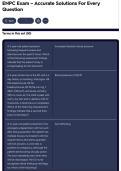
A 3 year-old patient presents Increased diastolic blood pressure
following frequent emesis and
diarrhea over the past 12 hours. Which
of the following assessment findings
indicate that the patient' body is
compensating for the fluid loss?
A 5-year-old arrives in the ED with a 4 Blood pressure of 92/78
day history of vomiting. Vital signs: HR
136 beats/minute, RR 36
breaths/minute, BP 92/56 mm Hg, T
38oC (100.4oF), and pulse oximetry
93% on room air. The child is pale with
warm, dry skin and a capillary refill of
3 seconds. A fluid bolus is completed.
Which of the following reassessment
findings indicate that a second fluid
bolus is necessary?
A 14-year-old patient presents to the Sex trafficking
emergency department with her aunt
after being assaulted. The patient has
multiple bruises inconsistent with the
assault history and seems guarded
with her answers. A urine test is
positive for pregnancy, although the
patient denies being sexually active.
The aunt repeatedly asks when they
will be discharged. The ED nurse
recognizes these finding as red flags
for which of the following?
, A 2-year-old arrives at the ED in Intraosseous in the patient's medial tibia
hypovolemic shock and needs fluids
immediately. After several attempts,
your team has been unsuccessful at
establishing vascular access. Of the
following, which is the next best
option for establishing access quickly?
A neonate presents to the emergency Serum blood glucose
department with irritability, weak cry,
and hypotonia. Which of the following
is a priority intervention?
A term infant is delivered in the Central cyanosis
emergency department. Which
assessment finding is most
concerning?
A caregiver presents to the Sick
emergency department with an 18-
month-old and reports the child is not
using their left arm after playing a
game with an older sibling. The child is
alert and curious, with regular, even
respirations, and skin color is
appropriate.Using the Pediatric
Assessment Triangle (PAT), how would
you categorize this patient?
A six-week-old infant presents to the hyponatremia
emergency department with seizures.
The infant is afebrile with a normal
glucose level ,and caregivers report
no signs of illness other than formula
intolerance, which they treated by
adding extra water to the formula. The
nurse would expect to find which of
the following laboratory
abnormalities?
Question
Save
Terms in this set (50)
A 3 year-old patient presents Increased diastolic blood pressure
following frequent emesis and
diarrhea over the past 12 hours. Which
of the following assessment findings
indicate that the patient' body is
compensating for the fluid loss?
A 5-year-old arrives in the ED with a 4 Blood pressure of 92/78
day history of vomiting. Vital signs: HR
136 beats/minute, RR 36
breaths/minute, BP 92/56 mm Hg, T
38oC (100.4oF), and pulse oximetry
93% on room air. The child is pale with
warm, dry skin and a capillary refill of
3 seconds. A fluid bolus is completed.
Which of the following reassessment
findings indicate that a second fluid
bolus is necessary?
A 14-year-old patient presents to the Sex trafficking
emergency department with her aunt
after being assaulted. The patient has
multiple bruises inconsistent with the
assault history and seems guarded
with her answers. A urine test is
positive for pregnancy, although the
patient denies being sexually active.
The aunt repeatedly asks when they
will be discharged. The ED nurse
recognizes these finding as red flags
for which of the following?
, A 2-year-old arrives at the ED in Intraosseous in the patient's medial tibia
hypovolemic shock and needs fluids
immediately. After several attempts,
your team has been unsuccessful at
establishing vascular access. Of the
following, which is the next best
option for establishing access quickly?
A neonate presents to the emergency Serum blood glucose
department with irritability, weak cry,
and hypotonia. Which of the following
is a priority intervention?
A term infant is delivered in the Central cyanosis
emergency department. Which
assessment finding is most
concerning?
A caregiver presents to the Sick
emergency department with an 18-
month-old and reports the child is not
using their left arm after playing a
game with an older sibling. The child is
alert and curious, with regular, even
respirations, and skin color is
appropriate.Using the Pediatric
Assessment Triangle (PAT), how would
you categorize this patient?
A six-week-old infant presents to the hyponatremia
emergency department with seizures.
The infant is afebrile with a normal
glucose level ,and caregivers report
no signs of illness other than formula
intolerance, which they treated by
adding extra water to the formula. The
nurse would expect to find which of
the following laboratory
abnormalities?