
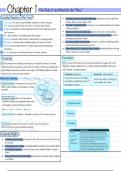
Chapter 1 The Role of and Need for the “New”
I
Complex Factors of the “new” •
Op
Creativity is only for those with right brains: creativity is solely a right brain
1. Uncertainty: the future is unpredictable, making innovation necessary function (false, emotions play a role)
2. Risk: every new idea involves risk, but it can lead to high rewards •
Op
The book of mystery prevails: creativity is an unexplained phenomenon (false,
3. Relativity: innovation is context-dependent, what is new today may not be it follows patterns)
new tomorrow • Women are more creative than men: gender determines creativity (false)
·
• Madness/Craziness are the core ingredients of creative success: creative
4. Idea: the foundation of creativity, ideas drive change
5. Problems: innovation often arises to solve existing or emerging issues individuals are eccentric (false)
6. Alternatives: creativity offers multiple solutions, not just one answer •
Op
It’s all about high-end technology: innovation is only about technology (false,
7. Stupidity: some unconventional or “stupid” ideas lead to breakthrough social and business innovations exist too)
innovations •
Op
Above the age of 40, sorry no longer creative : creativity declines with age
8. Needs: innovation is driven by the demand for better solutions (false, it depends on your mindset)
Creativity Innovation
Def: the phenomenon whereby something new or valuable is formed. It involves Def: a process that embraces the newly generated idea, engages with it and
transforming ideas, imagination and dreams into reality. Creativity is characterized develops it, finally transferring it to a target market (by including “discovery”
by the ability to perceive the world in new ways, to find hidden patterns, to think and “invention” as subprocesses)
outside the box and to generate solutions. Creativity-imagination Innovation -implementation
Model of Creativity P odel by Rhodes involves the process of identifying
involves the action of taking the
Press and solving a problem by means of
most suitable idea further
Creative Person: the entrepreneur who uses their
generating new ideas
skills, creative abilities and motivation to create
a product Person Product
Innovation Configuration
imagination familiar with domain/has experience
Creative Process: refers to the procedures Process
involved in creating and developing the product
Tangible Products
and includes creativity techniques/actions
ideas open to experience puzzle
Creative Product: the tangible or intangible outcomes of the creative process Services
musical composition 7poem novel
The Press: the external environment in which we live and operate in Processes
but the environment also influences creativity
-
dynamic activity > unconventional > motivational
Creativity Myths
•
Op
Creativity can’t be taught: creativity is often seen as an innate trait, but it can
be nurtured
• Only geniuses are creative: only highly intelligent people can be creative (false)
·• It’s all about inspiration: creativity always comes suddenly (false, it requires
effort)
-
•
Op
Only artists know the art of creation: only artists are creative (false, it applies
to all fields)
-
, Chapter 2 The Creative Person and the Environment
↓
Trilogy of the Mind Levels of Creativity
Scientifically based and reveals the role of 3 important aspects of creativity that Small c creativity: everyday problem solving and minor innovations
are the drivers from the brain that affect creativity
Big C Creativity: groundbreaking, world changing innovations
Cognition (Think): Motivation
The mental process of understanding and generating rules
Intrinsic Extrinsic
• thinking • gaining knowledge about something
Motivation Motivation
• comprehending • environmental awareness
• processing info
Emotion (Feel): ·
The role of feelings in motivating and shaping creativity
·
• feelings • attachments to people/objects
• interpretations and perceptions • joy/sadness/anger etc
Conation (Link):
The connection between thoughts and actions
• impulses to act or respond • conducting something deliberately
Results of the
• linking cognition and emotion • decision making towards goal Performing the
behavior!
• environmental awareness orientation behavior!
Kolbe indicated we put our thinking into action by:
Creativity
1. Fact Finder: instincts to probe, refine and simplify
2. Follow Thru: instincts to organize, reform and adapt
3. Quick Start: instincts to improvise, revise and stabilize Achievement Variables
4. Implementer: instincts to construct, renovate and envision
Cognitive Variables Environmental Variables Personality Varaibles
Dynamics of Creativity • intelligence • politico-religious factors • internal motivations
Def: are consequently a combination of environmental factors and biological/ • knowledge • cultural factors • confidence
genetic factors • technical skills • socioeconomic factors • non-conformity
• special talents • educational factors • creativity trait
Personality Traits
-
• inquisitive • active imagination Measuring Creativity
-• independent
-• adaptability
1. The Torrance Test for Creative Thinking (TTCT)
Motivation A standardized assessment developed by Ellis Torrance to measure creativity
• purposeful • resistance to
through verbal and figural tasks. It evaluates aspects like fluency, originality,
M
enviro- •
•
fascination with task
taking risks
premature closure
evel of
flexibility and elaboration in problem solving and idea generation.
mentaa Process creativity 2. Epstein Creativity Competencies Inventory for Individuals (ECCI-i)
• problem recognition and construction An assessment tool that measures four key skill sets essential for creativity:
-•
•
unusual combination of ideas
recognition of solutions
capturing new ideas, challenging assumptions, broadening knowledge and
skills, and managing creative environments.
Product 3. Situational Outlook Questionaire (CCQ)
• originality • usefulness A tool used to assess the climate for creativity and innovation within an
·• relevance
3• complexity organization, measuring factors like support for new ideas, trust, and risk-taking.
, Barriers to Creativity
The barriers to creativity are part of our internal and external environment. Any stimuli / conditions that prevent us from thinking and acting creatively are barriers to
creativity
Perceptual Barriers
The same product might be seen or understood differently by different individuals due to their understanding or knowledge level. The following barriers should be removed:
• making a quick decision without identifying and defining the problem
• premature assumptions
• trouble in identifying the relationships between variables
• negating the obvious or logic
• applying non-specific data in forming opinions
Emotional Barriers
Also known as a psychological barrier. Our emotions could become major barriers in the process of creativity. Some individuals react emotionally to radically new ideas
and discard them immediately. Remove the following barriers:
• negative emotions: fear of failure, self doubt, mistakes, risks and lack of confidence
• positive emotions: over confidence/motivation to make rapid progress and be successful quickly
• you don’t have the capacity to relax or think
• inability to change your mindset
• a negative attitude towards anything that is different from the norm
Cultural Barriers
Aspects such as language, education, religion, beliefs, values or norms that guide the way we relate to one another. Remove the following barriers:
• conformation is a set pattern
• stereotyping
• don’t ask questions
• don’t be inquisitive
Environmental Barriers
External factors such as:
• physical: workspace limitations, lack of resources
• economic: financial constraints on innovation
• political: policies and regulations restricting creative freedom
• social: peer pressure and cultural expectations limiting creativity
Intellectual Barriers
Will people clearly understand the product without prior knowledge. These barriers are caused by an unwillingness to use new solution approaches
• lack of knowledge, skills or cognitive flexibility to generate new ideas
I
Complex Factors of the “new” •
Op
Creativity is only for those with right brains: creativity is solely a right brain
1. Uncertainty: the future is unpredictable, making innovation necessary function (false, emotions play a role)
2. Risk: every new idea involves risk, but it can lead to high rewards •
Op
The book of mystery prevails: creativity is an unexplained phenomenon (false,
3. Relativity: innovation is context-dependent, what is new today may not be it follows patterns)
new tomorrow • Women are more creative than men: gender determines creativity (false)
·
• Madness/Craziness are the core ingredients of creative success: creative
4. Idea: the foundation of creativity, ideas drive change
5. Problems: innovation often arises to solve existing or emerging issues individuals are eccentric (false)
6. Alternatives: creativity offers multiple solutions, not just one answer •
Op
It’s all about high-end technology: innovation is only about technology (false,
7. Stupidity: some unconventional or “stupid” ideas lead to breakthrough social and business innovations exist too)
innovations •
Op
Above the age of 40, sorry no longer creative : creativity declines with age
8. Needs: innovation is driven by the demand for better solutions (false, it depends on your mindset)
Creativity Innovation
Def: the phenomenon whereby something new or valuable is formed. It involves Def: a process that embraces the newly generated idea, engages with it and
transforming ideas, imagination and dreams into reality. Creativity is characterized develops it, finally transferring it to a target market (by including “discovery”
by the ability to perceive the world in new ways, to find hidden patterns, to think and “invention” as subprocesses)
outside the box and to generate solutions. Creativity-imagination Innovation -implementation
Model of Creativity P odel by Rhodes involves the process of identifying
involves the action of taking the
Press and solving a problem by means of
most suitable idea further
Creative Person: the entrepreneur who uses their
generating new ideas
skills, creative abilities and motivation to create
a product Person Product
Innovation Configuration
imagination familiar with domain/has experience
Creative Process: refers to the procedures Process
involved in creating and developing the product
Tangible Products
and includes creativity techniques/actions
ideas open to experience puzzle
Creative Product: the tangible or intangible outcomes of the creative process Services
musical composition 7poem novel
The Press: the external environment in which we live and operate in Processes
but the environment also influences creativity
-
dynamic activity > unconventional > motivational
Creativity Myths
•
Op
Creativity can’t be taught: creativity is often seen as an innate trait, but it can
be nurtured
• Only geniuses are creative: only highly intelligent people can be creative (false)
·• It’s all about inspiration: creativity always comes suddenly (false, it requires
effort)
-
•
Op
Only artists know the art of creation: only artists are creative (false, it applies
to all fields)
-
, Chapter 2 The Creative Person and the Environment
↓
Trilogy of the Mind Levels of Creativity
Scientifically based and reveals the role of 3 important aspects of creativity that Small c creativity: everyday problem solving and minor innovations
are the drivers from the brain that affect creativity
Big C Creativity: groundbreaking, world changing innovations
Cognition (Think): Motivation
The mental process of understanding and generating rules
Intrinsic Extrinsic
• thinking • gaining knowledge about something
Motivation Motivation
• comprehending • environmental awareness
• processing info
Emotion (Feel): ·
The role of feelings in motivating and shaping creativity
·
• feelings • attachments to people/objects
• interpretations and perceptions • joy/sadness/anger etc
Conation (Link):
The connection between thoughts and actions
• impulses to act or respond • conducting something deliberately
Results of the
• linking cognition and emotion • decision making towards goal Performing the
behavior!
• environmental awareness orientation behavior!
Kolbe indicated we put our thinking into action by:
Creativity
1. Fact Finder: instincts to probe, refine and simplify
2. Follow Thru: instincts to organize, reform and adapt
3. Quick Start: instincts to improvise, revise and stabilize Achievement Variables
4. Implementer: instincts to construct, renovate and envision
Cognitive Variables Environmental Variables Personality Varaibles
Dynamics of Creativity • intelligence • politico-religious factors • internal motivations
Def: are consequently a combination of environmental factors and biological/ • knowledge • cultural factors • confidence
genetic factors • technical skills • socioeconomic factors • non-conformity
• special talents • educational factors • creativity trait
Personality Traits
-
• inquisitive • active imagination Measuring Creativity
-• independent
-• adaptability
1. The Torrance Test for Creative Thinking (TTCT)
Motivation A standardized assessment developed by Ellis Torrance to measure creativity
• purposeful • resistance to
through verbal and figural tasks. It evaluates aspects like fluency, originality,
M
enviro- •
•
fascination with task
taking risks
premature closure
evel of
flexibility and elaboration in problem solving and idea generation.
mentaa Process creativity 2. Epstein Creativity Competencies Inventory for Individuals (ECCI-i)
• problem recognition and construction An assessment tool that measures four key skill sets essential for creativity:
-•
•
unusual combination of ideas
recognition of solutions
capturing new ideas, challenging assumptions, broadening knowledge and
skills, and managing creative environments.
Product 3. Situational Outlook Questionaire (CCQ)
• originality • usefulness A tool used to assess the climate for creativity and innovation within an
·• relevance
3• complexity organization, measuring factors like support for new ideas, trust, and risk-taking.
, Barriers to Creativity
The barriers to creativity are part of our internal and external environment. Any stimuli / conditions that prevent us from thinking and acting creatively are barriers to
creativity
Perceptual Barriers
The same product might be seen or understood differently by different individuals due to their understanding or knowledge level. The following barriers should be removed:
• making a quick decision without identifying and defining the problem
• premature assumptions
• trouble in identifying the relationships between variables
• negating the obvious or logic
• applying non-specific data in forming opinions
Emotional Barriers
Also known as a psychological barrier. Our emotions could become major barriers in the process of creativity. Some individuals react emotionally to radically new ideas
and discard them immediately. Remove the following barriers:
• negative emotions: fear of failure, self doubt, mistakes, risks and lack of confidence
• positive emotions: over confidence/motivation to make rapid progress and be successful quickly
• you don’t have the capacity to relax or think
• inability to change your mindset
• a negative attitude towards anything that is different from the norm
Cultural Barriers
Aspects such as language, education, religion, beliefs, values or norms that guide the way we relate to one another. Remove the following barriers:
• conformation is a set pattern
• stereotyping
• don’t ask questions
• don’t be inquisitive
Environmental Barriers
External factors such as:
• physical: workspace limitations, lack of resources
• economic: financial constraints on innovation
• political: policies and regulations restricting creative freedom
• social: peer pressure and cultural expectations limiting creativity
Intellectual Barriers
Will people clearly understand the product without prior knowledge. These barriers are caused by an unwillingness to use new solution approaches
• lack of knowledge, skills or cognitive flexibility to generate new ideas



