

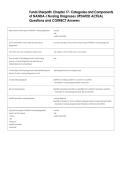
Funds Sherpath: Chapter 17- Categories and Components
of NANDA-I Nursing Diagnoses UPDATED ACTUAL
Questions and CORRECT Answers
What are the three types of NANDA-I nursing diagnoses: -actual
-risk
-health promotion
Can a nurse select one or more of each type of -a nurse may select one or more of each type of NANDA-I nursing diagnoses
diagnoses?
What does the type of diagnoses depend on? -the patients current health status and situation
True or False: In the diagnosis step of the nursing true
process, nursing diagnoses are selected and
individualized but not prioritized
In what step of the nursing process does determining the -planning phase of the nursing process
priority of each nursing diagnosis occur?
Actual Nursing Diagnosis Identifies an existing problem or concern of a patient.
---Example of nursing diagnosis label: Acute pain
Risk nursing diagnosis Identifies increased potential or vulnerability for a patient to develop a problem.
----Example of nursing diagnosis label: Risk for Infection
Health promotion nursing diagnosis nursing diagnosis
Identifies a situation in which a patient expresses interest in improving their health.
----Example of nursing diagnosis label: Readiness for Enhanced Nutrition
What are the types of NANDA-I nursing diagnoses? -actual
(select all that apply) -risk
-actual -health promotion
-risk
-medical
-health promotion
-potential
, Which is an example of a NANDA-I health-promotion Readiness for Enhanced Family Processes, as evidenced by verbalized willingness
nursing diagnosis? to attend family counseling.
-Ineffective Airway Clearance related to retained ---Readiness for Enhanced Family Processes is an example of a NANDA-I health-
secretions, as evidenced by thick secretions and promotion nursing diagnosis because it identifies a situation in which a patient
unproductive cough. experiences interest in improving their health.
-Risk for Falls with the risk factors of advanced age,
dizziness, low blood pressure, and anemia.
-Readiness for Enhanced Family Processes, as evidenced
by verbalized willingness to attend family counseling.
-Acute Pain related to physical injury, as evidenced by
complaint of pain level 8 on a scale of 0 to 10, and
inability to move without grimacing and yelling.
Which NANDA-I nursing diagnosis type describes the Actual
nursing diagnosis of Ineffective Breathing Pattern? ---NANDA-I actual nursing diagnoses identify existing problems or patient
-Risk concerns.
-Actual
-Medical
-Health promotion
Components of actual nursing diagnosis Diagnosis label + related factors + defining characteristics
Components of a risk nursing diagnosis Diagnosis label + risk factors
Components of health promotion nursing diagnosis Diagnosis label + defining characteristics
What is the NANDA-I diagnostic label? -the first section of every nursing diagnosis
-describes the diagnostic focus and requires nursing judgment before its
assignment to a patient
All NANDA-I health promotion nursing diagnostic labels readiness for enhanced
being with the words
All NANDA-I risk nursing diagnostic labels begin with the Risk for
words
What are related factors underlying cause or etiology of a patient's problem
What are risk factors? environmental, physical, psychological, or situational concerns that increase a
patient's vulnerability to a potential problem or concern.
What are defining characteristics? -cues or clusters of related assessment data that are signs, symptoms, or
indications of an actual or health-promotion NANDA -I nursing diagnosis
****not used in risk NANDA-I nursing diagnoses
-usually presented following the words as AEB (as evidence by:)
of NANDA-I Nursing Diagnoses UPDATED ACTUAL
Questions and CORRECT Answers
What are the three types of NANDA-I nursing diagnoses: -actual
-risk
-health promotion
Can a nurse select one or more of each type of -a nurse may select one or more of each type of NANDA-I nursing diagnoses
diagnoses?
What does the type of diagnoses depend on? -the patients current health status and situation
True or False: In the diagnosis step of the nursing true
process, nursing diagnoses are selected and
individualized but not prioritized
In what step of the nursing process does determining the -planning phase of the nursing process
priority of each nursing diagnosis occur?
Actual Nursing Diagnosis Identifies an existing problem or concern of a patient.
---Example of nursing diagnosis label: Acute pain
Risk nursing diagnosis Identifies increased potential or vulnerability for a patient to develop a problem.
----Example of nursing diagnosis label: Risk for Infection
Health promotion nursing diagnosis nursing diagnosis
Identifies a situation in which a patient expresses interest in improving their health.
----Example of nursing diagnosis label: Readiness for Enhanced Nutrition
What are the types of NANDA-I nursing diagnoses? -actual
(select all that apply) -risk
-actual -health promotion
-risk
-medical
-health promotion
-potential
, Which is an example of a NANDA-I health-promotion Readiness for Enhanced Family Processes, as evidenced by verbalized willingness
nursing diagnosis? to attend family counseling.
-Ineffective Airway Clearance related to retained ---Readiness for Enhanced Family Processes is an example of a NANDA-I health-
secretions, as evidenced by thick secretions and promotion nursing diagnosis because it identifies a situation in which a patient
unproductive cough. experiences interest in improving their health.
-Risk for Falls with the risk factors of advanced age,
dizziness, low blood pressure, and anemia.
-Readiness for Enhanced Family Processes, as evidenced
by verbalized willingness to attend family counseling.
-Acute Pain related to physical injury, as evidenced by
complaint of pain level 8 on a scale of 0 to 10, and
inability to move without grimacing and yelling.
Which NANDA-I nursing diagnosis type describes the Actual
nursing diagnosis of Ineffective Breathing Pattern? ---NANDA-I actual nursing diagnoses identify existing problems or patient
-Risk concerns.
-Actual
-Medical
-Health promotion
Components of actual nursing diagnosis Diagnosis label + related factors + defining characteristics
Components of a risk nursing diagnosis Diagnosis label + risk factors
Components of health promotion nursing diagnosis Diagnosis label + defining characteristics
What is the NANDA-I diagnostic label? -the first section of every nursing diagnosis
-describes the diagnostic focus and requires nursing judgment before its
assignment to a patient
All NANDA-I health promotion nursing diagnostic labels readiness for enhanced
being with the words
All NANDA-I risk nursing diagnostic labels begin with the Risk for
words
What are related factors underlying cause or etiology of a patient's problem
What are risk factors? environmental, physical, psychological, or situational concerns that increase a
patient's vulnerability to a potential problem or concern.
What are defining characteristics? -cues or clusters of related assessment data that are signs, symptoms, or
indications of an actual or health-promotion NANDA -I nursing diagnosis
****not used in risk NANDA-I nursing diagnoses
-usually presented following the words as AEB (as evidence by:)

