
NRSG 301 (Lab Midterm) – Questions With Clear Solutions
Save
Students also studied
WSC 2026: Are we there yet? Social Science Nationalism Vocab T... WSC 2026 Next Year
Teacher 156 terms 21 terms Teacher 50 terms
Amy_Woodall4 Preview Keiya_Raja Preview Sandywu1205
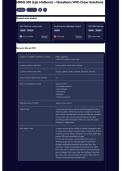
Terms in this set (79)
Location of Catheter Tip (PVAD vs CVAD) PVAD: periphery
CVAD: SVC (superior vena cava)
Location insertion cite PVAD hand to elbow, distal veins arm/foot
Location insertion cite CVAD Jugular, cephalic, basilic, brachial, subclavian, femoral
Can you blood sample from a PVAD? no
Risk of complications (CVAD) Same as PVAD +
-air/catheter embolus
-pneumothorax
-hemothorax
-arrthymia
-Horner's syndrome
Different types of CVAD's valved vs non-valved
Valved Cvad A venous access device with an internal (integrated) valve or
device located at either the proximal or distal end. The valve
allows infusion and aspiration through the VAD, but it remains
closed when not in use, thus preventing back flow and
providing a safety mechanism. There is no need for routine
clamping or heparinizing
Non-valved Cvad A venous access device without an internal (integrated) valve
or device. Has a clamp to prevent reflux or black flow of fluid
contents or blood. Require a heparin lock to keep patent (eg.
heparin 100 units/ml prefilled syringes)
If more than one lumen, usually at least one lumen is a
different gauge (eg. 19g, 20g and 20g). May administer
multiple medications/treatments at the same time. May
administer multiple incompatible medications at the same
time. Multi-lumen catheters have different port openings at
end of catheter. Each lumen often has a different color hub
(eg. red is often used for blood, and white is often used for
TPN (but varies between manufacturers).
, Peripherally Inserted Central Catheter -Inserted in the periphery in the cephalic, basilic or median
(PICC) cubital vein above the ACF (antecubital fossa)
-Tip of the catheter rests in the lower portion of the distal
superior vena cava
CVAD - Central Lines - Non-Tunneled Lines -Used for short term and emergent therapy (i.e. resuscitation)
(7 days - 1 month)
-Placed in jugular or subclavian vein (rarely femoral)
-Sutured in place as risk of bleeding if pulled out
CVAD - Central Lines - Tunneled Lines -Used long term intermittent or continuous access usually
more than 1 year
-Can be in place indefinitely if there are no complications
-Placed in subclavian or internal jugular vein
-Dacron cuff under skin creates a seal to keep catheter from
slipping out and creates a barrier from infection
CVAD - Implanted Vascular Access Device -May also be called Surgically Implanted Ports (i.e. Port-a-
(IVAD) cath)
-Decreased risk of infection for long term use
-Used long term intermittent or continuous access usually
more than 1 year (i.e. chemotherapy)
-Port has a reservoir with a self sealing membrane and a
catheter
-When in use, aseptic, transparent dressing over Huber
needle, side and tubing
-requires heparin flush to maintain patency
CVAD Complications Infection
Air embolism
Occlusions - thrombosis, chemical and mechanical
Phlebitis, thrombophlebitis, infiltration, extravasation
Catheter embolism
Pulmonary embolism
Catheter migration
Pneumothorax / hemothorax
Arrhythmia
CVAD Med Admin -Need to check parenteral manual (compatibility, dilution and
rate of administration)
Need to check patency of the CVAD prior to administration
Need to flush before and after administration, flush at same
rate as med administration (initially to assess patency, post to
ensure complete dose of medication has entered the
bloodstream)
Need to flush between medications; Use a turbulent (push-
pause) flush technique
Save
Students also studied
WSC 2026: Are we there yet? Social Science Nationalism Vocab T... WSC 2026 Next Year
Teacher 156 terms 21 terms Teacher 50 terms
Amy_Woodall4 Preview Keiya_Raja Preview Sandywu1205
Terms in this set (79)
Location of Catheter Tip (PVAD vs CVAD) PVAD: periphery
CVAD: SVC (superior vena cava)
Location insertion cite PVAD hand to elbow, distal veins arm/foot
Location insertion cite CVAD Jugular, cephalic, basilic, brachial, subclavian, femoral
Can you blood sample from a PVAD? no
Risk of complications (CVAD) Same as PVAD +
-air/catheter embolus
-pneumothorax
-hemothorax
-arrthymia
-Horner's syndrome
Different types of CVAD's valved vs non-valved
Valved Cvad A venous access device with an internal (integrated) valve or
device located at either the proximal or distal end. The valve
allows infusion and aspiration through the VAD, but it remains
closed when not in use, thus preventing back flow and
providing a safety mechanism. There is no need for routine
clamping or heparinizing
Non-valved Cvad A venous access device without an internal (integrated) valve
or device. Has a clamp to prevent reflux or black flow of fluid
contents or blood. Require a heparin lock to keep patent (eg.
heparin 100 units/ml prefilled syringes)
If more than one lumen, usually at least one lumen is a
different gauge (eg. 19g, 20g and 20g). May administer
multiple medications/treatments at the same time. May
administer multiple incompatible medications at the same
time. Multi-lumen catheters have different port openings at
end of catheter. Each lumen often has a different color hub
(eg. red is often used for blood, and white is often used for
TPN (but varies between manufacturers).
, Peripherally Inserted Central Catheter -Inserted in the periphery in the cephalic, basilic or median
(PICC) cubital vein above the ACF (antecubital fossa)
-Tip of the catheter rests in the lower portion of the distal
superior vena cava
CVAD - Central Lines - Non-Tunneled Lines -Used for short term and emergent therapy (i.e. resuscitation)
(7 days - 1 month)
-Placed in jugular or subclavian vein (rarely femoral)
-Sutured in place as risk of bleeding if pulled out
CVAD - Central Lines - Tunneled Lines -Used long term intermittent or continuous access usually
more than 1 year
-Can be in place indefinitely if there are no complications
-Placed in subclavian or internal jugular vein
-Dacron cuff under skin creates a seal to keep catheter from
slipping out and creates a barrier from infection
CVAD - Implanted Vascular Access Device -May also be called Surgically Implanted Ports (i.e. Port-a-
(IVAD) cath)
-Decreased risk of infection for long term use
-Used long term intermittent or continuous access usually
more than 1 year (i.e. chemotherapy)
-Port has a reservoir with a self sealing membrane and a
catheter
-When in use, aseptic, transparent dressing over Huber
needle, side and tubing
-requires heparin flush to maintain patency
CVAD Complications Infection
Air embolism
Occlusions - thrombosis, chemical and mechanical
Phlebitis, thrombophlebitis, infiltration, extravasation
Catheter embolism
Pulmonary embolism
Catheter migration
Pneumothorax / hemothorax
Arrhythmia
CVAD Med Admin -Need to check parenteral manual (compatibility, dilution and
rate of administration)
Need to check patency of the CVAD prior to administration
Need to flush before and after administration, flush at same
rate as med administration (initially to assess patency, post to
ensure complete dose of medication has entered the
bloodstream)
Need to flush between medications; Use a turbulent (push-
pause) flush technique

