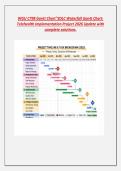
WGU C798 Gantt Chart"SDLC Waterfall Gantt Chart:
Telehealth Implementation Project 2026 Update with
complete solutions.
,
,Part 1: SDLC Waterfall Methodology (Questions 1-10)
1. You are managing a Telehealth implementation project using the Waterfall
methodology. In which phase would you formally document the specific
network bandwidth requirements needed to support high-definition video
visits?
A. Planning
B. Analysis
C. Design
D. Implementation
- - answer-: B. Analysis
Explanation: The Analysis phase is dedicated to gathering detailed requirements.
Bandwidth is a specific technical requirement for the system to function. While
high-level needs are identified in Planning, the detailed specifications are
documented in Analysis.
2. A stakeholder asks to add a new feature after the Design phase is signed off.
According to strict Waterfall principles, what is the best course of action?
A. Add it to the current sprint.
B. Reject the change entirely.
C. Document the request and address it in a formal project change request or a
future project phase.
D. Quickly code the feature during Implementation to save time.
- - answer-: C. Document the request and address it in a formal project change
request or a future project phase.
Explanation: Waterfall is sequential. Going back to change the design after it's
signed off is costly and against the methodology. Changes must be controlled
formally. Option A refers to "sprints" which is an Agile term, not Waterfall.
3. During which phase of the Waterfall SDLC would you conduct a Gap Analysis
to compare the current state (in-person visits) with the future state (telehealth
capabilities)?
A. Planning
B. Analysis
, C. Design
D. Evaluation
- - answer-: B. Analysis
Explanation: Gap Analysis is a core activity of the Analysis phase. It helps define
the requirements by identifying the difference between what exists now and
what is needed in the future.
4. Which of the following is a primary characteristic of the Waterfall
methodology that makes it suitable for a healthcare compliance project like
C798?
A. It allows for overlapping phases to speed up delivery.
B. It requires continuous customer feedback after every coding iteration.
C. It relies on heavy documentation and phase gate reviews before proceeding.
D. It minimizes the importance of the planning phase.
- - answer-: C. It relies on heavy documentation and phase gate reviews before
proceeding.
Explanation: Healthcare projects require strict audit trails and compliance
(HIPAA). Waterfall's emphasis on documentation and formal approval at the end
of each phase (gates) provides this control.
5. In the context of the C798 project, what is the main deliverable at the end of
the Planning phase?
A. A fully functional prototype
B. The project charter or Project Initiation Document (PID)
C. The final training manuals
D. The system architecture diagram
- - answer-: B. The project charter or Project Initiation Document (PID)
Explanation: The Planning phase is about defining the project. The Project Charter
authorizes the project and outlines the objectives, scope, and key stakeholders.
Prototypes and architecture come later (Design). Training manuals come even
later (Implementation).
6. (Difficult) If a critical requirement is missed during the Analysis phase but is
discovered during Testing (part of Implementation), what is the most likely
consequence in a Waterfall project?
Telehealth Implementation Project 2026 Update with
complete solutions.
,
,Part 1: SDLC Waterfall Methodology (Questions 1-10)
1. You are managing a Telehealth implementation project using the Waterfall
methodology. In which phase would you formally document the specific
network bandwidth requirements needed to support high-definition video
visits?
A. Planning
B. Analysis
C. Design
D. Implementation
- - answer-: B. Analysis
Explanation: The Analysis phase is dedicated to gathering detailed requirements.
Bandwidth is a specific technical requirement for the system to function. While
high-level needs are identified in Planning, the detailed specifications are
documented in Analysis.
2. A stakeholder asks to add a new feature after the Design phase is signed off.
According to strict Waterfall principles, what is the best course of action?
A. Add it to the current sprint.
B. Reject the change entirely.
C. Document the request and address it in a formal project change request or a
future project phase.
D. Quickly code the feature during Implementation to save time.
- - answer-: C. Document the request and address it in a formal project change
request or a future project phase.
Explanation: Waterfall is sequential. Going back to change the design after it's
signed off is costly and against the methodology. Changes must be controlled
formally. Option A refers to "sprints" which is an Agile term, not Waterfall.
3. During which phase of the Waterfall SDLC would you conduct a Gap Analysis
to compare the current state (in-person visits) with the future state (telehealth
capabilities)?
A. Planning
B. Analysis
, C. Design
D. Evaluation
- - answer-: B. Analysis
Explanation: Gap Analysis is a core activity of the Analysis phase. It helps define
the requirements by identifying the difference between what exists now and
what is needed in the future.
4. Which of the following is a primary characteristic of the Waterfall
methodology that makes it suitable for a healthcare compliance project like
C798?
A. It allows for overlapping phases to speed up delivery.
B. It requires continuous customer feedback after every coding iteration.
C. It relies on heavy documentation and phase gate reviews before proceeding.
D. It minimizes the importance of the planning phase.
- - answer-: C. It relies on heavy documentation and phase gate reviews before
proceeding.
Explanation: Healthcare projects require strict audit trails and compliance
(HIPAA). Waterfall's emphasis on documentation and formal approval at the end
of each phase (gates) provides this control.
5. In the context of the C798 project, what is the main deliverable at the end of
the Planning phase?
A. A fully functional prototype
B. The project charter or Project Initiation Document (PID)
C. The final training manuals
D. The system architecture diagram
- - answer-: B. The project charter or Project Initiation Document (PID)
Explanation: The Planning phase is about defining the project. The Project Charter
authorizes the project and outlines the objectives, scope, and key stakeholders.
Prototypes and architecture come later (Design). Training manuals come even
later (Implementation).
6. (Difficult) If a critical requirement is missed during the Analysis phase but is
discovered during Testing (part of Implementation), what is the most likely
consequence in a Waterfall project?